
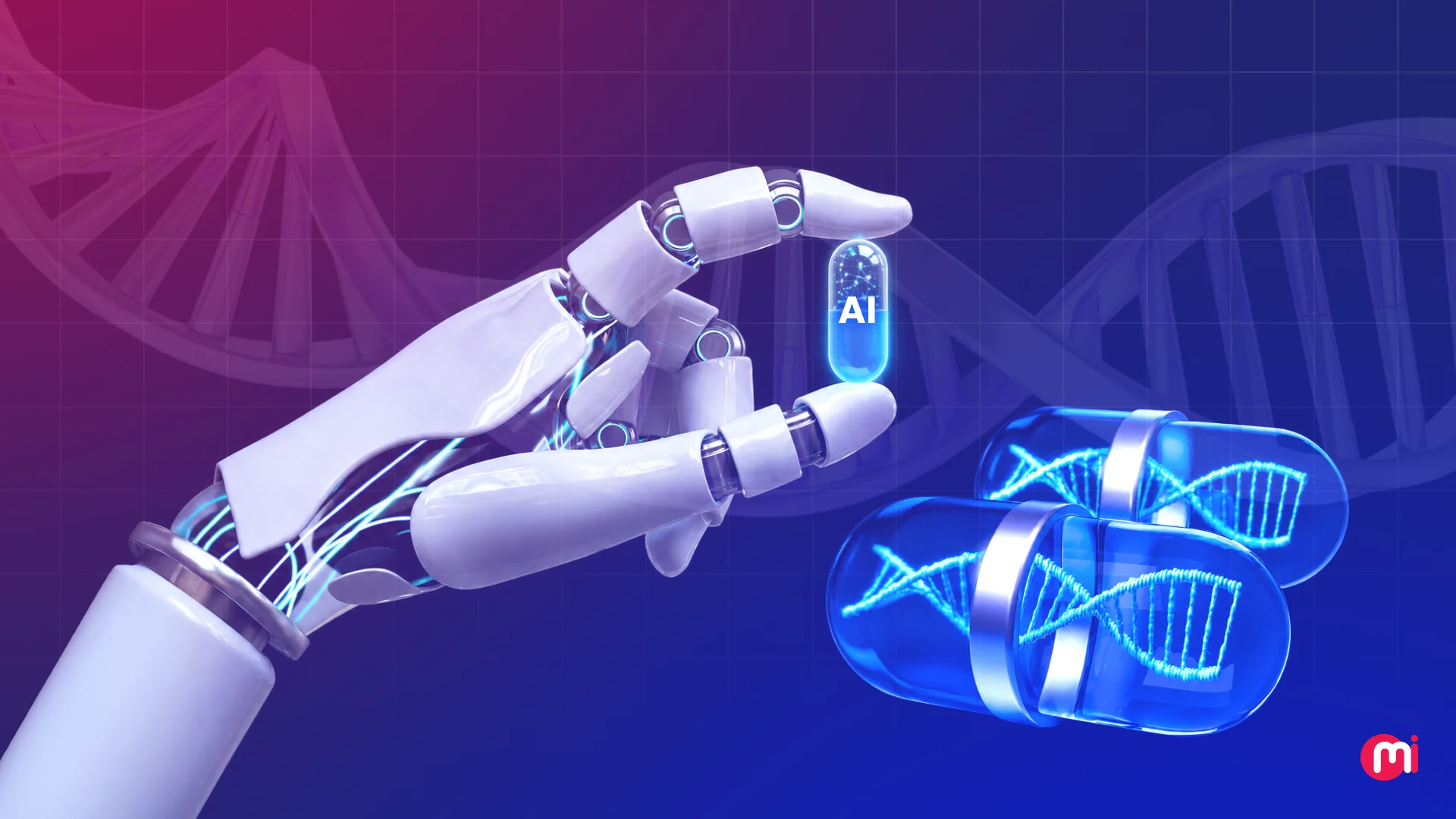
Artificial intelligence is revolutionizing the pharmaceutical and biotech industries, transforming drug discovery, clinical trials, manufacturing, supply chain, and commercialization. The conventional drug development model is being reshaped by AI, particularly in the early stages of discovery and preclinical phases, by enabling data-driven decisions, predictive modeling, and rapid iteration.
Pharma companies are leveraging AI to identify viable drug candidates faster than traditional methods, significantly reducing the time and costs associated with drug development. AI is becoming an integral part of the production infrastructure at companies like Pfizer, Novartis, and Roche, offering measurable ROI across various aspects of the industry.
AI in pharma and biotech involves the use of machine learning, deep learning, generative models, and predictive analytics to process large biological, chemical, and clinical datasets. These tools simulate molecular interactions, predict outcomes, optimize processes, and support decision-making throughout the value chain.
Unlike traditional methods that rely on trial-and-error in wet labs, AI enables in-silico experimentation at scale, integrating various data sources to uncover patterns and insights that humans might overlook. This leads to faster iteration, reduced failure rates, and more targeted therapies.
In terms of pharmaceutical development, AI is transforming the landscape by enabling virtual screening, predictive manufacturing, clinical trial optimization, smarter patient recruitment, and personalized marketing strategies. The use of AI models like AlphaFold 3, generative AI, and agentic systems is revolutionizing the industry, leading to faster molecule design, improved early clinical success rates, and enabling precision medicine at scale.
While AI adoption in the pharmaceutical and biotech industries offers substantial ROI through lower costs and higher efficiency, it also comes with challenges. Strict regulatory compliance, robust governance, explainability, and human oversight are essential for successful AI implementation.
Pharma and biotech leaders who strategically implement AI gain a competitive edge in R&D productivity, pipeline de-risking, and faster time-to-patient. The key takeaway is that AI is reshaping the pharmaceutical and biotech industries, offering immense potential for innovation and growth.
Key Takeaways:
– AI is revolutionizing the pharma and biotech industries by significantly accelerating drug discovery, clinical trials, manufacturing, supply chain, and commercialization.
– AI models like AlphaFold 3, generative AI, and agentic systems are reducing drug discovery timelines, improving early clinical success rates, and enabling precision medicine at scale.
– Key applications include faster molecule design, smarter patient recruitment and trial optimization, predictive manufacturing, resilient supply chains, proactive pharmacovigilance, and hyper-personalized marketing.
– Successful AI adoption requires strict regulatory compliance, robust governance, explainability, and human oversight.
– Pharma and biotech leaders gain a competitive edge in R&D productivity, pipeline de-risking, and faster time-to-patient through strategic AI implementation.