
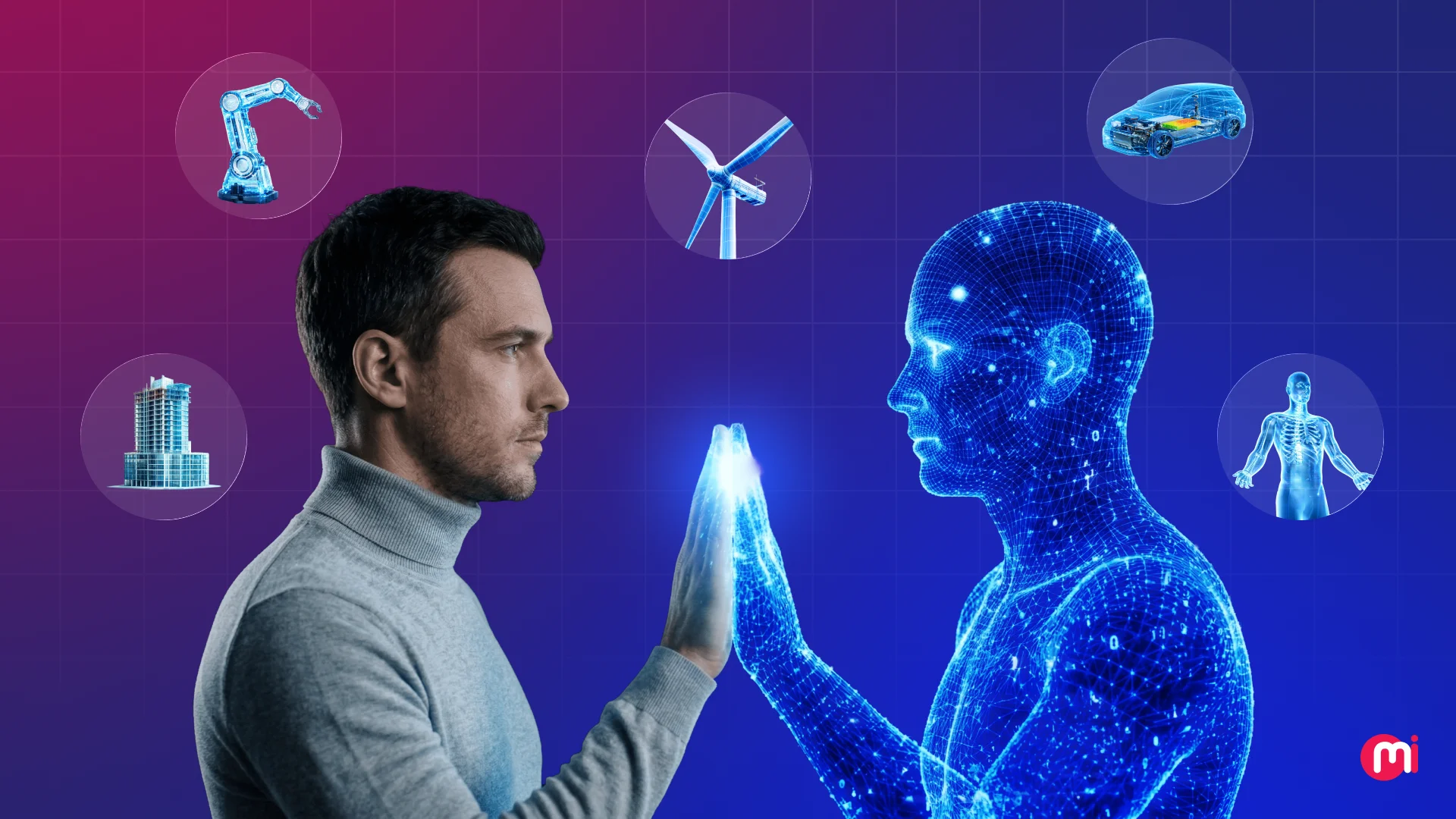
In the year 2026, the decision to create digital twins has emerged as a strategic move for businesses. The concept of digital twins has revolutionized various sectors, from smart cities predicting traffic patterns to factories capable of self-repair. These digital twin trends are reshaping our interaction with the physical world and driving innovation across industries.
The advancement of generative AI and autonomous agents has elevated virtual models into sophisticated and efficient tools. Instead of merely monitoring data, businesses now utilize digital twins to simulate outcomes, reduce costs, and expedite product launches. This shift reflects a global movement, with nearly 60% of executives planning to integrate digital twins into their core operations by 2028. This integration enables businesses to test decisions in a safe digital environment before implementing them in the real world.
Whether it’s predicting machine failures or optimizing supply chains, observing how industry leaders apply digital twin models offers valuable insights to stay competitive in the market. This blog delves into the top 10 digital twin trends and the cutting-edge technology driving this revolution, empowering readers to navigate the rapidly evolving digital landscape effectively.
Key Takeaways:
1. A digital twin is a virtual replica of a physical system, asset, or process that utilizes real-time data, simulations, and AI to monitor performance, predict outcomes, and optimize operations.
2. Digital twins are evolving from static, confined models to dynamic, portable tools that provide real-time intelligence throughout the product lifecycle.
3. Generative and agentic AI have transformed digital twins into active entities capable of autonomously solving problems and communicating in plain language.
4. Leveraging twins for what-if simulations enables businesses to maintain stability during global disruptions and environmental changes.
5. Executable digital twins (xDT) make advanced simulations accessible on the shop floor through simple devices like tablets.
6. Collaborating with experts like MindInventory enables companies to develop scalable, high-fidelity twins using advanced tools like Unreal Engine.
Digital Twin Trends Shaping Enterprises in 2026:
The rapid adoption of digital twins across industries is fueling a new wave of innovation. As businesses increasingly rely on simulation-driven decision-making, several technology and business trends are influencing the future of digital twin adoption. By the end of 2026, the digital twin market is projected to reach $33.97 billion, driven by diverse trends shaping the utilization of digital twins across various sectors.
Here are the top 10 trends influencing the future of digital twins:
1. Autonomous AI-Driven Digital Twins
Earlier versions of digital twins provided real-time insights, but autonomous twins go a step further by running continuous simulations in the background to identify potential risks and offer prescriptive solutions.
2. Interconnected Enterprise Digital Twin Ecosystems
The trend is shifting towards unified digital twin platforms that integrate data, software, and hardware, promoting real-time collaboration across the entire value chain.
3. Sustainable Green Digital Twins
Businesses are increasingly adopting sustainable practices, leveraging green digital twins to monitor, simulate, and optimize environmental footprints.
4. Low-Code Digital Twin Democratization
The democratization of digital twins is becoming more feasible through Low-Code and No-Code platforms, allowing organizations to create twins using user-friendly interfaces and pre-built templates.
5. Twin-as-a-Service (TaaS) Platforms
TaaS enables businesses to subscribe to digital twin services instead of building them from scratch, eliminating the need for expensive data scientists and infrastructure.
6. Bio-Digital and Genomic Twins
Bio-digital twins and genomic twins are revolutionizing healthcare by creating virtual replicas of individuals based on wearable data, medical scans, and genetic information.
7. Smart City Digital Twins
Urban digital twins are transforming cities into living digital maps, enabling city leaders to test and optimize projects before physical implementation, enhancing urban planning and infrastructure management.
8. Self-Healing Digital Twins
Self-healing digital twins utilize artificial intelligence to detect inconsistencies and repair themselves, ensuring reliability and reducing downtime.
9. Rise of Executable Digital Twins (xDTs)
Executable digital twins are portable software that simplifies complex simulations, making them accessible to operators on the factory floor using devices like tablets.
10. Immersive Digital Twins in the Metaverse
Immersive digital twins in the metaverse offer a 3D virtual environment for collaborative work, training, and testing of new designs, enhancing productivity and innovation.
Technology Stack Powering Digital Twins:
To bring these trends to life, a robust technology stack is essential. Key technologies powering digital twin applications include Artificial Intelligence (AI) for reasoning and autonomous actions, Cloud Services for data storage and processing, Smart Sensors for data acquisition, Blockchain for data integrity, Generative AI for automated 3D asset generation, and Agentic AI for autonomous decision-making.
The Business Impact of Digital Twins in 2026:
The application of digital twins is yielding tangible financial and operational benefits for businesses. By leveraging virtual models to predict equipment failures, optimize resources, and accelerate production cycles, companies are saving costs, reducing downtime, and enhancing operational efficiency.
1. Faster Time-to-Market
Digital twins expedite product development by enabling virtual testing and refinement, reducing the time required for physical prototyping.
2. Significant Cost Reductions
Predictive insights from digital twins help prevent equipment failures and optimize resource utilization, leading to substantial cost savings.
3. Enhanced Operational Resilience
Digital twins enhance operational efficiency by simulating crisis scenarios and enabling real-time adjustments to adapt to disruptions.
How Can MindInventory Help You Stay Ahead With Digital Twin Trends?
MindInventory offers end-to-end development and consulting services to help businesses navigate the digital twin technology landscape. With expertise in building scalable and efficient virtual replicas using advanced technologies like IoT, AI, and cloud computing, MindInventory assists companies in optimizing operations and making data-driven decisions.
Partnering with MindInventory enables businesses to leverage cutting-edge digital twin solutions tailored to their specific industry needs. By focusing on user-friendly interfaces and robust data systems, MindInventory ensures that complex information is transformed into actionable insights, accelerating digital transformation and staying ahead of evolving digital twin trends.
FAQ for Digital Twin Trends:
1. How does Generative AI enhance digital twin technology?
Generative AI enhances digital twins by automating the generation of code and 3D assets, enabling natural language interactions, and making complex data accessible to a wider audience.
2. What are some challenges organizations face in digital-twin development?
Organizations face challenges in scoping the right solutions, defining complex software stacks, and achieving development excellence in digital twin projects.
3. How are digital twins evolving with AI?
Digital twins are evolving into active, reasoning systems with the integration of generative AI for asset generation and agentic AI for autonomous decision-making.
4. Why will digital twins be essential across industries in the future?
Digital twins will be essential for simulating global scenarios, predicting outcomes, reducing costs, and ensuring operational efficiency in an unpredictable world, driving innovation and sustainability.
In conclusion, digital twins are revolutionizing industries by providing a virtual environment for testing and optimizing operations. By staying updated on the latest trends and leveraging advanced technologies, businesses can harness the power of digital twins to drive innovation, reduce costs, and enhance operational efficiency in a rapidly evolving digital landscape.