
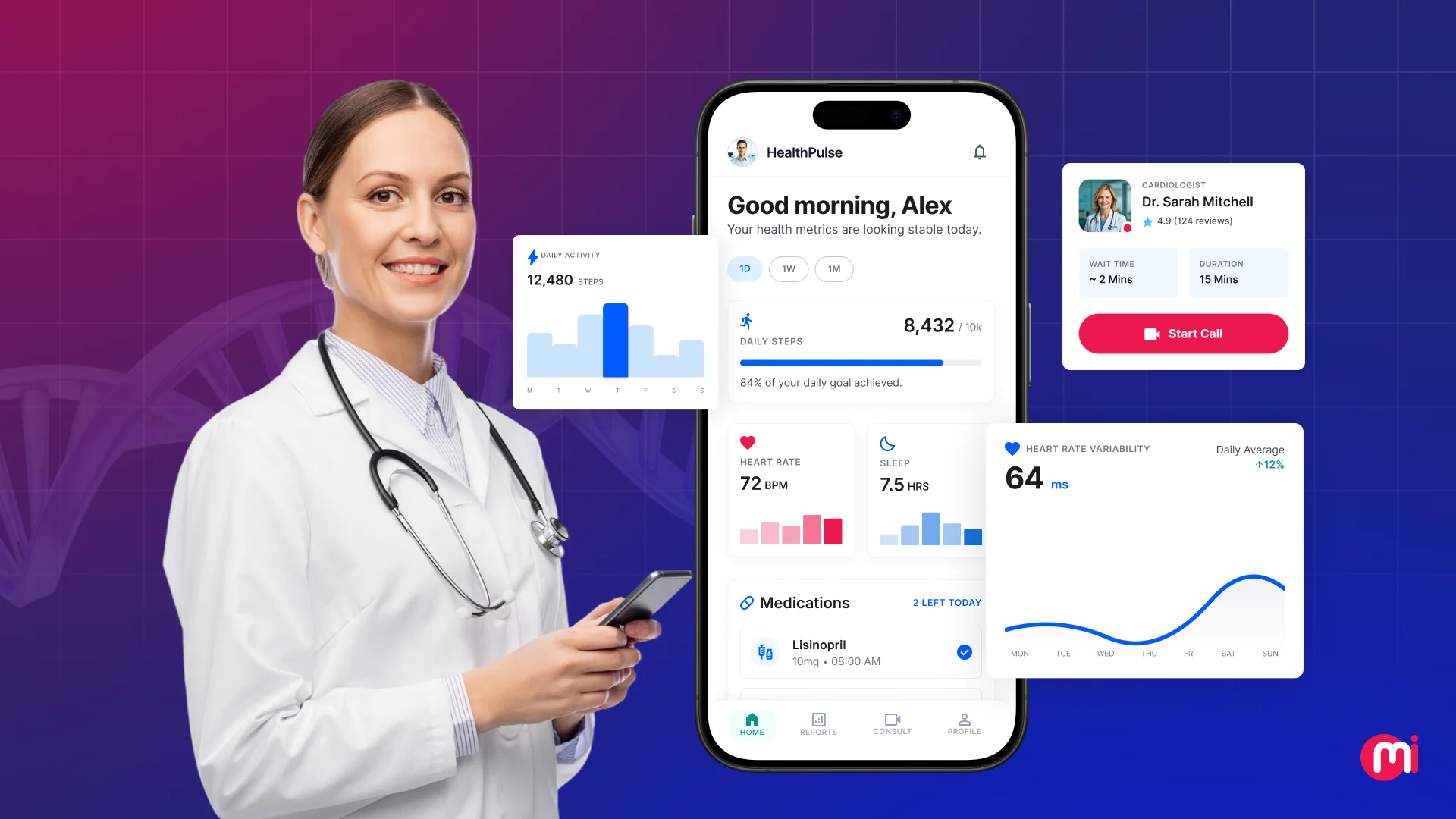
Healthcare app development has undergone a significant transformation in recent years. Patients now expect the same level of convenience and accessibility from their healthcare providers as they do from other industries like banking and e-commerce. This shift has led to an increased demand for healthcare mobile applications that offer virtual consultations, digital prescriptions, remote monitoring, and real-time access to medical records directly from smartphones.
Investing in healthcare app development services is no longer just about creating a digital product. It now involves building secure, compliant, and scalable mobile solutions that can operate effectively within complex clinical environments while enhancing patient engagement and operational efficiency.
The global healthcare mobile application market is rapidly growing, with projections indicating a significant increase in market size by 2031. As healthcare organizations continue to prioritize mobile-first care delivery, understanding the design, development, and deployment of mHealth applications has become essential.
Key Takeaways:
– The global mHealth app market is projected to grow significantly by 2031, reflecting the rapid adoption of digital healthcare worldwide.
– Clinical-grade healthcare apps help providers improve care coordination, streamline workflows, and enhance chronic care monitoring through mobile accessibility.
– Healthcare organizations should prioritize interoperability, accessibility, user experience, scalability planning, and continuous adoption monitoring for long-term success.
– mHealth apps must operate within highly regulated environments, requiring compliance with HIPAA, EHR interoperability, encrypted data handling, secure authentication, and reliability standards.
– Selecting the right tech stack, cloud infrastructure, interoperability standards, and security architecture directly impacts scalability, compliance readiness, performance, and maintenance costs.
– EHR integration should be prioritized from the MVP stage to ensure real clinical adoption.
What Is mHealth App Development?
mHealth app development involves creating mobile applications that help patients, doctors, hospitals, and healthcare providers manage healthcare services more efficiently. These apps can be used for virtual consultations, appointment booking, patient monitoring, medical records access, diagnostics, remote care delivery, care coordination, and improving mobile healthcare workflows. Unlike traditional mobile applications, healthcare mobile apps must operate within highly regulated environments involving sensitive patient health information, compliance requirements, EHR/EMR interoperability, real-time clinical communication, secure authentication, and reliability.
Benefits of mHealth Apps for Patients and Providers:
mHealth applications offer numerous benefits across clinical operations, patient experience, care coordination, and healthcare accessibility. For healthcare providers, these benefits include:
– Clinical efficiency and care delivery improvements
– Optimization of mobile care delivery
– Financial and business benefits
– Data accessibility and care coordination enhancements
For patients, mHealth apps provide better access to healthcare, improved patient experience, better health outcomes, and enhanced security and emergency support.
Types of mHealth Apps:
– Remote Patient Monitoring (RPM) Apps
– Telemedicine & Virtual Care Apps
– EHR/EMR Mobile Access Apps
– Mental Health & Therapy Apps
– Medication Reminder Apps
– Fitness & Wellness Apps
– Appointment Booking Apps
– Women’s Health & Pregnancy Apps
– Health Insurance and Claims Management Apps
Features of a Clinical-Grade Mobile Healthcare App:
A well-built healthcare app should include essential features for both doctors and patients, such as secure login, appointment scheduling, telemedicine, EHR/EMR access, medication reminders, push notifications, remote patient monitoring, wearable device integration, secure messaging, digital prescriptions, payment gateway integration, offline access, AI-based symptom checker, health tracking dashboard, camera, and document upload, and emergency SOS support.
Tech Stack for mHealth App Development:
Building a strong technical foundation is crucial for healthcare mobile app development. The right tech stack includes mobile frontend technologies, backend and cloud infrastructure, API and interoperability standards, communication and notification infrastructure, AI, wearables, and IoT integration, authentication and security infrastructure.
Native vs. Cross-Platform Development:
Choosing between native and cross-platform development depends on the specific requirements of the healthcare app. Native development is preferred for deep device integration and high performance, while cross-platform frameworks can reduce development time and cost for applications with less hardware dependency.
How to Build an mHealth App: Step-by-Step:
The development process for a healthcare mobile app involves several structured steps, including clinical workflow discovery, regulatory and compliance scoping, defining app type and user populations, platform and technology decisions, UX design around clinical workflows, MVP development with EHR integration, clinical validation and load testing, security audit and compliance review, staged rollout, and adoption monitoring.
Regulatory and Compliance Requirements:
Compliance in healthcare app development is crucial and involves adhering to regulations such as HIPAA, FDA SaMD, GDPR, PIPEDA, and others. Determining compliance scope before building the app is essential to ensure regulatory requirements are met.
mHealth App Development Challenges and Solutions:
Healthcare app development comes with various challenges, including clinical adoption, technical complexity, compliance and security, and engagement issues. Addressing these challenges requires a thorough understanding of the domain and the implementation of best practices.
mHealth App Development Best Practices:
Following best practices in healthcare app development, such as designing around real clinical workflows, prioritizing interoperability, building security into the architecture, optimizing for accessibility and usability, validating with healthcare professionals, planning for scalability, and continuously monitoring adoption metrics, can lead to successful app development.
How Much Does mHealth App Development Cost?
The cost of healthcare app development varies based on app complexity, compliance requirements, platform strategy, and integration depth. Estimates range from $30,000 to $150,000 or more, depending on the scope of the project.
Key Trends and Emerging Technologies in mHealth App Development:
Emerging trends in healthcare app development include ambient clinical documentation and AI note-taking, precision medicine and hyper-personalization, hospital-at-home expansion, wearables reaching clinical-grade accuracy, 5G-enabled continuous monitoring, mental health apps moving into the clinical mainstream, and interoperability as infrastructure.
Why Choose MindInventory as Your Healthcare App Development Partner:
MindInventory offers expertise in healthcare app development, with experience in building secure, compliant, and scalable solutions for healthcare providers, payers, and health technology companies. Their full-cycle delivery capability, compliance-first approach, and experience in the healthcare domain make them a reliable partner for healthcare app development.
FAQs On mHealth App Development:
– How long does mHealth app development take?
– What makes healthcare app development different from any other mobile app build?
– Should we choose native or cross-platform development for an mHealth app?
– Can mHealth apps integrate with wearable devices and medical IoT systems?
– Is HIPAA compliance alone enough for a healthcare mobile app?
Overall, healthcare app development is a complex and highly regulated process that requires careful planning, compliance with regulatory requirements, and a focus on user experience and security. By following best practices, addressing challenges, and staying up-to-date with emerging trends, healthcare organizations can create successful and impactful mobile applications for their patients and providers.