
Every day is chock-full of new discoveries when you are a kindergartner. These hands-on kindergarten science experiments and activities take advantage of kids’ boundless curiosity. They’ll learn about physics, biology, chemistry, and more basic science concepts, gearing them up to become lifelong learners.
To make things even easier, we’ve rated every one of these kindergarten science experiments based on difficulty and materials.
Difficulty:
- Easy: Low or no-prep experiments you can do pretty much anytime.
- Medium: These take a little more setup or a longer time to complete.
- Advanced: Experiments like these take a fairly big commitment of time and/or effort.
Materials:
- Basic: Use simple items you probably already have around the house.
- Medium: These require items that you might not already have but are easy to get your hands on.
- Advanced: These require specialized or more expensive supplies to complete.
Jump to:
Forces and Interactions Kindergarten Science Experiments
1. Build a catapult
- Difficulty: Easy
- Materials: Basic
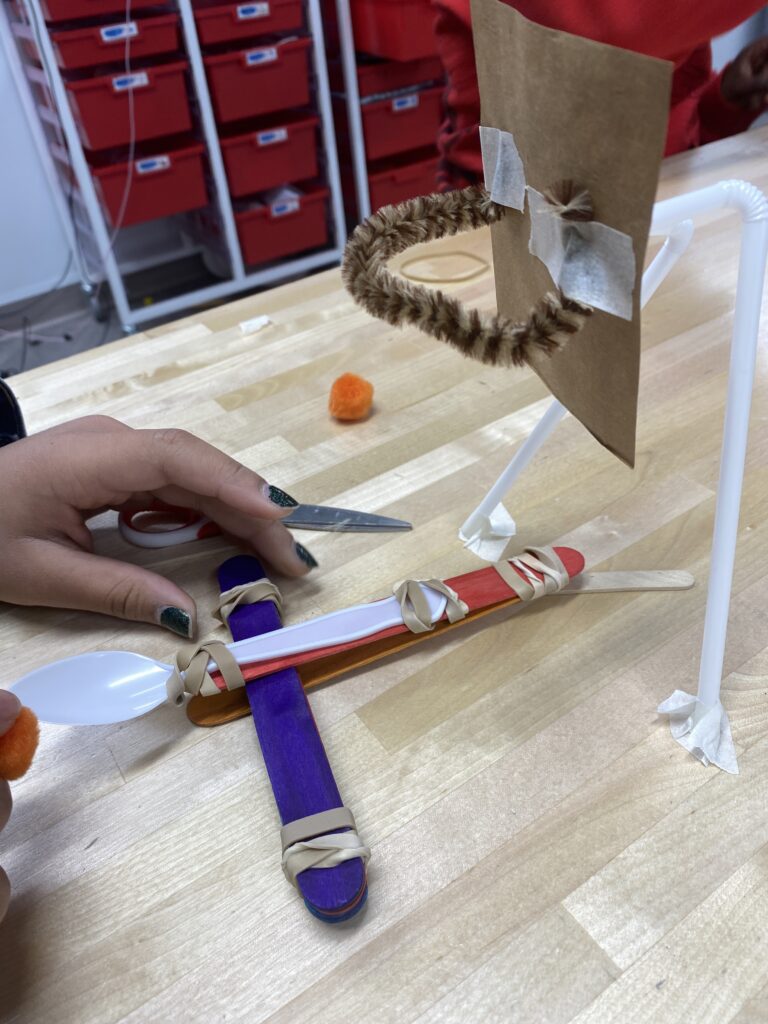
- Materials Needed: Craft sticks, plastic spoon, rubber bands
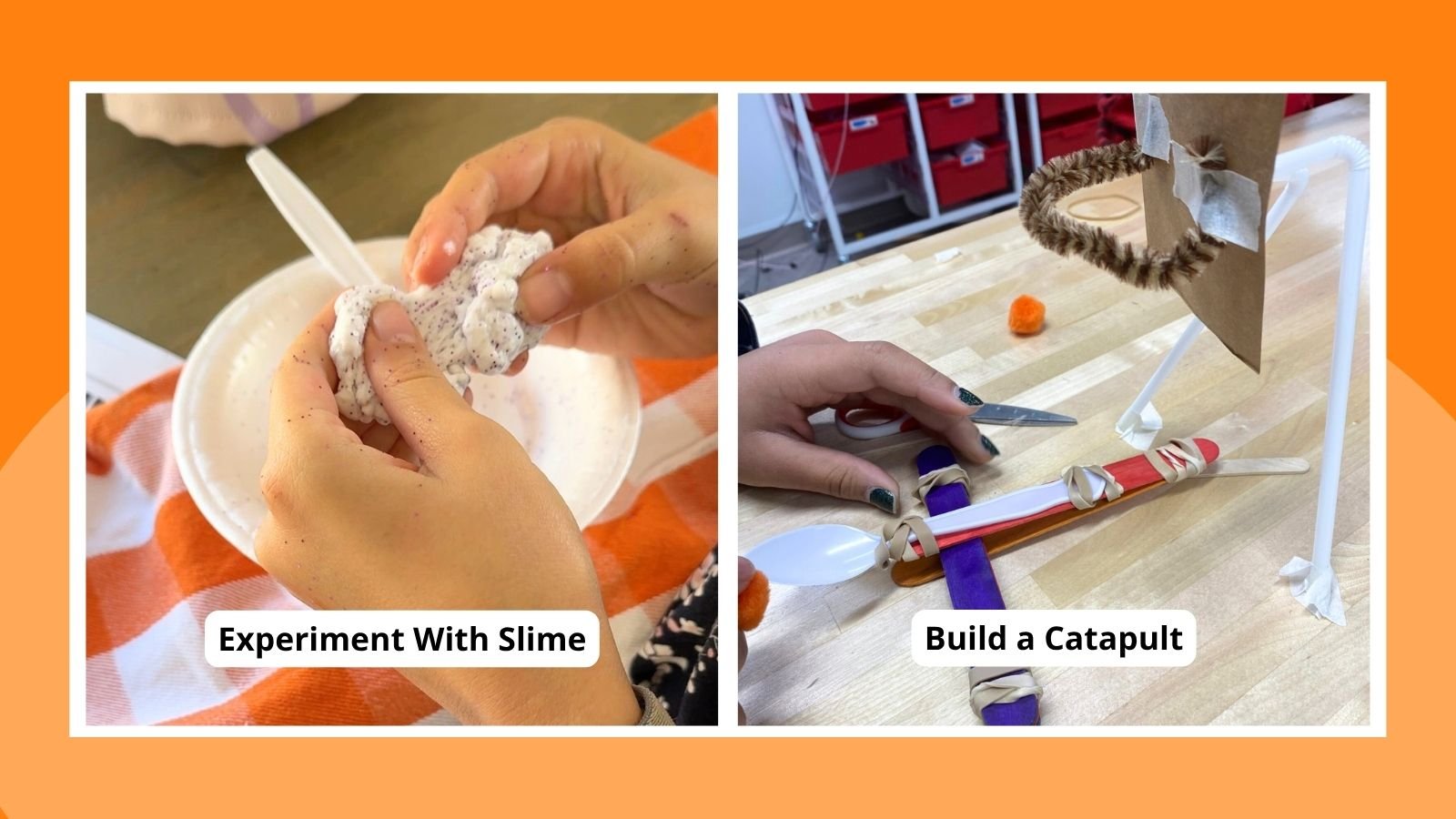
Students build a simple catapult using craft sticks and a spoon. By launching small objects, they explore how pushing harder or softer changes motion and distance, helping them understand force and movement. Just attach the craft sticks together with rubber bands and attach the spoon to use as the launcher.
2. Demonstrate the power of a pulley
- Difficulty: Easy
- Materials: Basic
- Materials Needed: Rolling pin, 2 chairs, string, small objects
Students lift objects using a homemade pulley system. Place two chairs back-to-back with the rolling pin spanning from one chair to the other. Tie objects to the string and drape the string over the rolling pin. Students discover how pulleys make lifting easier and learn how forces help move objects upward. Have students compare lifting the same object with and without the pulley to notice how the effort changes.
3. Race balloon rockets
- Difficulty: Easy
- Materials: Basic
- Materials Needed: Balloons, string, tape, straws
Thread string through a straw, blow up a balloon (don’t tie the end), and tape it to the straw. Balloon rockets zoom along strings when air escapes. Students see how pushing air backward makes the balloon move forward, demonstrating push and pull forces. They can test different balloon sizes or string angles to see how each change affects speed and distance.
4. Lift a bag with balloons
- Difficulty: Advanced
- Materials: Medium
- Materials Needed: Helium balloons, string, small bag, tape
Students test how many balloons it takes to lift a lightweight bag attached with string. They explore upward force, weight, and balance in a hands-on way. Have them add or remove small objects from the bag to see how weight affects whether it rises, falls, or stays balanced.
5. Blow up a balloon with baking soda and vinegar
- Difficulty: Easy
- Materials: Basic
- Materials Needed: Baking soda, vinegar, balloon, bottle
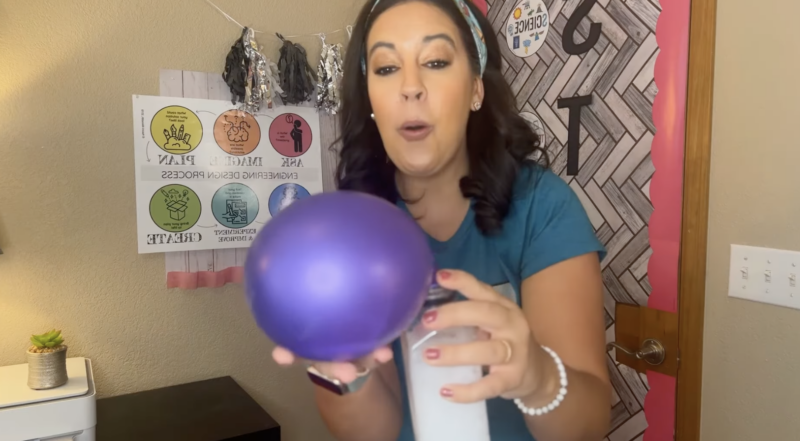
Combine baking soda and vinegar in a bottle to inflate a balloon. Students observe chemical reactions producing gas. As the balloon fills, students can see that gas takes up space even when they cannot see it.
Learn more: Baking Soda and Vinegar Balloon (Guide + Printable Reflection Sheet)
6. Blow up your fingerprints
- Difficulty: Easy
- Materials: Basic
- Materials Needed: Balloons, marker pens
Students press fingerprints onto balloons and then inflate them to see the ridges stretch. This activity explores air pressure and elasticity.
7. Try this hair-raising activity
- Difficulty: Easy
- Materials: Basic
- Materials Needed: Balloons, hair
Rubbing balloons on hair creates static electricity. Students see invisible forces when hair stands up or sticks to the balloon. They can test the balloon near small paper pieces to observe how static charge can attract lightweight objects.
8. Move a paper drawing with static electricity
- Difficulty: Easy
- Materials: Medium
- Materials Needed: Tissue paper, balloons, string
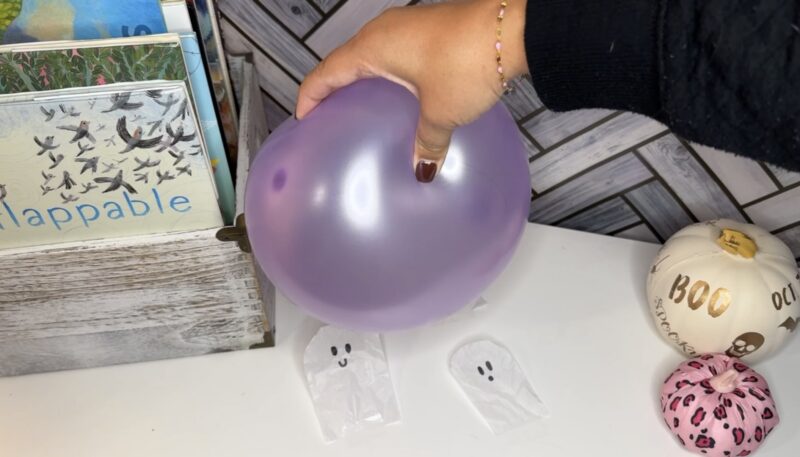
Students use charged balloons to move lightweight paper shapes without touching them, showing how forces can act from a distance. Just rub the balloons on hair or something fuzzy to charge them. Have students compare different paper sizes or shapes to see which ones move most easily.
Ecosystem Kindergarten Science Experiments
9. Germinate a seed
- Difficulty: Easy
- Materials: Basic
- Materials Needed: Bean seeds, paper towels, jar
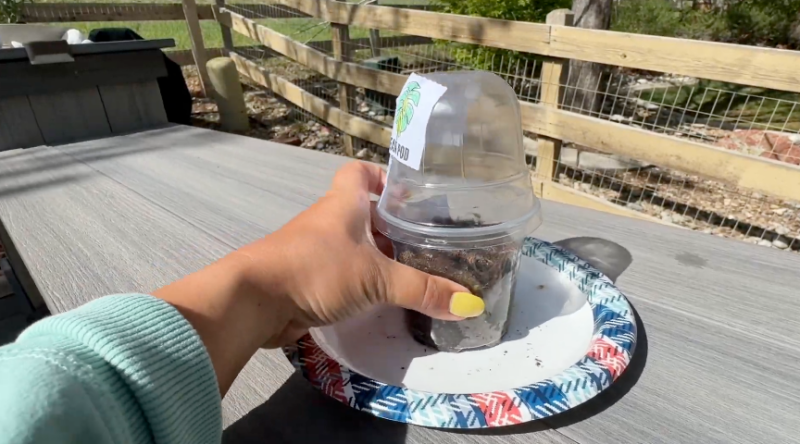
Students place seeds in damp paper towels and observe them over several days. They watch roots grow downward and shoots grow upward, learning that plants need water, air, and time to grow. Students can record daily changes in a simple science journal to track how the seed develops.
10. Discover how plants breathe
- Difficulty: Easy
- Materials: Basic
- Materials Needed: Leaves, jars, water
Leaves placed in water release tiny bubbles. Students observe that plants exchange gases, helping them understand that plants need air just like animals. Have students compare leaves placed in sunlight and shade to see whether the number of bubbles changes.
11. Change the color of flowers
- Difficulty: Easy
- Materials: Medium
- Materials Needed: White flowers, water, food coloring, jars
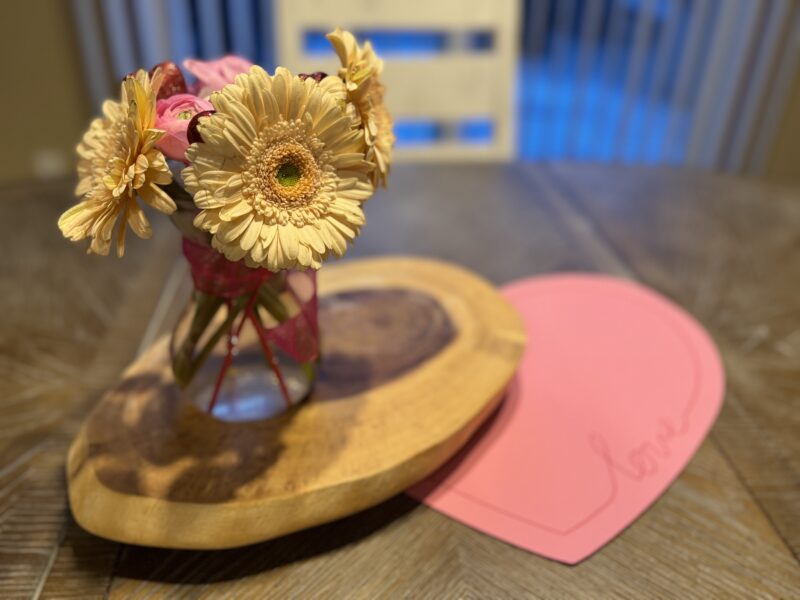
Students place flowers in colored water and watch the petals slowly change color. This shows how plants move water through their stems to all parts of the plant. They can compare different colors or flower types to see which shows the change most clearly.
12. Watch water move colors
- Difficulty: Easy
- Materials: Basic
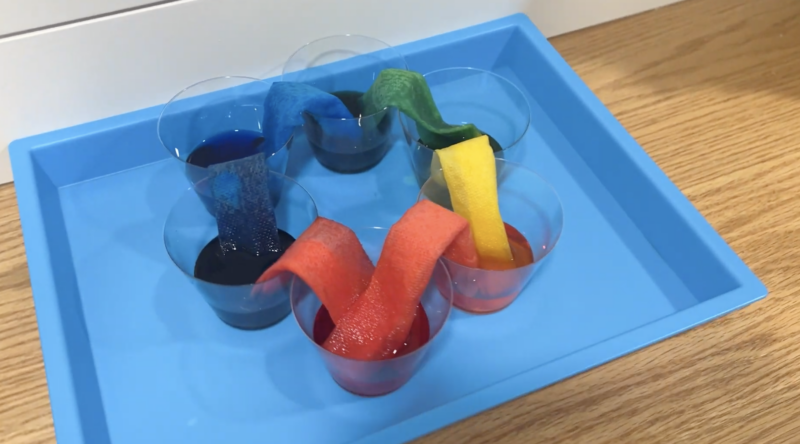
- Materials Needed: 6 small cups, water, food coloring, paper towels.
Fill three small cups with water and add food coloring in each: red, yellow, and blue. Then, set an empty cup next to each filled cup, creating a circle. Add a folded strip of paper towel inside each filled up, then into an empty cup, alternating the pattern. Check back in about an hour and notice how the colored water moved to each cup!
Learn more: Rainbow Walking Water Experiment: How-To Plus Free Worksheet
13. Grow crystal letters
- Difficulty: Easy
- Materials: Basic
- Materials Needed: Pipe cleaners, jar, crystal solution
Students shape pipe cleaners into letters or numbers and place them in solution. Over time, crystals form, helping students observe slow changes and growth. Have students check their designs each day and describe how the crystals change in size, shape, and texture.
14. Find out what sinks and what floats
- Difficulty: Easy
- Materials: Basic
- Materials Needed: Water container, small objects
Students predict and test objects in water. They compare results and learn that some objects float while others sink based on material and shape. They can sort the objects after testing and discuss which properties seemed to matter most.
15. Explore buoyancy with oranges
- Difficulty: Easy
- Materials: Basic
- Materials Needed: Oranges, water container
Students place peeled and unpeeled oranges in water. They observe how trapped air in the peel helps the orange float, introducing density. Have students explain why the heavier-looking orange may float while the peeled orange sinks.
16. Go on a nature scavenger hunt
- Difficulty: Easy
- Materials: Basic
- Materials Needed: Magnifying glasses
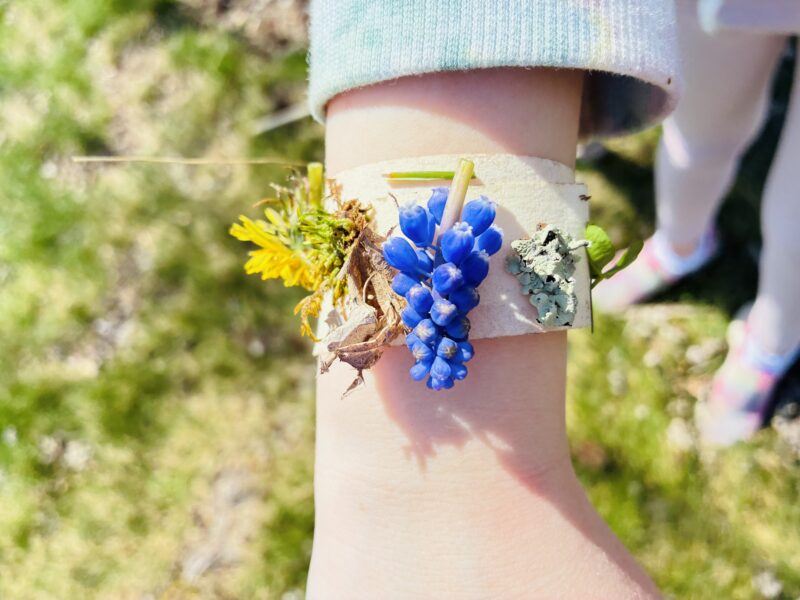
Students search outdoors for plants, soil, rocks, and insects. They observe how living and nonliving things exist together in an ecosystem. Students can sketch what they find and label examples of living and nonliving parts.
17. Eat your way through soil layers
- Difficulty: Easy
- Materials: Medium
- Materials Needed: Yogurt, granola, fruit, candy, clear cup
Students layer foods to represent soil layers. This helps them understand that soil is made of different materials that support plant and animal life. Have them compare each food layer to real soil components such as rocks, sand, clay, and humus.
18. Discover how germs spread
- Difficulty: Easy
- Materials: Basic
- Materials Needed: Glitter, soap, water
Glitter represents germs as students touch objects and each other. Washing hands shows how soap helps remove germs and keep people healthy. Students can compare rinsing with water only to washing with soap to see which removes more “germs.”
Learn more here: 8 DIY Activities To Teach Kids About Germs
19. Explore properties of mystery items
- Difficulty: Easy
- Materials: Basic
- Materials Needed: Mystery objects, bags
Students feel, shake, or smell hidden objects. They describe properties like texture and sound, practicing observation and making guesses based on evidence. Have students explain which clues helped them make each prediction before revealing the object.
Weather and Climate Kindergarten Science Experiments
20. Create a tornado in a jar
- Difficulty: Easy
- Materials: Basic
- Materials Needed: Jar, water, dish soap, glitter (optional)
Students fill a jar with water and spin it in a circular motion. A funnel-shaped vortex forms in the center, helping students observe how spinning air and water create tornado-like movement during storms. They can change the speed of the spin to see how it affects the shape and strength of the vortex. Glitter can be added to represent debris affected by the tornado.
21. Make it rain with shaving cream

- Difficulty: Easy
- Materials: Basic
- Materials Needed: Shaving cream, water, food coloring, jars
The shaving cream represents clouds holding water. As colored water is added, it becomes heavy and falls through the “cloud,” modeling how precipitation occurs. Have students count how many drops it takes before the “rain” begins to fall.
22. Suspend water inside a jar
- Difficulty: Easy
- Materials: Basic
- Materials Needed: Glass jar, water, stiff cardboard
Students turn a full jar upside down and observe how water stays inside. This demonstrates how air pressure pushes upward and holds the water in place. They can test different amounts of water or different coverings to see what keeps the seal strongest.
23. Watch popcorn kernels dance
- Difficulty: Easy
- Materials: Basic
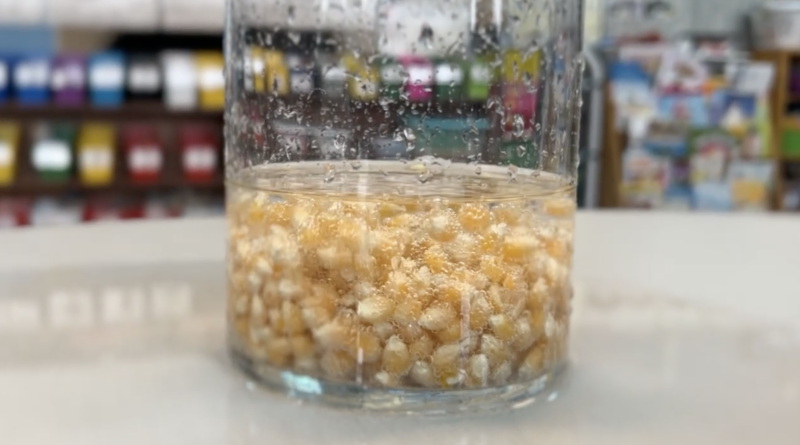
- Materials Needed: Popcorn kernels, Alka-Seltzer, water, clear glass
Gas bubbles form and rise to the surface, lifting kernels along the way. Students observe how energy and motion can be caused by a chemical reaction. Have students watch the kernels rise and fall, then discuss how the bubbles help move them.
Learn more: Dancing Popcorn (Guide + Printable Reflection Sheet)
24. Create a tower of instant ice
- Difficulty: Easy
- Materials: Basic
- Materials Needed: Water bottles, ice cubes, ceramic bowl
Students pour supercooled water over ice cubes and watch ice form instantly. This shows how temperature changes cause liquids to freeze into solids. Students can observe how quickly the liquid changes state once it touches the cold surface.
25. Assemble a lava lamp
- Difficulty: Easy
- Materials: Basic
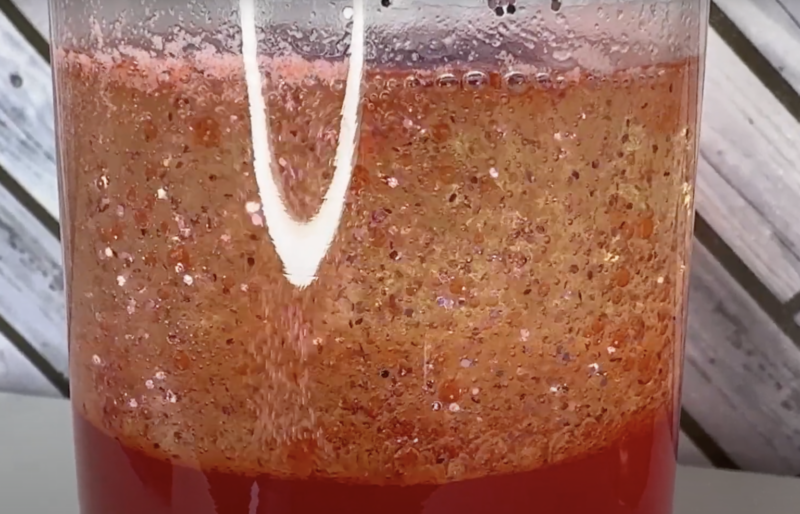
- Materials Needed: Clear bottle, oil, water, food coloring, Alka-Seltzer
Students watch colored blobs rise and fall inside the bottle. They observe how density differences and gas bubbles create motion. Have them notice how the oil and water stay separated while the bubbles carry colored water upward.
Learn more: DIY Lava Lamp Experiment: How-To Plus Free Worksheet
26. Bend light with water
- Difficulty: Easy
- Materials: Basic
- Materials Needed: Water, clear glass, paper arrow
Students look through a glass of water and notice the arrow appears to flip direction. This demonstrates how light bends, or refracts, when it moves through water. They can try moving the arrow closer or farther from the glass to see how the image changes.
Engineering and Physical Kindergarten Science Experiments
27. Build a Three Little Pigs STEM house
- Difficulty: Medium
- Materials: Medium
- Materials Needed: Straw, sticks, blocks, toy pigs
Students design houses using different materials and test them against wind or breath. They compare which materials make the strongest structures. Have students revise their designs after testing to improve stability and protection.
28. Create 3D art with a salt pendulum
- Difficulty: Advanced
- Materials: Medium
- Materials Needed: Funnel, string, colored salt, paper
A swinging pendulum made from a funnel and string drops salt onto paper. Students observe how gravity and motion create patterns and repeated paths. They can change the length of the string or strength of the push to see how the pattern changes.
29. Mix ice cream in a bag
- Difficulty: Medium
- Materials: Basic
- Materials Needed: Milk, sugar, vanilla, ice, salt, zip-top bags
Students shake the mixture and observe liquid turning solid. They learn that adding salt lowers the freezing point of ice. Have students describe how the texture changes from liquid to slushy to solid as the mixture cools.
30. Dehydrate your own raisins
- Difficulty: Easy
- Materials: Advanced
- Materials Needed: Grapes, sunlight or dehydrator
Students observe grapes shrinking as water slowly evaporates. This demonstrates how removing water changes materials. They can compare fresh grapes and dried grapes by size, texture, and weight.
31. Cook up edible glass
- Difficulty: Medium
- Materials: Basic
- Materials Needed: Sugar, pan, stove
Students watch sugar melt and harden as it cools. This shows how heating and cooling can change a material’s state. Have students observe the color, texture, and shape before and after heating.
32. Paint with salt
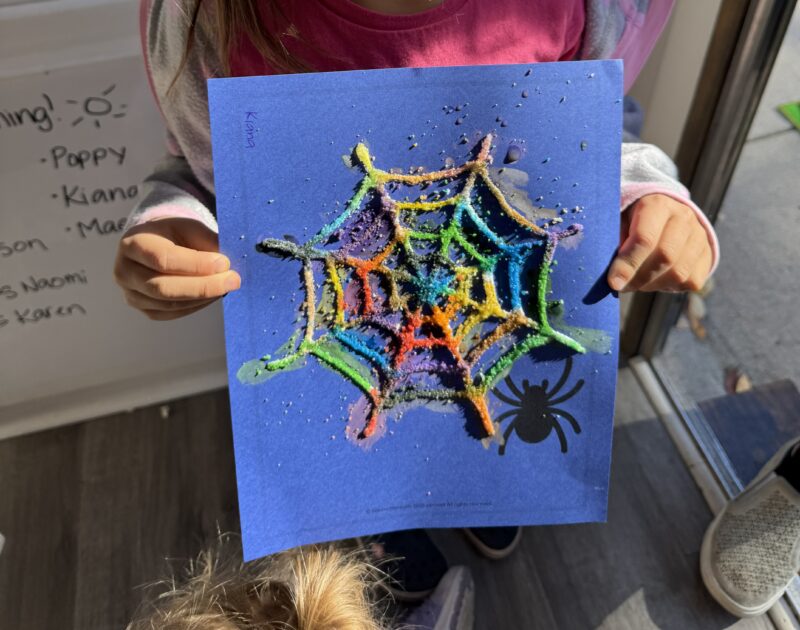
- Difficulty: Easy
- Materials: Basic
- Materials Needed: Salt, watercolors or food coloring, paper
Students sprinkle salt onto wet paint and watch the colors spread and change shape. They observe how salt absorbs water and pulls color outward, showing how materials interact with liquids. Students can compare fine salt and coarse salt to see which creates the strongest effect.
Learn more: How To Create a Salt Painting (Plus Free Printable Worksheet)
33. Play with “magic” milk
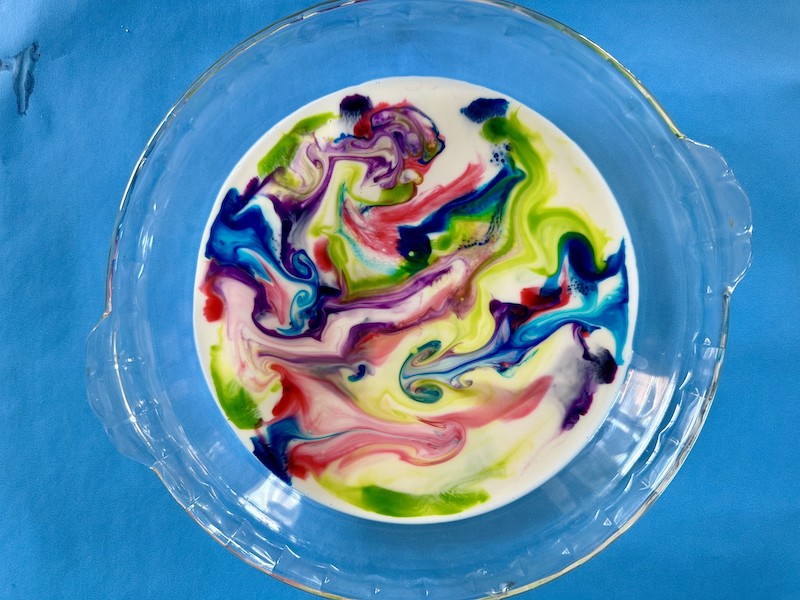
- Difficulty: Easy
- Materials: Basic
- Materials Needed: Milk, food coloring, dish soap, shallow dish
Students drip food coloring into milk and touch it with soapy cotton swabs. Colors swirl and move quickly, helping students see how soap reacts with milk fat to create motion. Have students try different types of milk to compare how the colors move.
Learn more: Magic Milk Experiment (Guide + Printable Reflection Sheet)
34. Bounce popcorn with sound waves
- Difficulty: Easy
- Materials: Basic
- Materials Needed: Bowl, plastic wrap, popcorn kernels, speaker or sound source
Students place popcorn kernels on plastic wrap stretched over a bowl. When sound plays, vibrations cause kernels to jump, demonstrating that sound is energy that causes movement. They can test different volumes or sound sources to see which creates the most movement.
35. Watch a bag with holes remain leakproof
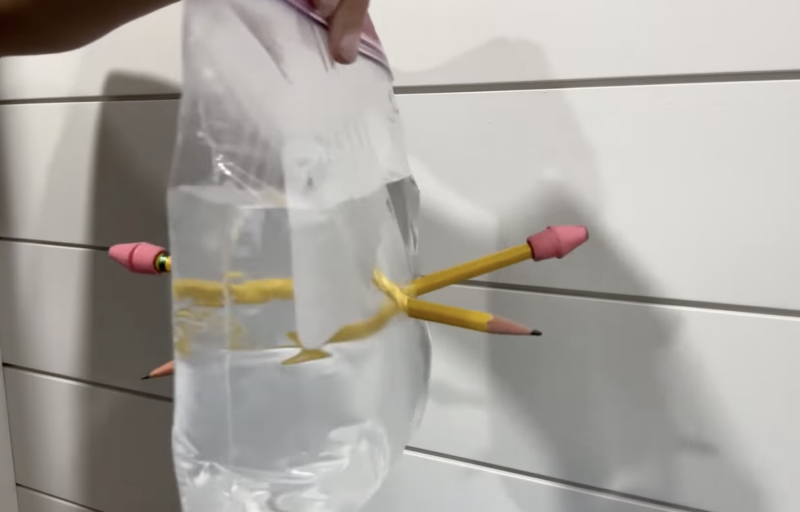
- Difficulty: Easy
- Materials: Basic
- Materials Needed: Zip-top bag, pencils, water
Poke holes in a sealed water bag to observe polymers. Students learn about material properties. As pencils or skewers pass through the bag, students can observe how the plastic stretches tightly around each object to help prevent leaks.
Learn more: Leakproof Bag (Guide + Printable Reflection Sheet)
36. Grow rock candy
- Difficulty: Medium
- Materials: Basic
- Materials Needed: Sugar, water, jar, string, stick
Students dissolve sugar in hot water and allow it to cool over time. Crystals form on the string, helping students observe slow changes and crystal growth. They can check the string each day to see how dissolved sugar becomes visible crystals.
37. Try the bouncy egg experiment
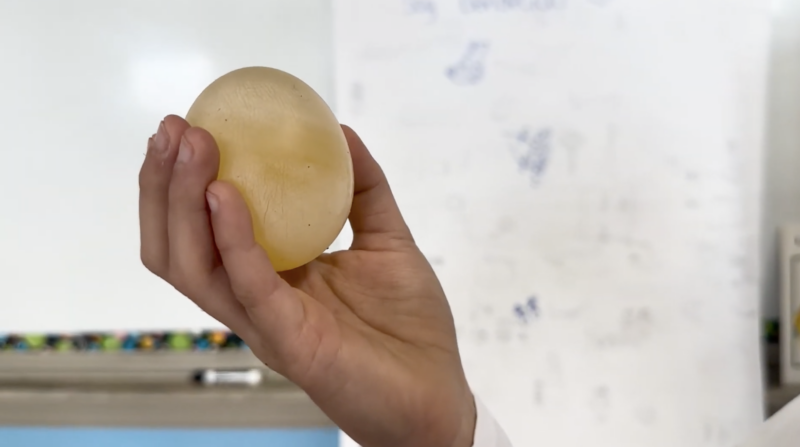
- Difficulty: Medium
- Materials: Basic
- Materials Needed: Egg, vinegar, container
Students soak an egg in vinegar and observe the shell dissolve. The egg becomes rubbery, showing how chemical reactions can change materials. Have students gently compare the egg before and after soaking to identify evidence of a chemical change.
Learn more: Egg and Vinegar Experiment (Guide + Printable Reflection Sheet)
38. Make egg geodes
- Difficulty: Advanced
- Materials: Medium
- Materials Needed: Eggshell halves, salt or borax solution, jar
Students grow crystals inside eggshells over several days. They observe how minerals form and compare their creations to real geodes. Students can use a magnifying glass to examine the crystal shapes and patterns more closely.
39. Mix up some Oobleck
- Difficulty: Easy
- Materials: Basic
- Materials Needed: Cornstarch, water, bowl
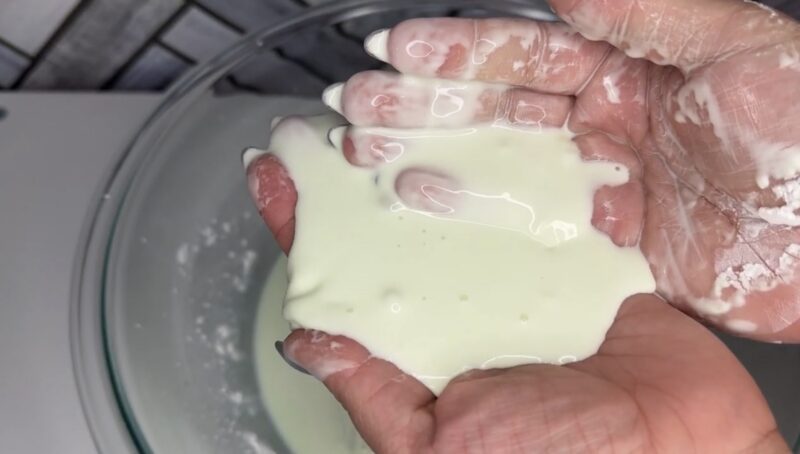
Students squeeze and release Oobleck, noticing it feels solid when pressed and liquid when relaxed. This introduces materials that behave in more than one way. Have students test how Oobleck reacts to poking, pouring, rolling, and slow pressure.
Learn more: How To Make Oobleck (Free Printable Worksheet)
40. Experiment with slime
- Difficulty: Easy
- Materials: Basic
- Materials Needed: Glue, water, borax solution, food coloring
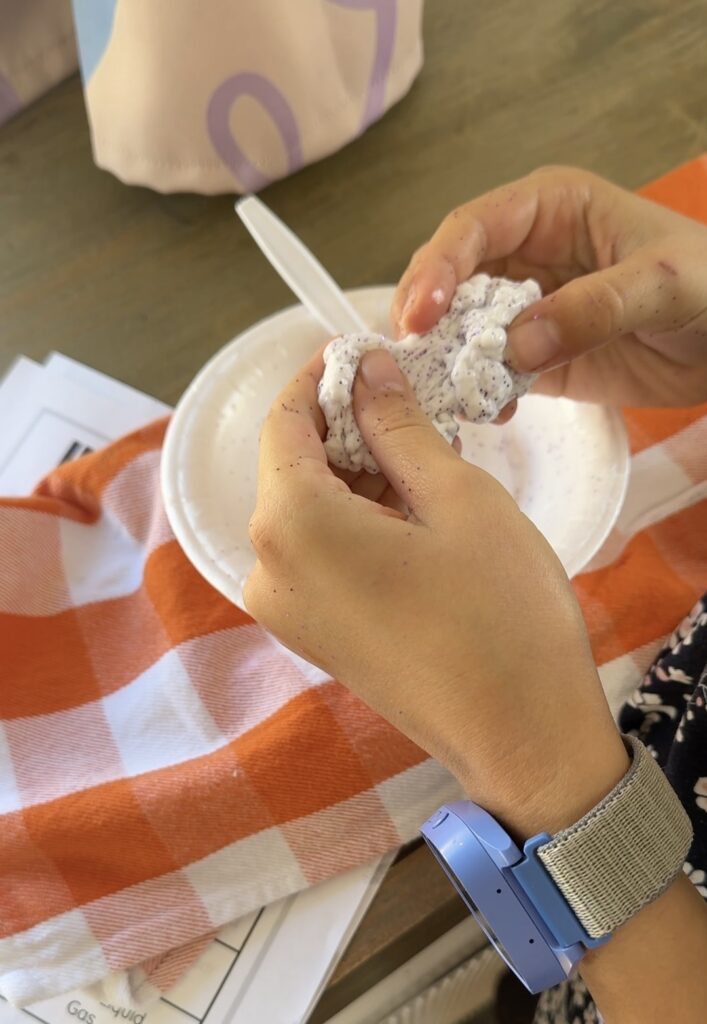
Students mix ingredients to create slime and observe how a chemical reaction forms a stretchy, moldable material. They can compare how small changes in the recipe affect stretchiness, stickiness, and firmness.
Learn more: 4 Slime Recipes (Guide + Printable Reflection Sheet)
41. Create a model of the human spine
- Difficulty: Easy
- Materials: Basic
- Materials Needed: Egg cartons, pipe cleaners
Students stack carton pieces on a pipe cleaner to form a flexible spine. They explore how bones support movement and bending. Have students bend the model gently to see how separate pieces work together to allow motion.
42. Sniff scented sensory bottles
- Difficulty: Easy
- Materials: Medium
- Materials Needed: Cotton balls, scented liquids or spices, bottles
Students smell and identify different scents. They learn how the sense of smell helps gather information about the world. Students can describe each scent using words like sweet, sour, fresh, strong, or mild before making a guess.
43. Play with magnets
- Difficulty: Easy
- Materials: Medium
- Materials Needed: Magnets, assorted small objects
Students test which objects are attracted to magnets and which are not. They explore attraction, repulsion, and magnetic force. Have students sort the objects by material and look for patterns in what magnets attract.
44. Waterproof a boot
- Difficulty: Easy
- Materials: Basic
- Materials Needed: Paper boot cutouts, wax, plastic wrap, tape
Students test different materials to keep a paper boot dry. They compare results and learn which materials repel water best. Students can use their results to choose the best material for a waterproof design.
45. Turn pennies green
- Difficulty: Easy
- Materials: Medium
- Materials Needed: Pennies, vinegar, salt, container
Students soak pennies and observe color changes over time. They see how chemical reactions can change the appearance of materials. Have students compare different cleaning solutions to see which creates the biggest change.
46. Explore prisms
- Difficulty: Easy
- Materials: Medium
- Materials Needed: Prism, sunlight or flashlight, white paper
Students shine light through a prism and observe rainbows. This shows that white light is made of many colors. They can move the prism or light source to see how the angle changes the rainbow.
47. Create echoes
- Difficulty: Easy
- Materials: Basic
- Materials Needed: Tin bucket, metal and soft objects
Students drop or tap objects and listen for echoes. They explore how sound reflects off hard surfaces. Have students compare soft and hard spaces to hear where echoes are stronger or weaker.
48. Make a volcano erupt
- Difficulty: Medium
- Materials: Medium
- Materials Needed: Baking soda, vinegar, clay or papier-mâché, tray
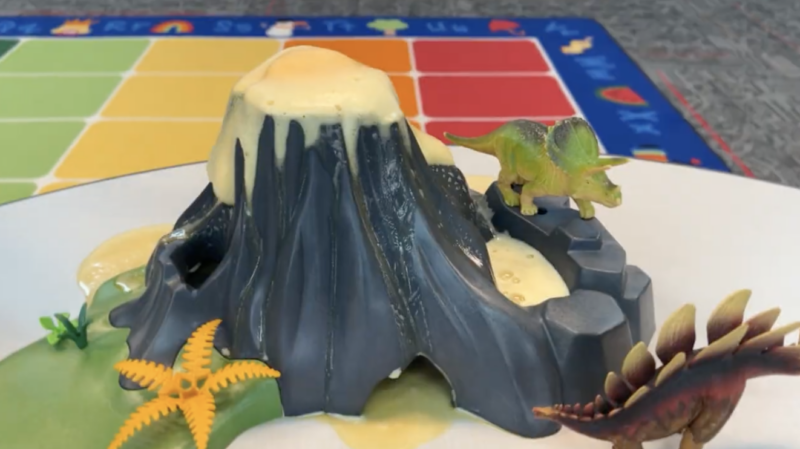
Construct a volcano and simulate an eruption. Students explore chemical reactions and Earth processes. As the “lava” bubbles out, students can observe how gas formation creates pressure and movement.
Learn more: Baking Soda Volcano (Guide + Printable Reflection Sheet)
49. Mix up a batch of elephant toothpaste
- Difficulty: Medium
- Materials: Medium
- Materials Needed: Hydrogen peroxide, yeast, dish soap, food coloring, container
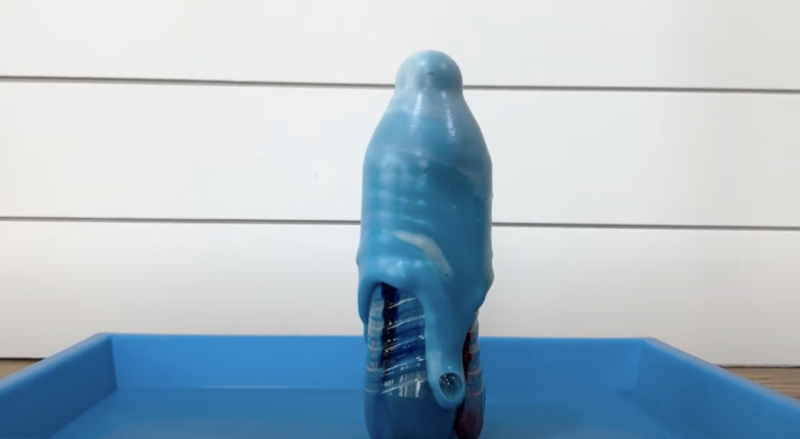
Create a foamy reaction using hydrogen peroxide and yeast. Students explore chemical reactions and catalysts. Students can watch the foam grow as oxygen gas is released during the reaction.
Learn more: Elephant Toothpaste (Guide + Printable Reflection Sheet)
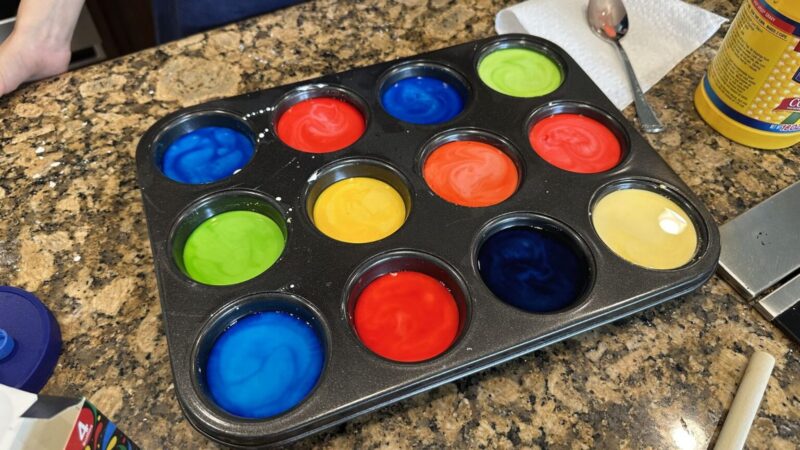
50. Make sidewalk chalk paint
- Difficulty: Medium
- Materials: Medium
- Materials Needed: Cornstarch, water, food coloring, cups, paintbrushes
Create colorful chalk paint and explore pigments and texture. Students connect art and science. Have students compare how the paint looks when wet versus dry and how texture changes on different surfaces.
Learn more: Learn How To Make Sidewalk Chalk Paint (Plus Free Printable)
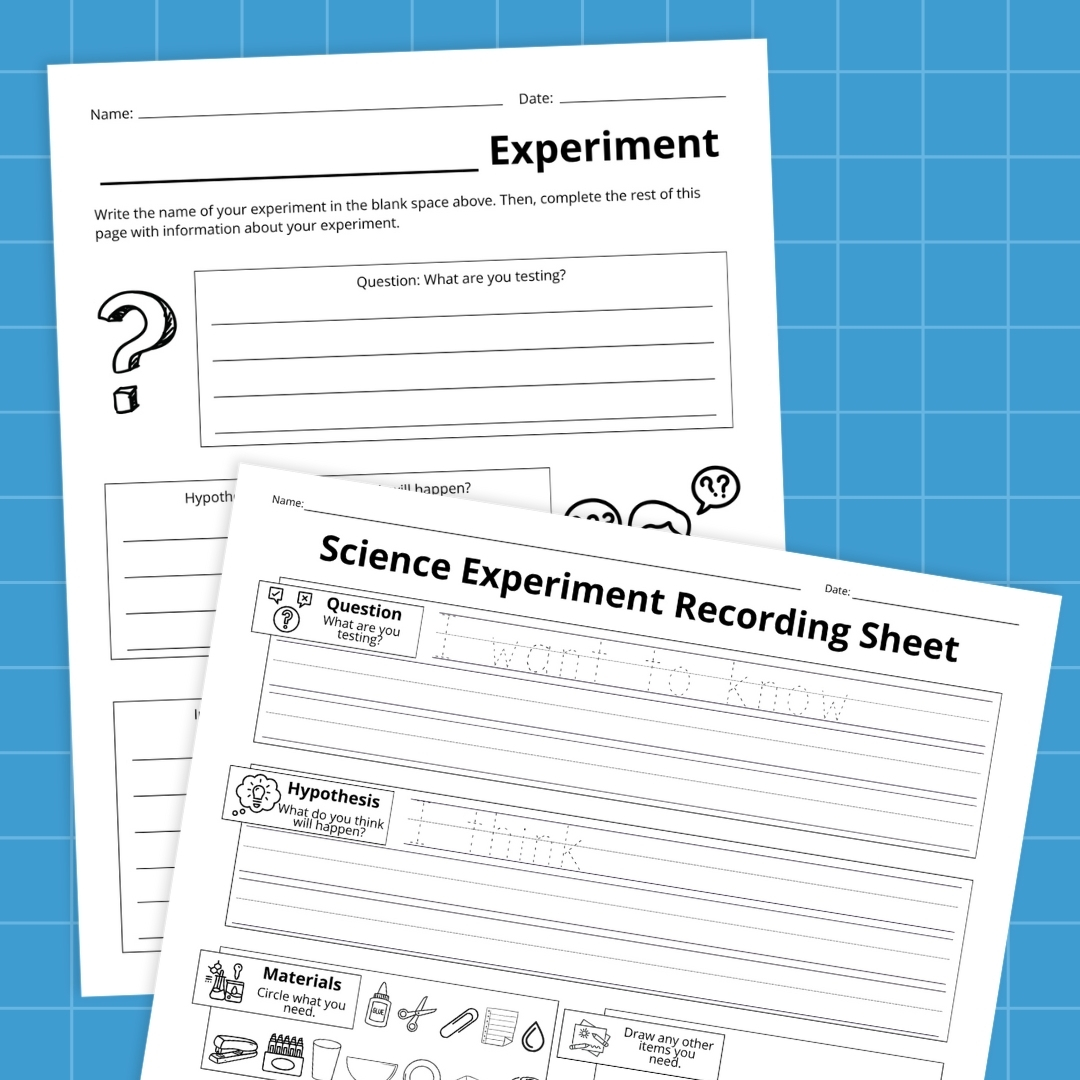
Get your free printable science experiment recording sheets!
Download your free experiment recording sheets to help your class master the scientific method! Just click on the link below and fill out the form to get yours.