
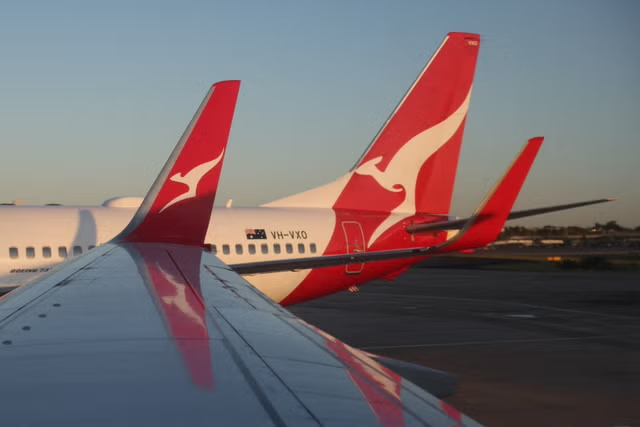
Australia’s Qantas Airways, Scandinavia’s Scandinavian Airlines (SAS), and Air New Zealand announced airfare increases on Tuesday, citing a sudden surge in jet fuel costs linked to the escalating conflict in the Middle East.
The three carriers said the spike in energy prices had significantly increased operating costs, forcing them to pass some of the burden on to passengers through higher ticket prices. Airlines are particularly sensitive to fuel price swings because fuel typically accounts for a substantial share of operating expenses.
The surge in costs has been driven by disruption to global oil markets following the conflict in the Middle East, which has pushed jet fuel prices sharply higher in recent days. According to industry estimates, fuel that previously cost around $85–$90 per barrel has surged to between $150 and $200, creating severe pressure on airline margins.
Qantas said it would raise fares on international routes as the airline grapples with rising fuel expenses and operational challenges linked to the conflict. The Australian carrier is also reviewing how it deploys aircraft on long-haul routes, particularly to Europe, where demand remains strong despite disruptions to airspace in the region.
SAS also confirmed it had introduced temporary price increases, stating that the speed and scale of the fuel price spike left the airline with little choice but to adjust ticket prices. The Scandinavian carrier said the measure was necessary to maintain stable operations during a period of volatile energy markets.
Meanwhile, Air New Zealand announced fare adjustments across its network. The airline increased one-way economy fares by NZ$10 on domestic routes, NZ$20 on short-haul international services and NZ$90 on long-haul flights, warning that further changes may follow if fuel prices remain elevated.
Air New Zealand also signalled the uncertainty facing the aviation sector by suspending its financial outlook for 2026, noting that rapidly changing fuel costs make it difficult to forecast earnings.
The conflict has also created broader challenges for airlines, including airspace restrictions and the need to reroute flights away from parts of the Middle East. These changes have increased flight times and fuel consumption, further driving up costs across the industry.
Analysts say that if oil prices remain high, more airlines around the world may be forced to raise fares or reduce capacity in order to protect profitability. The developments highlight how geopolitical tensions can quickly ripple through global travel markets, affecting both airline finances and ticket prices for passengers.