
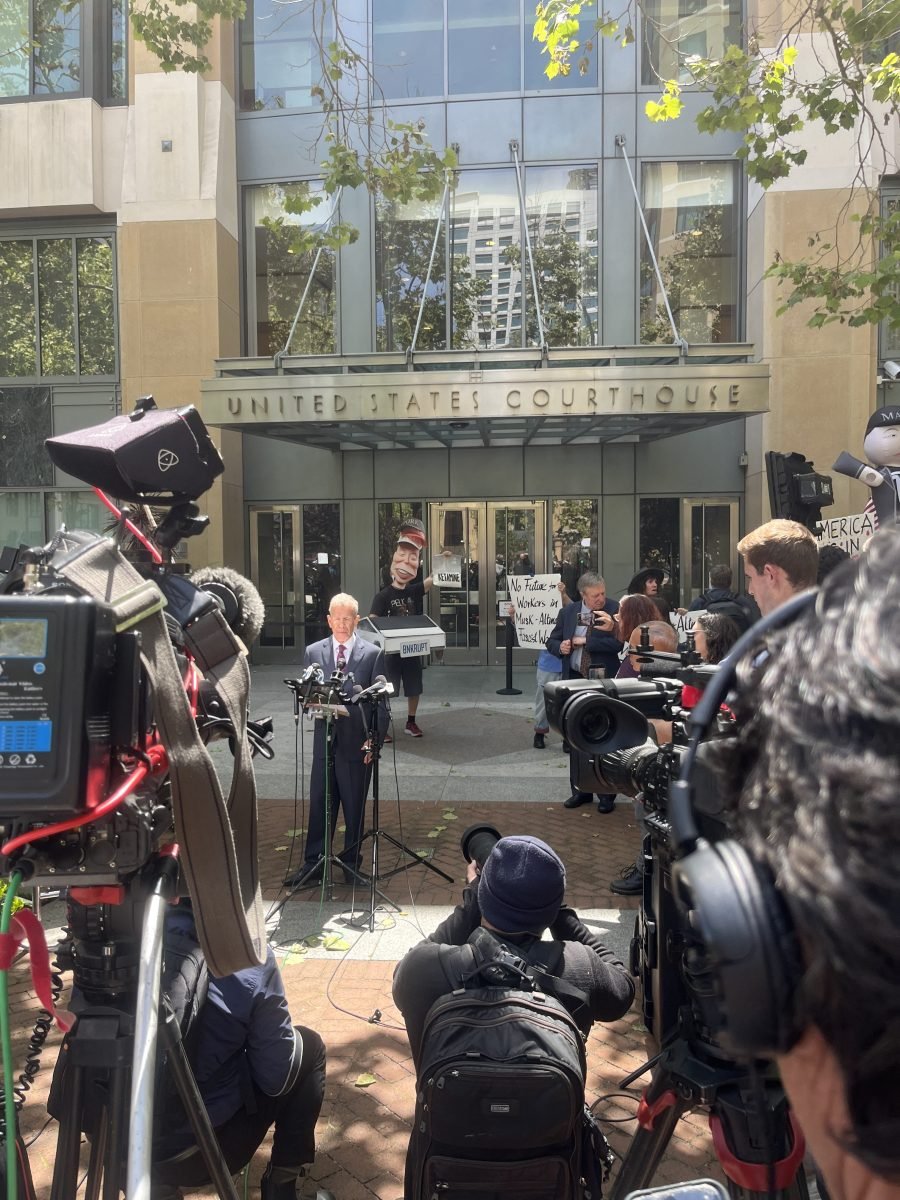
Nine California jurors are currently deliberating on the fate of OpenAI, a renowned artificial intelligence lab that is at the center of a legal battle involving Elon Musk and the company’s cofounders.
The trial has delved into various aspects, from the founders’ split in 2018 to Sam Altman’s termination and subsequent rehiring in 2023. However, the jurors are tasked with addressing specific questions in their deliberations.
The key issues being considered include whether there was a breach of charitable trust by OpenAI and its cofounders, Sam Altman and Greg Brockman, in their handling of Musk’s donations. Additionally, the jurors are examining whether there was unjust enrichment by the defendants and if Microsoft, through its involvement with OpenAI, played a role in breaching charitable trust.
OpenAI has presented three main arguments in its defense that the jury will evaluate. These arguments focus on the statute of limitations, unreasonable delay in filing the lawsuit, and the concept of unclean hands in Musk’s conduct towards OpenAI.
A ruling in favor of Musk could potentially have significant implications for OpenAI, possibly leading to the company’s restructuring. However, the exact outcomes remain uncertain, and further hearings will be held to determine the consequences of such a verdict.
In the case of breach of charitable trust, Musk’s legal team asserts that the defendants were aware of his intention to support a nonprofit organization dedicated to ensuring the responsible use of AI for the benefit of society. They highlight a major investment by Microsoft in OpenAI’s for-profit arm as a turning point that diverted funds away from the intended charitable purpose.
Conversely, OpenAI contends that Musk’s donations were utilized as intended, with all funds being utilized by the organization before the specified key dates. They argue that the for-profit affiliate has contributed to the foundation’s mission and generated substantial value to support its nonprofit activities.
Regarding unjust enrichment, the plaintiffs argue that the defendants, including OpenAI founders and Microsoft, benefited personally from Musk’s donations, rather than advancing the charitable mission of the organization. They claim that the for-profit arm of OpenAI focused on commercial endeavors, while the nonprofit entity remained inactive.
OpenAI rebuts these claims by emphasizing that all of Musk’s contributions were utilized by the foundation in a manner consistent with its mission. They maintain that equity distributions occurred after Musk’s departure from the organization and that the for-profit activities were aligned with the nonprofit’s goals.
In the context of aiding and abetting, Musk’s case centers on Microsoft’s involvement in the governance of OpenAI and its potential impact on the nonprofit’s mission. Microsoft denies any knowledge of specific conditions on Musk’s donations and asserts that its investments were instrumental in OpenAI’s achievements.
The issue of statute of limitations raises questions about the timing of Musk’s lawsuit and whether he had sufficient knowledge of the alleged breaches before filing. OpenAI argues that Musk had ample information about the organization’s activities and that his formal association with the organization had ended years prior to the lawsuit.
The concept of unreasonable delay is another point of contention, with OpenAI claiming that Musk’s suit was prompted by his changing views on the organization rather than any new developments. They argue that forcing a restructuring of OpenAI after several years of operation is unwarranted.
Lastly, the notion of unclean hands focuses on Musk’s actions, such as pursuing his own AI initiatives while associated with OpenAI, as well as his attempts to exert control over the organization. OpenAI’s legal team argues that Musk’s conduct undermined the organization and compromised its mission.
In conclusion, the deliberations of the California jurors will determine the outcome of the legal battle between Elon Musk and OpenAI. The complex issues at play highlight the challenges of balancing charitable objectives with commercial activities in the realm of artificial intelligence. As the trial unfolds, the implications for both OpenAI and the broader AI community remain uncertain.