
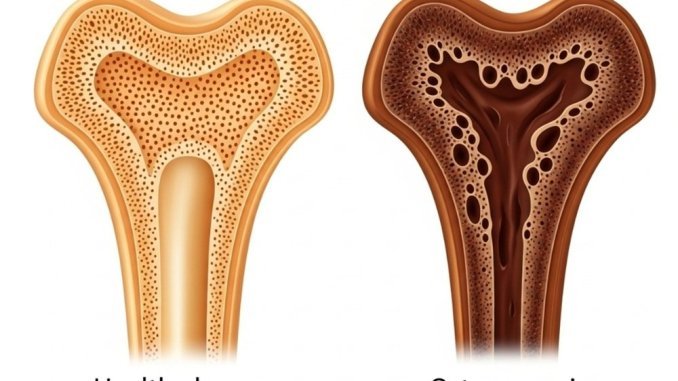
The article discusses the hidden signals that can speed up bone loss after menopause, focusing on the role of serotonin in bone deterioration. While conventional care often overlooks the underlying metabolic dysfunction driving osteoporosis, recent research highlights the impact of peripheral serotonin on bone health.
A study published in Biomolecules and Biomedicine examined blood markers related to serotonin in postmenopausal women with varying bone densities. The findings revealed that higher levels of serotonin markers correlated with faster bone breakdown and poorer bone strength, ultimately leading to osteoporosis. This suggests that serotonin plays a crucial role in signaling bone loss long before fractures occur.
Further analysis by bioenergetic researcher Georgi Dinkov delves into the mechanistic explanation of how elevated serotonin triggers a stress response that accelerates bone loss. By activating the hypothalamic-pituitary-adrenal axis and raising cortisol levels, serotonin sets off a chain reaction that breaks down bone tissue over time. Understanding this hormonal cascade sheds light on why bone loss worsens with aging and menopause.
To address the root cause of bone loss driven by elevated serotonin, several steps can be taken. These include shutting down chronic stress signals, boosting calming brain chemistry, eating in a way that prevents gut-based serotonin production, maintaining consistent energy and nutrient intake, and using gentle strength work to signal safety to bone tissue. By focusing on restoring metabolic balance and addressing stress chemistry, it is possible to halt bone deterioration and promote bone rebuilding.
In conclusion, the article emphasizes the importance of addressing the metabolic dysfunction underlying osteoporosis rather than simply treating symptoms in isolation. By targeting serotonin levels and stress chemistry, it is possible to prevent and reverse bone loss effectively. This holistic approach not only supports bone health but also improves overall metabolic function and well-being.