
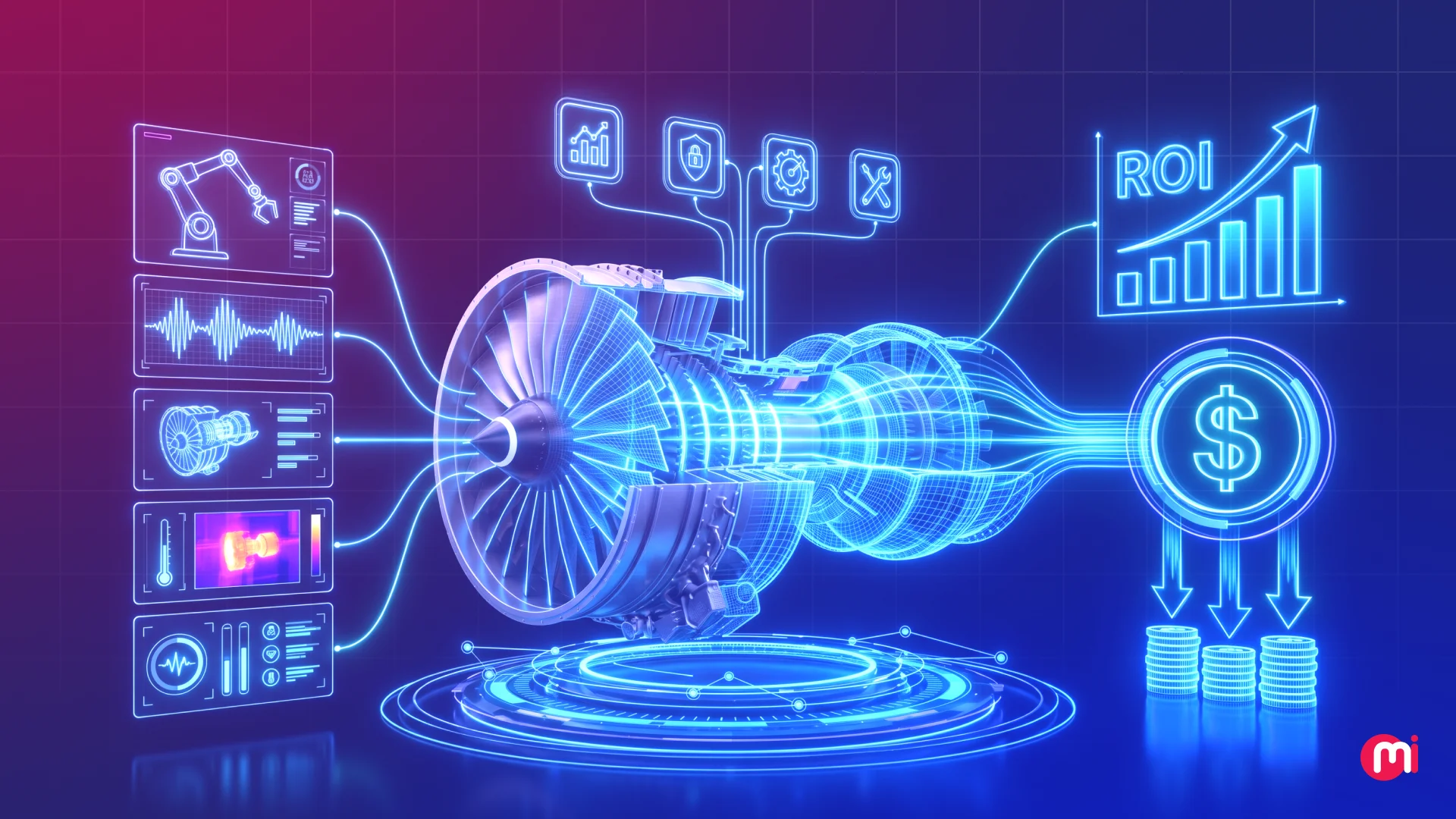

Asset-intensive industries face significant challenges when it comes to maintenance failures, as they can lead to substantial revenue risks.
In manufacturing or energy operations, just one hour of unplanned downtime can result in financial losses ranging from thousands to millions of dollars, depending on the scale of the facility. Despite this, many organizations still rely on fixed maintenance schedules that do not accurately reflect the actual conditions of equipment.
The main issue lies in the lack of visibility. Without real-time insights into how equipment functions in the field, maintenance decisions are made based on assumptions rather than actual performance conditions. As systems become more interconnected and complex, this approach becomes increasingly unsustainable.
Digital twins present a more intelligent alternative. By creating a live digital replica of physical assets, organizations can continuously monitor performance, identify issues early, and make informed maintenance decisions before problems escalate into costly disruptions.
Key Takeaways
- Digital twins can reduce unplanned downtime by 20-50% through early fault detection and continuous performance monitoring.
- Condition-based maintenance supported by digital twins can deliver 15-25% maintenance cost savings by optimizing service schedules.
- Digital twin insights help improve capacity factors from 85-90% to 92-96%, increasing overall asset productivity.
- Facilities can reduce forced outage losses of $500K-$2M per event by detecting risks earlier and preventing unexpected shutdowns.
- Simulation-driven optimization can improve thermal efficiency by 0.4-2.5%, contributing to measurable operating cost reductions.
- Predictive monitoring helps reduce emergency spare parts procurement and unnecessary inspections, improving lifecycle maintenance efficiency across asset fleets.
Understanding Digital Twins
A digital twin is a real-time virtual model of a physical asset, system, or environment that utilizes IoT sensor data, analytics, and simulation models to replicate operational behavior.
This digital model continuously updates as the physical asset operates, providing maintenance teams with the ability to monitor performance, detect issues early, and understand how equipment responds under various conditions.
Unlike traditional monitoring tools, a digital twin goes beyond showing status; it facilitates the simulation of scenarios, prediction of failures, and enables smarter maintenance decisions throughout the asset lifecycle.
In maintenance programs, digital twins enable the transition from routine inspections to condition-based servicing, allowing teams to focus their efforts where they are most needed.
The Drawbacks of Traditional Maintenance Models
Many organizations rely on maintenance methods designed for earlier industrial systems, lacking real-time visibility and leading to higher service costs over time.
Reactive Maintenance: Repairs after failure
Reactive maintenance initiates only after equipment breakdowns occur.
This results in:
- Unexpected downtime
- Emergency repair costs
- Production interruptions
- Rushed procurement of spare parts
- Increased workforce pressure during outages
Emergency repairs typically cost significantly more than planned maintenance activities.
Preventive Maintenance: Fixed schedules instead of real conditions
Preventive maintenance follows predefined service intervals. However, equipment condition may not align with these timelines.
This often leads to:
- Unnecessary inspections
- Early part replacements
- Repeated servicing of healthy equipment
- Increased labor effort without clear value
Teams end up spending time maintaining assets that may not actually require attention.
Limited Asset Visibility: Lack of real-time performance insight
Traditional systems do not offer continuous monitoring between inspections.
Consequently:
- Early warning signs go unnoticed
- Maintenance planning becomes reactive
- Hidden performance issues remain unresolved
- Failures manifest suddenly rather than gradually
As assets become increasingly interconnected and distributed, this lack of visibility amplifies maintenance complexity and long-term operating costs.
| Maintenance Type | Reactive | Preventive | Predictive with Digital Twin |
| Downtime Risk | High | Medium | Low |
| Maintenance Timing | After Failure | Fixed Schedule | Condition-based |
| Operational Visibility | Limited | Partial | Real-time |
| Maintenance Cost | High | Moderate | Optimized |
Benefits of Digital Twins in Maintenance Cost Reduction
Digital twins enhance maintenance practices by connecting physical assets with real-time operational data, allowing teams to have continuous visibility into equipment performance under actual conditions.
By moving away from fixed schedules and reactive responses, organizations can plan maintenance based on performance insights, leading to reductions in unnecessary servicing, prevention of unexpected disruptions, and enhancement of asset reliability over time. Here are the main ways digital twins facilitate more efficient maintenance programs:
1. Predictive Maintenance Instead of Reactive Repairs
Digital twins enable teams to continuously monitor asset behavior, facilitating the early detection of warning signs before failures occur.
With predictive maintenance, organizations can:
- Identify performance changes early
- Detect abnormal equipment behavior
- Forecast possible component failures
- Schedule maintenance at optimal times
- Avoid emergency repair situations
This approach minimizes unexpected service events and allows maintenance teams to operate in a more planned and controlled manner.
2. Reduced Unplanned Downtime
Unplanned downtime significantly contributes to maintenance costs by disrupting operations, delaying production, and increasing recovery expenses.
Through continuous visibility into asset performance provided by digital twins, organizations can reduce downtime by 20-50%, enabling them to identify risks early and take preemptive measures before failures impact operations.
With digital twins, organizations can:
- Monitor equipment health in real time
- Detect performance deviations early
- Receive alerts before critical failures occur
- Plan maintenance during scheduled service windows
- Minimize emergency shutdown situations
This results in improved asset availability and smoother operations across facilities.
3. Optimized Spare Parts Inventory
Proper spare parts planning becomes challenging when teams lack precise information on component failure times. This often leads to overstocking certain parts and urgently procuring others during breakdowns.
Digital twins enhance inventory planning by illustrating how equipment components wear over time. Teams can anticipate replacements in advance, avoiding last-minute procurement decisions.
With digital twins, organizations can:
- Predict when components are likely to require replacement
- Reduce emergency spare parts purchases
- Avoid storing unnecessary inventory
- Plan procurement based on actual usage patterns
- Enhance coordination between maintenance and supply teams
This results in reduced inventory holding costs and improved spare parts availability when needed.
4. Remote Monitoring Across Distributed Assets
Managing maintenance across multiple locations becomes challenging without centralized visibility. Teams often rely on manual reporting or site visits to understand asset conditions.
Digital twins enable organizations to remotely monitor equipment through a unified digital platform. This allows maintenance teams to track performance across facilities without physically being present at each site.
With digital twins, organizations can:
- Monitor asset health across multiple sites from a single platform
- Reduce the need for frequent on-site inspections
- Respond promptly to performance issues in remote locations
- Support maintenance teams with real-time performance data
- Enhance coordination across distributed operations
This simplifies maintenance programs, especially for organizations operating extensive infrastructure networks or multi-site facilities.
5. Faster Root Cause Analysis
Identifying the exact cause of equipment failures can be time-consuming. Teams often review logs, inspect components manually, and explore multiple possibilities before pinpointing the issue.
Digital twins expedite this process by providing a connected view of system behavior under actual operating conditions. Teams can analyze performance changes and identify problems more swiftly.
With digital twins, organizations can:
- Trace performance issues across interconnected components
- Review historical and real-time asset behavior together
- Simulate operating conditions that led to failures
- Accurately identify the source of faults
- Reduce troubleshooting time during service events
This enables maintenance teams to resolve issues quicker and restore operations with minimal disruption.
6. Prolonged Asset Lifespan
Equipment tends to deteriorate faster when maintenance does not align with actual operating conditions. Delayed servicing increases the risk of failure, while premature servicing raises unnecessary replacement costs.
Digital twins assist teams in maintaining assets based on real usage patterns and performance behavior, facilitating more balanced and timely maintenance decisions throughout the asset lifecycle.
With digital twins, organizations can:
- Service equipment based on actual condition rather than fixed schedules
- Detect stress patterns before causing damage
- Avoid unnecessary part replacements
- Minimize repeated wear due to improper maintenance timing
- Enhance long-term asset reliability
This extends equipment life and reduces the need for premature capital replacements.

Breakdown of Maintenance Savings with Digital Twins
Digital twins reduce maintenance costs across various areas of asset operations. Instead of enhancing a single maintenance activity, they aid organizations in continuously monitoring performance, adjusting service schedules, and responding early to equipment risks.
One of the primary savings stems from reducing unplanned downtime. Digital twins enhance operational efficiency and minimize downtime. With continuous monitoring and early warning alerts, teams can address issues before they escalate into forced outages or emergency shutdown events.
Maintenance scheduling also becomes more efficient. Instead of adhering to fixed inspection intervals, servicing decisions can be based on actual equipment condition and performance behavior. This reduces unnecessary maintenance work across asset fleets.
Improved spare parts planning is another benefit. Predictive insights facilitate preparations for replacements in advance, preventing urgent procurement during breakdown scenarios.
Digital twins also contribute to extending equipment life. Simulation models aid in recognizing stress patterns early, enabling teams to adjust operations and prevent avoidable wear on critical components.
In large industrial settings, digital twins can even boost operational efficiency by optimizing performance conditions, leading to additional cost savings over time.
| Savings Source | Typical Impact Range |
| Reduced unplanned downtime | 20 – 50% reduction |
| Optimized maintenance scheduling | 15 – 25% cost savings |
| Lower spare parts inventory | Reduced emergency procurement costs |
| Extended equipment life | Multi-year lifecycle savings |
| Improved thermal efficiency | 0.4 – 2.5% improvement |
Real-World Economic Impact from Industrial Assets
The impact of digital twins becomes more apparent when viewed at the facility level. Organizations overseeing large industrial assets often observe tangible improvements after implementing digital twin-enabled monitoring and predictive maintenance strategies.
Extensive refinery studies, analyzing over 150 digital twin deployments, report maintenance cost reductions of 25-55%, with typical ROI achieved within 12-36 months, showcasing how predictive monitoring and condition-based servicing translate into measurable financial outcomes at the facility level.
For instance, a standard 500 MW combined-cycle power plant may spend between $8 million and $15 million annually on maintenance. With digital twin support, facilities can reduce this cost by approximately $1.2 million to $3.8 million each year.
These