
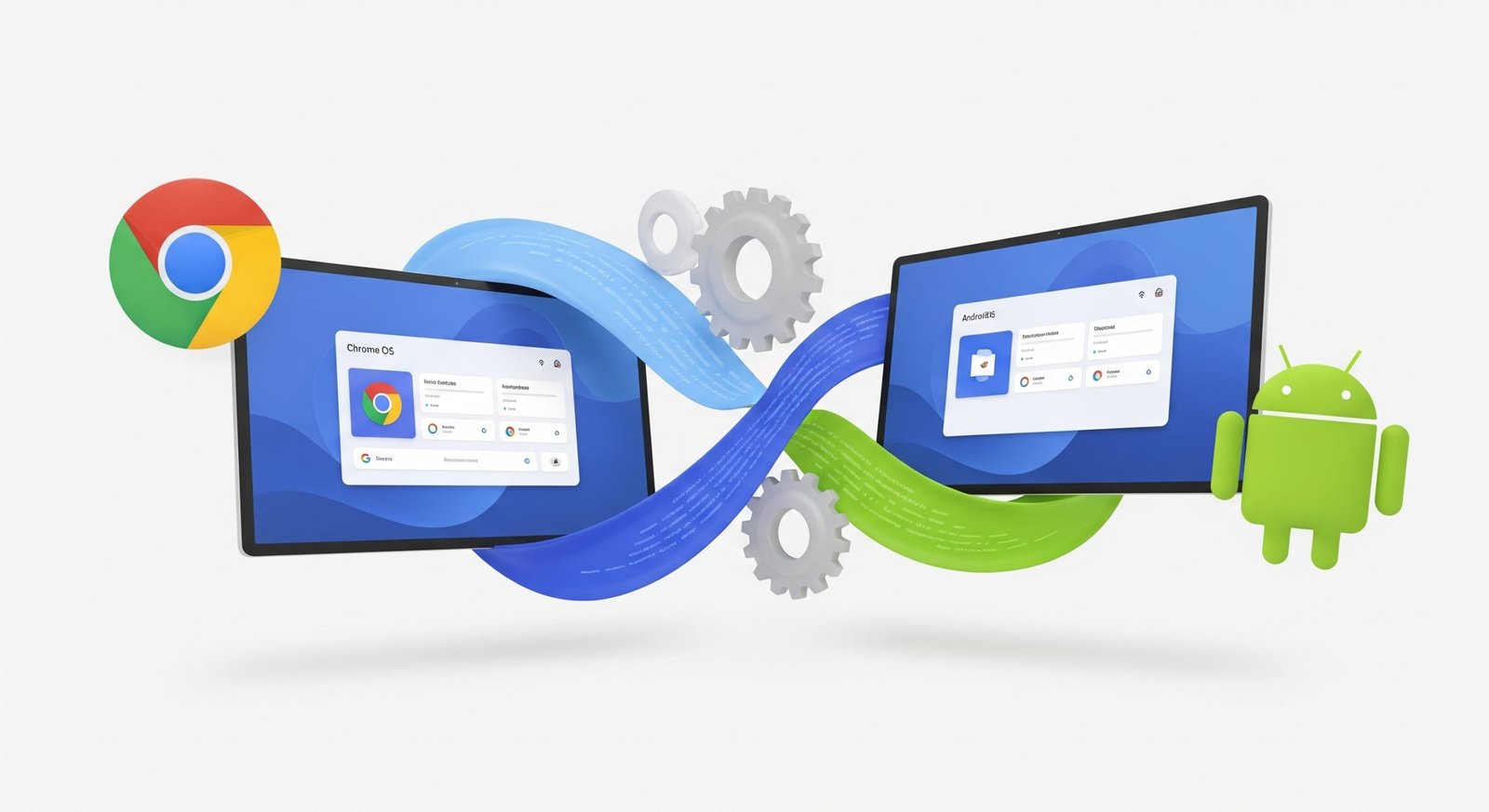
The merging of Android and Chrome OS has been a topic of speculation for some time now. Reports last year hinted at the possibility, but it was recently confirmed by a Google executive. The plan is to combine Chrome OS and Android into a single platform, although specific details about the merger have not been disclosed yet.
As someone who has used both Android and Chrome OS extensively, the idea of combining the two operating systems is intriguing. Android has been my preferred mobile OS since 2010, while I have also utilized Chrome OS on various laptops and Chromeboxes for work. The potential synergy between the two platforms could be significant if executed correctly.
Chrome OS has evolved over the years but has never quite reached the level of popularity enjoyed by Windows and macOS. Initially designed as a cloud-dependent OS with limited features, Chrome OS has since improved with the addition of Android app support. However, merging Chrome OS into Android could give the latter a competitive edge in the laptop market.
While the merger is on the horizon, it is expected to be a multi-year project before Chrome OS fully transforms into Android. The goal is to create a unified platform that can rival not only Windows and macOS but also iPadOS. By integrating features from both operating systems, Google aims to offer a seamless user experience across smartphones, tablets, and desktops.
Streamlined development is another advantage of combining Android and Chrome OS. With a single platform, Google can focus on enhancing integration and speeding up the development of new features. Security is also a key aspect to consider, as Chrome OS is known for its strong security protocols and automatic updates. Integrating these features into Android will be crucial for maintaining a high level of security across all devices.
Google has already taken steps towards integration by testing Android’s desktop mode and exploring Linux terminal support. The upcoming release of Android 16 will introduce a desktop mode for Pixel users, signaling a shift towards a more versatile operating system. Additionally, rumors of a new Pixel Laptop prototype running Android instead of Chrome OS further support the idea of integration between the two platforms.
In conclusion, the merger of Android and Chrome OS represents Google’s vision of creating a unified operating system that caters to a wide range of devices. By combining the strengths of both platforms, Google aims to establish a single ecosystem that offers seamless access to features across smartphones, tablets, and desktops. With ongoing developments in progress, it is clear that Google is working towards a future where one OS reigns supreme.