
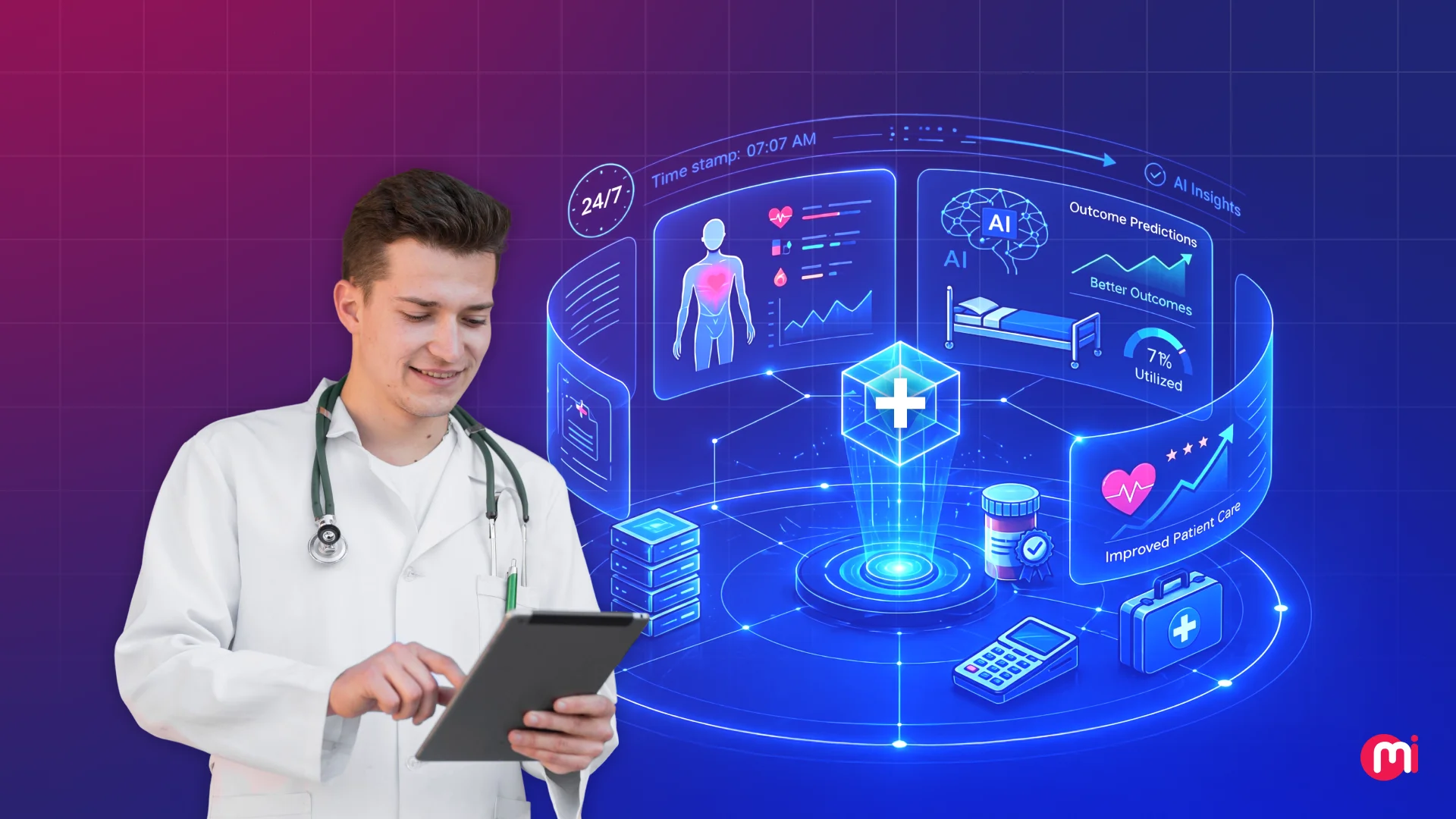
The healthcare industry is experiencing a surge in data generation, with organizations producing more data than ever before. Patient records, imaging systems, wearables, claims platforms, remote monitoring tools, and hospital operations software all contribute to this data influx. Despite this abundance of data, many healthcare organizations still struggle with fragmented visibility when it comes to decision-making.
Clinical teams often lack a comprehensive view of the patient, while operations teams face challenges in capacity planning. Finance leaders encounter delays in reimbursement insights, and executives lack real-time performance intelligence across the organization. This is where Business Intelligence (BI) in healthcare plays a crucial role.
Healthcare BI enables organizations to connect data across various systems and transform it into actionable insights. By leveraging BI, healthcare organizations can make better clinical decisions, improve operational efficiency, enhance financial control, and achieve more predictable outcomes.
Key Takeaways:
– Healthcare organizations generate vast amounts of data, and BI helps turn fragmented datasets into connected decision visibility across clinical, operational, and financial systems.
– Healthcare BI supports faster clinical decisions, stronger operational planning, and improved revenue performance through unified real-time insights.
– Leadership teams rely on BI dashboards to monitor performance, risks, and outcomes more proactively.
– A modern Healthcare BI ecosystem includes data integration layers, analytics engines, interoperability standards, and visualization tools working together as a decision intelligence framework.
– Business Intelligence is crucial for supporting value-based care models, population health strategies, and regulatory reporting accuracy.
– Predictive analytics and AI are transforming Healthcare BI from retrospective reporting into a forward-looking decision support infrastructure.
– Healthcare leaders who enhance data visibility today are better positioned to control outcomes, costs, and care quality tomorrow.
What is Business Intelligence in Healthcare?
Business Intelligence (BI) in healthcare refers to the process of collecting, connecting, analyzing, and visualizing healthcare data to support better decision-making. It helps healthcare organizations turn raw data into useful insights, providing real-time performance visibility across clinical, operational, and financial areas. Healthcare BI typically brings together data from billing and claims platforms, hospital operations systems, connected medical devices, and external population health datasets to provide an integrated view of the care ecosystem.
Why Business Intelligence Matters More Than Ever in Healthcare Today
The healthcare industry is entering a data-driven era, with the volume of healthcare data growing faster than most organizations can manage. Healthcare BI helps convert scattered information into structured visibility across departments, workflows, and leadership decisions. Several major industry shifts, such as the explosion of healthcare data, the shift toward value-based care, rising operational complexity, the consumerization of healthcare, and regulatory compliance pressure, are accelerating the need for Business Intelligence adoption.
Who Uses Healthcare BI and How?
Healthcare Business Intelligence is utilized by hospital executives, clinical leaders, finance teams, operations managers, and digital health decision-makers to monitor performance, improve patient outcomes, optimize resource utilization, control costs, and support strategic planning. By providing shared visibility across clinical, operational, and financial data, Healthcare BI helps stakeholders make faster, more informed decisions and coordinate actions across departments.
Healthcare BI Ecosystem Framework
The Healthcare BI ecosystem operates through multiple connected layers, moving from raw data to decision-ready insights. The framework includes a Data Acquisition Layer (Sources), Data Management & Integration Layer, Analytics & Intelligence Layer (The Engine), Application & Action Layer (Use Cases), and User Experience & Visualization Layer. These layers work together to support clinical intelligence, operational visibility, and strategic planning across healthcare organizations.
Core Benefits of Business Intelligence in the Healthcare Industry
Business Intelligence in the healthcare industry helps organizations improve clinical decision-making, increase operational efficiency, reduce costs, strengthen financial performance, enhance patient experience, support regulatory compliance, and enable population health management. By connecting data across clinical, administrative, and financial systems, Healthcare BI provides real-time visibility needed to monitor performance, identify risks early, and make faster, more informed strategic decisions across the organization.
Real-World Use Cases of Healthcare Business Intelligence Solutions
Healthcare BI supports decision-making across clinical care, hospital operations, financial management, and research environments. Real-world applications of Healthcare BI include individual patient health analytics, population health management, staffing optimization, fraud detection, supply chain management, clinical trial management, quality reporting and performance improvement, revenue flow improvement, facility management optimization, and drug research and treatment innovation.
How Modern Healthcare BI Is Evolving with AI, Predictive Analytics, and Real-Time Intelligence
Modern Healthcare BI platforms are evolving into intelligent decision-support systems that help organizations anticipate risks, respond faster to operational changes, and improve long-term planning accuracy. AI, predictive analytics, and real-time data processing are transforming how healthcare leaders use analytics across the organization. Predictive risk modeling, real-time clinical alerts, resource forecasting, and financial intelligence automation are some of the ways in which Healthcare BI is evolving to support proactive decision-making.
The Future of Business Intelligence in Healthcare
The future of Business Intelligence in healthcare is focused on real-time clinical insights, predictive planning, and organization-wide performance visibility. AI is playing a crucial role in enhancing BI capabilities, enabling earlier risk detection, smarter treatment support, and more accurate operational forecasting. Population health analytics and connected medical devices are expanding the scope of healthcare intelligence beyond hospital systems, enabling continuous patient monitoring environments.
Final Takeaway: Healthcare Leaders Who Control Data Visibility Control Outcomes
Healthcare organizations generate vast amounts of data, and Business Intelligence is essential for effectively utilizing this data. By connecting clinical, operational, and financial insights into a single decision environment, Healthcare BI enables organizations to make better decisions, improve outcomes, reduce inefficiencies, and plan strategically. Investing in Healthcare BI is becoming a strategic priority as healthcare systems transition towards value-based care and real-time decision-making models.
FAQs on Business Intelligence in Healthcare
– What is Business Intelligence in healthcare?
– How is Business Intelligence different from healthcare analytics?
– Why is Business Intelligence important for healthcare organizations today?
– Who uses Business Intelligence in healthcare organizations?
– What types of data are used in healthcare BI systems?
– How does Business Intelligence improve patient outcomes?
– Can Business Intelligence support value-based care initiatives?
– What are common challenges in implementing healthcare BI solutions?
– How is artificial intelligence changing healthcare Business Intelligence?
– How can healthcare organizations get started with Business Intelligence implementation?
In conclusion, Business Intelligence in healthcare is transforming the industry by providing real-time insights, predictive analytics, and enhanced decision-making capabilities. Healthcare organizations that invest in modern BI platforms will be better positioned to improve care quality, strengthen financial performance, and scale digital health initiatives effectively.