
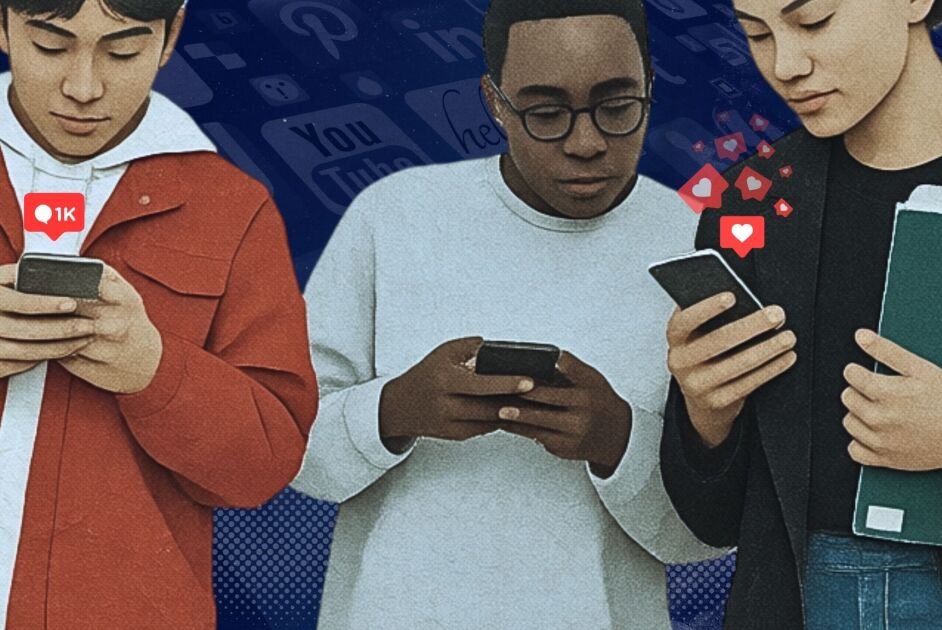
Toxic, addictive, crisis. Those are some of the frequently used words to describe social media and its effect on young people’s mental health.
But some experts warn that the dominant narrative that paints teens as helpless victims of social media is both inaccurate and counterproductive.
Instead, educators should focus more on a strengths-based approach that emphasizes kids’ agency and resilience while teaching students the social-emotional skills that will help them safely navigate their digital lives.
That was one of the main takeaways from a panel hosted by the Collaborative for Academic, Social, and Emotional Learning as part of the organization’s virtual spring conference.
“Unfortunately, youth and social media generally is discussed in news media [with] a fear-based narrative,” said Laura Hurwitz, a mental health and education consultant, speaking as part of a panel of experts on the topic. “It leads to shame, it leads to guilt, it leads to confusion, which we know when internalized can make young people feel hopeless and undermine healthy behaviors and self-efficacy.”
That’s not to say that social media—and other forms of digital media and technology, including gaming, television, and artificial intelligence—is benign. It can cause harm, but it can also have benefits.
Social media can expose kids to harmful content that promotes violence or unrealistic beauty standards. It can lead to cyberbullying, poor sleep, and unwanted contact from strangers, marketers, and groomers.
But it can also be a tool for civic engagement, a place to explore hobbies and interests, and a platform to connect with friends and family.
Research has found that teens, on average, spend more than four hours a day on their smartphones and receive more than 200 notifications a day. More than half of teens use their smartphones overnight on school nights, primarily for social media, gaming, and YouTube. Those constant interruptions lead students to feel like they must respond to their notifications.
These data align with what high school senior Gitanjali Nair, a youth adviser to the American Academy of Pediatrics, experiences in her personal life.
“There is a very big convenience to having a phone around, especially when avoiding social situations, so that four hours on a smartphone every day, that’s probably pretty accurate and probably a lot higher for a lot of my peers,” she said. “I can probably say that I get over 400 notifications a day, and maybe half of those are things that I throw away the second I see them. They can be really distracting as well.”
How social-emotional learning can promote healthy social media use
Strong relationships between staff and students, and incorporating student voice into school policies and decisionmaking, are key concepts for supporting social-emotional learning. They are also powerful strategies to help students develop healthy digital habits, the panelists said.
Educators can strengthen student-educator relationships while helping students learn how to use social media positively by simply showing an interest in their media use—whether it’s social networking, gaming, or using AI.
“How can you guide students toward quality content that helps support their well-being?” said Marija Hegel, the program manager for social media and mental health for the American Academy of Pediatrics, speaking on the panel. “This is important because research shows that quality content shapes whether kids have quality or negative experiences online. You can ask kids what they play or watch, help them think about which videos and games they use that have too much violence in them, rude role modeling, or unrealistic beauty standards or commercialism.”
If students are hesitant to open up about their own media use, Hegel suggests asking them about other kids’ media use—they’re usually more comfortable discussing that, and it still gives educators the insights they need.
Classroom agreements, or mutually agreed-upon expectations, have long been considered a best practice in social-emotional learning. They are another strategy that both leverages SEL and strengthens it by incorporating students’ feedback into how technology is managed in a classroom, according to Hurwitz.
Educators can take that idea a step further and seek student input on school and districtwide student technology policies, such as cellphone restrictions.
“You may want to ask your students about their opinions, share research on social media, in order to establish both student guidelines as well as guidelines for yourself or the teachers in your school, and then inform families so they can support the agreements,” said Hurwitz. “This is a great way to promote positive social media use while simultaneously creating a sense of community.”
Media literacy education is a helpful complement to SEL skills
Beyond teaching skills, educators should work to strengthen offline connections and belonging in their schools, the panelists said.
Media literacy education that teaches students about algorithms, engagement traps, misinformation, and data privacy is an important complement to social-emotional learning, Hegel added.
If this feels overwhelming, the panelists said that educators don’t have to reinvent the wheel, because there are many resources available to them, including from Common Sense Media and the AAP’s Center of Excellence on Social Media and Mental Health.
In short, there are many opportunities to reinforce social-emotional skills while teaching healthy digital behavior, said Hurwitz.
“Whether you’re talking about screen time and how much is too much and teaching self-management skills in that process, or whether you’re talking about perspectives on posting, helping students make decisions about what to post or not to post, they are practicing their responsible decisionmaking,” said Hurwitz. “Also, thinking about what their peers post increases a sense of social awareness.”