
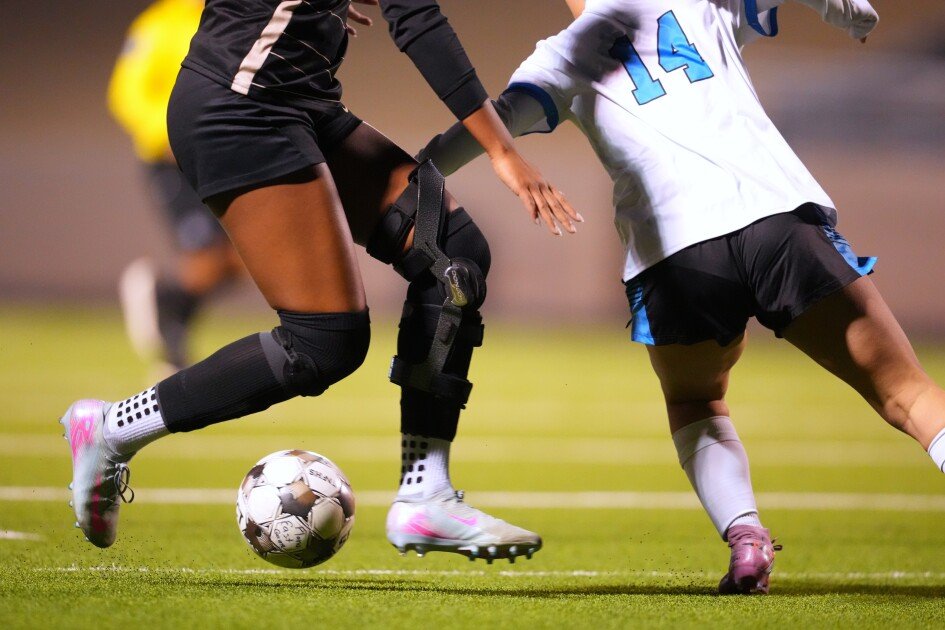
Theresa Salinas, a senior at Harlingen High School in Harlingen, Texas, has been a dancer since she was two years old.
Three years ago, she joined the school’s drill team and, while practicing double turns, she ruptured her entire anterior cruciate ligament. Unfortunately, Theresa’s knee injury is commonplace among high school athletes—especially teenage girls.
The number of high school athletes who have experienced an ACL injury has risen by 26% from 2007 to 2022, and the increase is much more striking among teenage girls (32%) than among teenage boys (14.5%), according to the National ACL Injury Coalition.
The road to recovery is long—between six and 12 months—and it not only affects a teenager’s physical well-being but their mental health, too. At this age, teens are forming their identity. And for student-athletes, that really revolves around their sport, said Dr. Melissa Christino, an orthopedic surgeon and assistant professor of orthopedic surgery at Boston Children’s Hospital and Harvard Medical School.
“When [the ability to compete] is taken away, it can be pretty devastating, even for a short time,” said Christino. “It can have a lot of ramifications in a patient’s social and psychological life and health.”
For teens, recovery goes well beyond the physical.
“I was stuck in bed, I couldn’t move, and that was really hard mentally,” Theresa told Education Week. “I was doing a lot of self-reflection and thinking, ‘What am I going to do? Am I ever going to dance again?’ ”
Christino’s student-athletes have access to sports psychologists, mental skills specialists, and social workers. After her surgery, Theresa did physical therapy for her rehabilitation, but she didn’t have access to other services.
It’s relatively rare for medical providers to offer that level of holistic care connected to athletic injuries, said Christino. Many simply don’t have the resources. “It’s our job as sports medicine surgeons to take care of the entire athlete,” said Christino, “and not just their knee.”
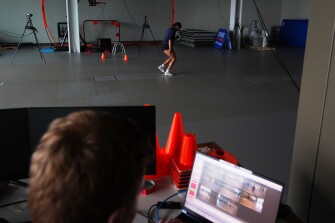
Why female athletes are more prone to ACL tears
The ACL is a ligament in the knee that provides stability, especially during movements like decelerating, changing direction, jumping, and landing.
There are several reasons why teenage girls have a higher incidence rate of ACL tears than boys, said Joseph Janosky, an assistant professor of athletic training and coordinator of clinical education at Lasell University in Massachusetts.
As teenage girls grow and mature, they develop smaller ACLs that contain less muscle mass—which helps stabilize the ligament—around them, than teenage boys. Some researchers also believe that during puberty, girls’ hormones affect the flexibility of the ACLs, making them more prone to injury, said Sandra Schultz, a professor emerita of kinesiology and director of the Center for Women’s Health and Wellness in the School of Health and Human Science at the University of North Carolina, Greensboro.
In addition, girls’ muscle mass growth eventually slows in their late teen years, while boys can continue to grow muscle mass into their 20s, resulting in teenage girls’ and boys’ bodies moving and playing differently during sports, both Schultz and Christino said.
In addition, women tend to have different jump-landing mechanics than men, and that can put stress on female athletes’ knees that predispose them to an ACL tear, Christino said.
After an ACL tear and post-surgery, most teenagers require months of physical therapy. Balancing PT and school work can be difficult for many students.
There are signs teachers can look out for if a student-athlete is struggling, post-injury, said Christino. If students are losing sleep, irritable, anxious, less engaging, or seeming to withdraw—symptoms consistent with depression—teachers can ask them open-ended questions, such as how they believe their recovery is going, to gauge their well-being.
Theresa had difficulty returning to school after surgery, she told Education Week. Her physical therapy was scheduled during her fifth period class, which required her to leave her fourth period class early to ensure she was on time. There were occasions when she would have to miss a class entirely due to scheduling issues.
Another student, Reiley Grace Whitson, 20, tore her left ACL and right ACL—once in middle school and the other in high school—and said both times were mentally challenging.
Whitson, who attends Milligan University in Tennessee, said she developed an eating disorder and depression as a result of her injury in middle school.
“I withdrew from a lot of my friends, especially those on the basketball team, [and] from time with my family,” she told Education Week. “I just wanted to be alone and wallow in self-pity.”
Whitson’s first injury resulted in a recovery that lasted for 16 months. With the second injury, she actively tried to keep herself from going down the same dark path.
She poured into her rehab, which resulted in a 6 month recovery. Whitson was bolstered by the support from her basketball coach, which made her want to recover faster.
Her perspective was, “I’ve been in this position before. I’ve seen how much it took from me the first time, and now I’m just trying to go into it with a better mindset.”
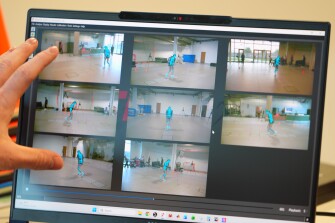
Experts agree: schools need to be as accommodating for student-athletes
After student-athletes experience ACL injuries, it’s important that schools recognize that the student will need support to overcome both physical and academic limitations. It is also important to have good communication with the family, notes Christino, the surgeon.
Students may need assistance, for example, getting from class to class, particularly if the school building does not have an elevator.
On the academic side, student-athletes might not be able to complete their work on time, immediately after an operation. Discussions about catch-up assignments, extra time, and ongoing support will help ensure they complete lessons during the remainder of their recovery.
In the case of Theresa, her school allowed her to work with a physical trainer at the school, and teachers provided her with schoolwork in advance if she had to miss or leave a class early. Teachers also gave Theresa extra time to complete assignments, she told Education Week.
Additionally, resources like a sports psychologist are helpful to student-athletes’ recovery, though not every school has them on staff, said Justin Smith, a sports clinical specialist who works with high schools and colleges in Tennessee.
“The problem is that really the specialists that [student-athletes] need to see, like a sports psychologist, are very hard to find unless you’re in a larger, more metropolitan area,” said Smith.
Sometimes other barriers stand in the way. In one instance, Smith worked with a high school student-athlete who had PTSD, depression, and anxiety because of an upcoming necessary surgery. Smith made sure the student saw a sports psychologist, but unfortunately after three sessions, that specialist couldn’t continue to see that student due to a contract they had with another school.
“That was very disheartening to me, very frustrating for the athlete and that parent,” Smith said.
But when schools don’t have access to sports psychologists, athletic trainers can be a “set of ears to listen to the athlete,” Smith said.
When Whitson, the student who tore both her right and left ACL, was recovering from the injury, her high school basketball coach, Lucas Andrews, checked in on her every day, she said.
“He always made sure I was taken care of and supported, and he made sure that I still felt just a part of the team, and that my recovery wasn’t me alone,” Whitson said.
Andrews heard stories of student-athletes getting injured and not hearing from their coaches, so he really strived for communication with his athletes, he told Education Week.
“We probably checked on her daily,” he said, referring to his role and that of others on the coaching staff. “Reiley, she was the kid who came and ate lunch in my classroom every day, so we’ve always had that constant communication.”
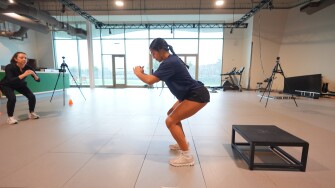
Long term affects of ACL tears
There’s evidence that over the last 20 to 25 years, those who have an ACL tear can require knee joint replacements later in life. But the long-term effects are still being studied.
“If you use tobacco or smoke or are exposed to tobacco over the long term, there’s a lot of health conditions that come from that,” he said. “But it took us a really long time to get there, and we’re not there yet with ACLs.”
Whitson, who is a rising college junior, said her injuries influenced her to pursue a career in sports psychology. She plans to become a certified personal trainer this summer, too.
In the case of Theresa, the high school senior in Texas, she did return to sports—as a manager of the drill team. She reflects on her high school career fondly. Her ACL tear allowed her to branch out into other school organizations and into more leadership roles, she told Education Week.
Tearing her ACL “pushed me in the right direction, and [helped me] appreciate what I have and appreciate myself,” Theresa said. She learned “to do more things [and] not to be scared of what’s going to happen.”