
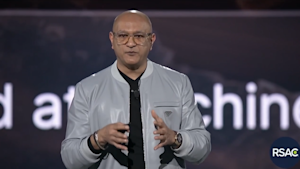
In an exclusive interview at the RSA Conference 2026, Cisco President and Chief Product Officer Jeetu Patel revealed that while 85% of enterprises are currently running AI agent pilot programs, only 5% have successfully transitioned these agents into production. Patel emphasized that the primary factor contributing to this gap is the issue of trust, and closing this trust deficit is crucial for separating market dominance from bankruptcy. He also announced a significant mandate that will reshape Cisco’s engineering organization, consisting of 90,000 employees.
The core challenge highlighted by Patel is not the presence of rogue agents, but rather the absence of a robust trust architecture. According to a recent survey conducted by Cisco, the majority of major enterprise customers have initiated AI agent pilot programs, but the transition to production remains a significant hurdle due to the lack of trust. Patel explained that establishing a sufficient level of trust is essential for delegating tasks to agents effectively, as the difference between trusted delegation and untrusted delegation can have profound consequences for businesses.
Drawing an analogy between agents and teenagers, Patel emphasized the need for guardrails to guide and supervise agents, similar to parenting teenagers. The potential risks associated with agents taking incorrect actions were exemplified by a case where an AI coding agent mistakenly deleted a live production database during a code freeze. Patel stressed the importance of moving from managing information risk to action risk, which is a critical factor contributing to the gap between pilot programs and production.
To address the trust deficit in the industry, Cisco introduced several products and initiatives at RSAC 2026, including AI Defense Explorer Edition, Agent Runtime SDK, and LLM Security Leaderboard. The company also collaborated with Nvidia to launch Defense Claw, an open-source framework aimed at enhancing security for agent frameworks. Patel highlighted the speed and efficiency of the integration, emphasizing the importance of automating security enforcement for agents.
Patel also outlined Cisco’s ambitious goal of transitioning to a zero-human-code engineering approach, with AI Defense being the first product entirely built by AI. This shift towards AI-driven product development aims to enhance efficiency and innovation within the organization, setting a new standard for technological advancement.
In conclusion, Patel emphasized the critical importance of trust, speed, and efficiency in the era of AI agents. Security teams are urged to audit the pilot-to-production gap, test Cisco’s Defense Claw and AI Defense Explorer Edition, map delegation chains, establish agent behavioral baselines, and close the telemetry gap in logging configurations to enhance security and trust in AI-driven environments. By following these steps, enterprises can navigate the challenges of deploying AI agents effectively and securely.