
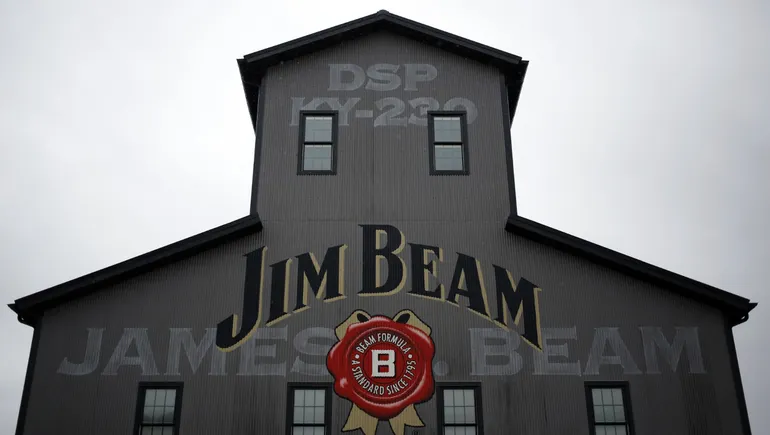
Jim Beam Halts Production at Main Kentucky Distillery in 2026
A spokesperson for Jim Beam announced on Monday that the company will be pausing production at its primary distillery in Kentucky in 2026. This decision comes as whiskey and bourbon makers face challenges due to a decrease in consumption.
The temporary halt in production at the Clermont, Kentucky plant was based on an evaluation of consumer demand and volumes for the year 2026. Despite this pause, Jim Beam will continue to operate its craft distilleries in Boston, Kentucky, and another small batch facility in Clermont.
During this one-year break, Jim Beam plans to make enhancements to the property while maintaining operations at the visitor center, bottling, and warehousing units. Suntory, the brand’s parent company, is currently working with union leadership to determine how to utilize the workforce during this transition period.
Industry-Wide Changes
The decision by Jim Beam reflects a larger trend in the alcohol sector, where declining consumption has prompted major spirit makers to take similar actions. Brown-Forman, the owner of Jack Daniel’s, recently closed its bourbon cooperage in Louisville, Kentucky, resulting in the layoff of 640 employees. Diageo also temporarily paused production at distilleries in Texas and Tennessee.
Kentucky’s bourbon industry is facing a unique challenge with a record amount of aging bourbon in storage. According to the Kentucky Distiller’s Association, there are approximately 16.1 million barrels of bourbon currently aging, with the majority expected to be ready for bottling around 2030.
To address this surplus, distillers are exploring trade negotiations with countries like Canada and Ireland to export some of the excess product. In 2025, American distilled spirits saw a 9% decrease in exports due to White House policies, highlighting the need for alternative markets.
These changes within the industry reflect a shifting landscape for whiskey and bourbon makers, with companies like Jim Beam adapting to meet evolving consumer demands and market conditions.