
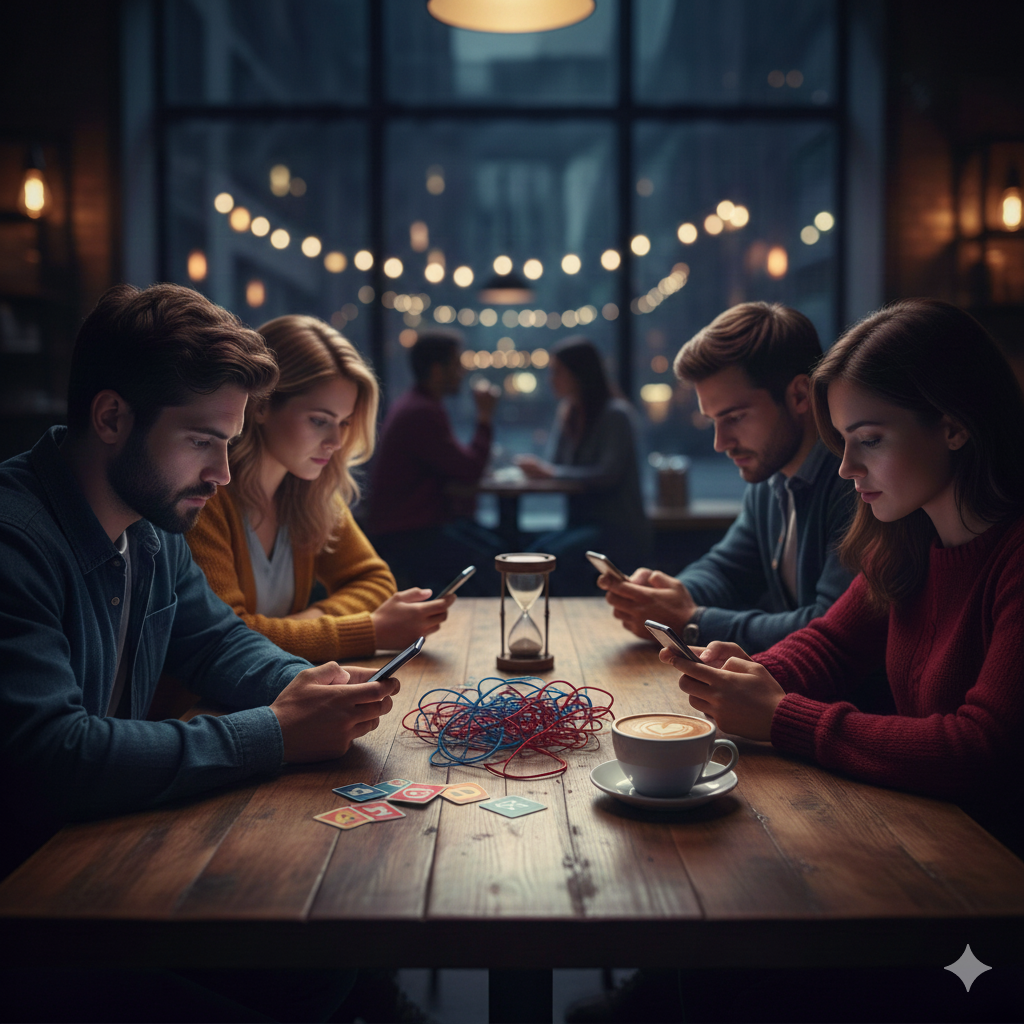
The landscape of modern dating has evolved into a complex and often overwhelming experience for many individuals. What was once a simple process of meeting potential partners has now become a maze of choices, uncertainties, and emotional roller coasters. The rise of online dating apps and endless swiping has transformed the way people approach relationships, leading to a myriad of psychological challenges that can make finding love feel like an uphill battle.
The Illusion of Endless Choice in Modern Dating
One of the primary psychological obstacles in modern dating is the phenomenon of choice overload. Psychologist Barry Schwartz, in his book “The Paradox of Choice,” highlights how having too many options can lead to anxiety, dissatisfaction, and decision paralysis. While having a wide array of choices may seem empowering, the human brain struggles to process and evaluate numerous potential partners simultaneously.
In the realm of online dating, users are bombarded with constant streams of new profiles, reminders of endless options, and the ability to swiftly move on with a simple swipe. This abundance of choices can leave individuals feeling like they are always missing out on something better, fostering a perpetual sense of dissatisfaction and uncertainty.
How Swiping Affects the Brain
Dating apps not only serve as social platforms but also trigger the brain’s reward system. Neuroscience research indicates that swiping on dating apps releases dopamine, a neurotransmitter associated with motivation, anticipation, and reward. Each match, like, or message generates a small dopamine response, akin to the gratification experienced when scrolling through social media or checking notifications.
However, the issue lies in the fact that dopamine is more linked to seeking than to satisfaction. The brain craves the possibility of a match more than the actual connection, leading to a cycle of novelty-seeking that can result in emotional fatigue and burnout. Users may find themselves caught in a loop of repetitive conversations, diminishing the meaningfulness of matches and making emotional investment increasingly challenging.
Why Commitment Feels Riskier Than Before
In the digital age of dating, the pool of potential partners has expanded exponentially, fueling a fear of missing out (FOMO) among individuals. Social psychology research suggests that the perception of better alternatives perpetually being available makes people hesitant to commit fully to one choice. The constant exposure to curated images of attractive individuals and the allure of new profiles create a climate where commitment feels riskier than ever.
Common concerns such as settling too soon, missing out on a more compatible match, or making the wrong choice plague modern daters, leading to prolonged decision-making processes and a reluctance to invest emotionally. Commitment, once a natural progression in relationships, now feels like a calculated gamble in the face of endless possibilities.
Emotional Burnout From Repeated Dating Cycles
Another significant factor contributing to the challenges of modern dating is emotional burnout. Relationship psychologists liken the process of dating to emotional labor, requiring vulnerability, empathy, and resilience. When individuals repeatedly invest emotional energy without tangible outcomes, they may experience exhaustion and disillusionment.
Dating burnout can stem from sources such as constant disappointment, unmet expectations, and the emotional toll of engaging with multiple potential partners. Over time, individuals may find themselves lowering their emotional defenses or disengaging altogether to protect themselves from further disappointment. This emotional overload can leave daters feeling drained and uninspired, rather than excited about the prospect of forming connections.
How Modern Communication Changes Dating Dynamics
The advent of technology has revolutionized how people communicate and interpret interest in the realm of dating. Texting and messaging platforms strip away crucial elements of communication such as tone, body language, and context, making it easier for misunderstandings to occur. Research suggests that individuals are more likely to misinterpret neutral messages negatively, particularly when emotions are involved.
This communication dynamic can lead to overanalyzing response times, prematurely assuming disinterest, and heightened levels of anxiety and insecurity. Dating apps further normalize constant accessibility without the obligation of meaningful communication, fostering a culture of surface-level interactions and misinterpreted intentions.
In conclusion, the complexities of modern dating are deeply intertwined with psychological factors that can make the quest for love a daunting and exhausting journey. By understanding the underlying psychology behind these challenges, individuals can approach dating in a more mindful and intentional manner, fostering healthier relationships and more meaningful connections in the digital age. Navigating modern dating can be challenging as individuals often find it easier to disappear rather than communicate discomfort or disinterest. While this may temporarily reduce conflict, it can lead to emotional confusion and hurt in the long run. Healthy relationships thrive on clarity and communication, yet the current dating landscape often rewards ambiguity.
In today’s dating culture, there is a strong emphasis on self-presentation. From carefully curated profiles to strategically crafted messages, individuals are encouraged to market themselves rather than simply show up authentically. Psychologists highlight that feeling pressured to perform can hinder authenticity in relationships. Instead of focusing on exploring compatibility, daters often prioritize saying the right things, avoiding mistakes, and maintaining interest.
This performance mindset can increase anxiety and hinder emotional presence, shifting the focus from genuine connection to impression management. Paradoxically, the more effort individuals put into appearing attractive or interesting, the harder it becomes to relax and be emotionally open.
Despite these challenges, research consistently demonstrates that online dating can be successful. Studies and surveys indicate that a significant number of long-term couples meet online, providing access to compatible partners across various age groups and backgrounds. The key lies in how individuals use online dating platforms.
Dating apps serve as environments that amplify behaviors and mindsets. When used consciously, they can support meaningful connections, but when approached mindlessly, they may lead to burnout and dissatisfaction. To combat dating fatigue and improve emotional outcomes, psychologists recommend several evidence-based strategies.
Firstly, limiting cognitive overload by focusing on quality over quantity can lead to stronger emotional connections. Clarifying intentions early on can reduce emotional confusion and mismatched expectations. Slowing down emotional investment allows attraction and trust to develop naturally. Taking breaks when needed can help restore motivation and emotional balance. Lastly, understanding that dating is a process and compatibility unfolds over time can alleviate early uncertainty.
While modern dating may feel challenging due to the overwhelming choices and unclear social norms, it is not impossible. By being aware of the psychological factors at play, individuals can approach dating with compassion for themselves and others. Rather than striving for perfection, dating becomes a journey of discovering alignment.
Connection and love still have a place in modern dating, but it requires a shift in mindset towards intentionality and awareness. By acknowledging that modern dating is not broken but rather misunderstood, individuals can navigate the complexities of relationships with greater understanding and empathy. As the sun sets over the horizon, casting a warm glow across the landscape, the world seems to slow down for just a moment. The hustle and bustle of the day fades away, replaced by a sense of serenity and peace. In these fleeting moments of twilight, there is a certain magic in the air, a feeling of possibility and wonder.
The sky transforms into a canvas of vibrant colors, with hues of pink, orange, and purple painting a breathtaking scene. The clouds take on a golden hue, illuminated by the last rays of sunlight as they drift lazily across the sky. The world is bathed in a soft, ethereal light, casting long shadows and creating a sense of mystery and enchantment.
As the day transitions into night, the world undergoes a subtle transformation. The sounds of the day give way to the quiet chirping of crickets and the gentle rustling of leaves in the breeze. The air becomes cooler, carrying with it the scents of earth and flowers. The world seems to hold its breath, waiting for the darkness to fully descend.
In this liminal space between day and night, there is a sense of infinite possibility. Anything could happen in the twilight hours, and the world feels charged with potential. It is a time for reflection and contemplation, a time to appreciate the beauty of the natural world and the simple pleasures of life.
As the last traces of daylight fade away, the stars begin to twinkle in the sky, their light piercing the darkness like diamonds. The moon rises, casting a silvery glow over the landscape and bathing everything in its soft, otherworldly light. The world seems to come alive in the darkness, with shadows dancing and flickering in the moonlight.
In these twilight hours, the world feels both familiar and alien, a place of beauty and mystery. It is a time to appreciate the fleeting nature of life and to savor the moments of peace and tranquility that come with the setting of the sun. As the night fully descends, enveloping the world in darkness, there is a sense of awe and wonder at the beauty of the natural world and the mysteries that lie beyond our understanding.