
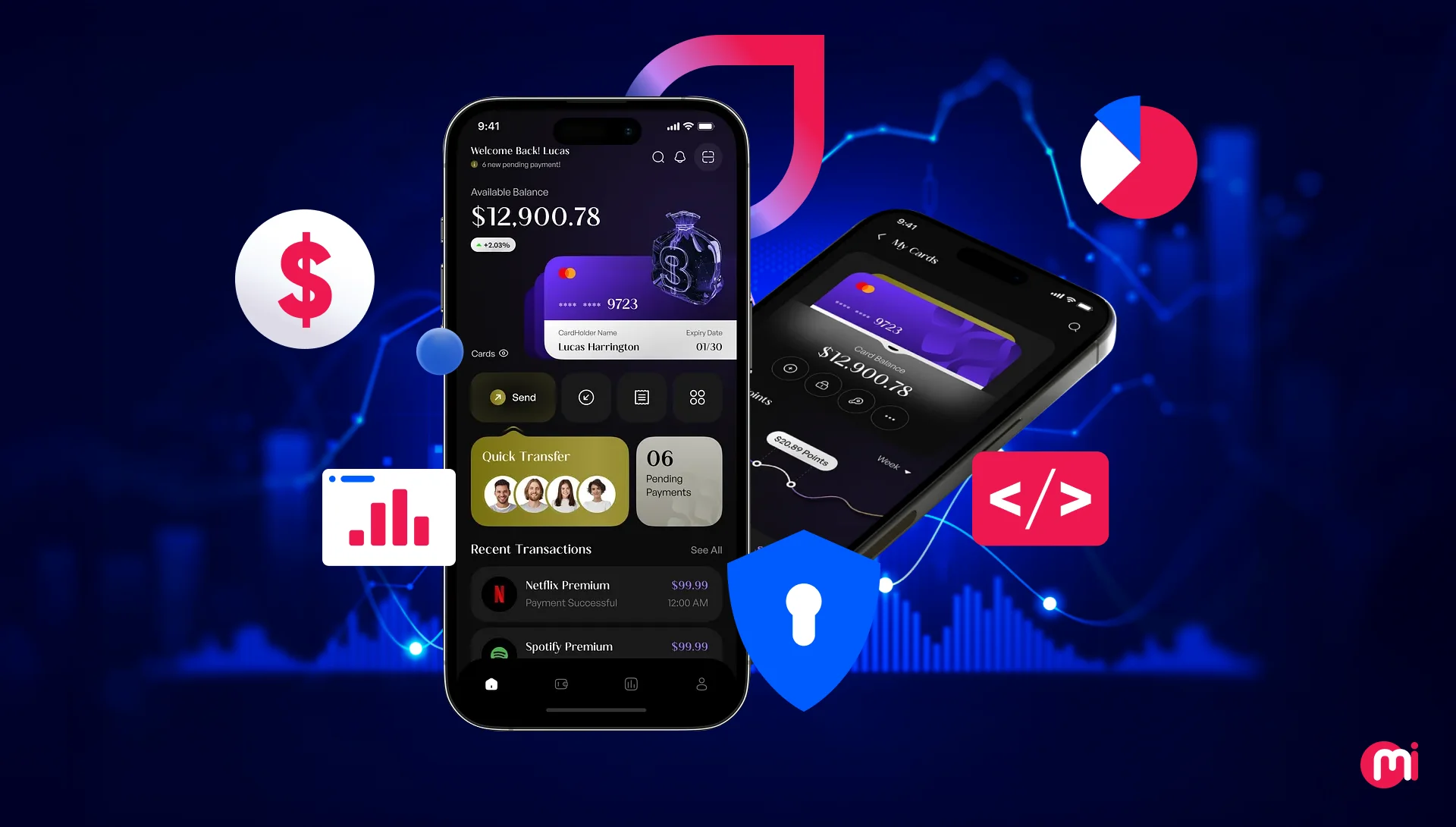
In the realm of modern financial management, the development of personal finance applications is essential. These apps play a crucial role in enhancing financial management, boosting productivity, tracking income and expenses, and automating tasks for organizations to stay ahead with their budgets. As a business, it is crucial to grasp the process of creating a budget app, understand its key features, and the associated costs. This knowledge is vital for those looking to innovate in the fintech space. This article will guide you through the process of building a secure, effective, and engaging personal finance app.
Personal finance apps have seen a surge in popularity, especially in light of the global pandemic, which has made individuals more conscious about their spending habits. Users are increasingly seeking ways to manage their resources, track their expenses, and achieve their financial goals.
According to research by GlobalNewsWire, the global finance app market is projected to exceed $330 billion by 2028. These statistics underscore the exponential growth of the global finance market, making it imperative for businesses to develop successful personal finance apps with the assistance of professional app development services.
Creating a top-notch personal finance application goes beyond having a great idea. It requires a deep understanding of user needs, robust security measures, and a well-defined budget app development process.
This comprehensive guide will take you through every step of personal finance app development, providing you with an in-depth understanding of how to build a high-impact financial tool. Let’s delve into the intricacies of creating a personal finance app that resonates with users and delivers value.
Key Takeaways
– Building a personal finance application involves a six-step journey from the initial idea to post-launch maintenance.
– Essential features of a personal finance app include goal-tracking tools, AI-driven insights, and secure bank linking.
– The app development cost of a budget app depends on complexity, features, and the location of the development team.
What is a Personal Finance Application?
A personal finance application is software designed to help businesses and individuals efficiently manage their financial activities. These apps provide tools for budgeting, expense tracking, and bill payments, enabling users to regulate their financial flows, set budgets, and gain insights into their expenditures and savings.
The primary role of personal finance apps is to simplify money management by automating tasks such as expense tracking, categorizing purchases, and setting saving goals. By offering transparency over a user’s financial situation, these apps make it easier for individuals to prepare for emergencies and plan for the future.
Types of Personal Finance Applications
Personal finance applications can be broadly categorized into simple and complex apps. Simple finance apps require users to manually input their financial data, including expenses and income, while complex finance apps automate the money management process by allowing users to link their cards and bank accounts for automatic data synchronization.
Pros and Cons of Simple Finance Apps
Pros:
– No risk involved as users do not link their bank accounts to the app.
– Simple features make these apps cost-effective.
Cons:
– High chances of human error due to manual data entry.
– Time-consuming process for users.
Pros and Cons of Complex Finance Apps
Pros:
– Comprehensive features offer advanced functionality to users.
– Efficient automation saves time for users.
Cons:
– Higher app development cost compared to simple finance apps.
Steps to Build a Personal Finance Application
1. Conduct User and Market Research: Analyze the market landscape and define your target audience to understand their financial needs.
2. Focus on UI/UX and Prototyping: Create intuitive designs and prototypes to enhance user experience.
3. Define and Develop the Minimum Viable Product (MVP): Develop a basic version of your app with essential features to validate your idea.
4. Choose the Right Technology Stack: Select appropriate frontend and backend technologies based on your app’s requirements.
5. Conduct Testing and Quality Assurance (QA): Ensure the app is secure, reliable, and bug-free through various testing methods.
6. Deploy, Maintain & Iterate: Deploy the app, monitor its performance, gather user feedback, and iterate for continuous improvement.
Features to Include in Your Personal Finance App
1. Registration and Onboarding: Simplify the sign-up process and enhance security with biometric options.
2. Account Integration: Collect all financial accounts in one place for easy management.
3. Knowledgeable Advice through AI Chatbots: Provide users with personalized financial insights through AI chatbots.
4. Real-time Spending Tracker: Track expenses in real-time to help users manage their finances effectively.
5. Personalization: Tailor the user experience to meet individual needs and preferences.
6. Gamification: Introduce game-like elements to boost user engagement and motivation.
7. 24*7 Customer Support: Offer multilingual customer support to enhance user satisfaction.
8. Alerts and Notifications: Send push notifications for upcoming bills, low balances, and budget limits.
9. Points and Rewards: Incentivize users with points, rewards, discounts, and cashbacks.
10. Financial Advice and Consultation: Provide expert financial advice to help users make informed decisions.
Personal Finance App Development Cost
The cost of personal finance app development varies based on factors such as complexity, features, platform selection, technology stack, location of the development team, and third-party integrations. Estimating the total cost involves calculating the development hours multiplied by developers’ hourly rate.
How Can MindInventory Help You in Personal Finance Application Development
MindInventory is a leading provider of FinTech software development services, offering expertise in building personal finance applications. Their industry experts focus on core features, security, and a strategic development approach to create impactful financial tools. Partnering with MindInventory can help businesses navigate the journey from idea to market-ready product with ease.
FAQs on Personal Finance App Development
– What is the use of a personal finance app?
Personal finance apps help individuals manage their expenses, income, and investments for financial stability and security.
– What are the most important features to include in a personal finance app?
Key features include expense tracking, account aggregation, budgeting tools, saving goals, financial reports, security measures, and user notifications.
– Why is user-centric design important for a personal finance app?
User-centric design ensures accessibility, intuitiveness, and engagement, enhancing user satisfaction and adoption of the app.
In conclusion, developing a personal finance app requires a strategic approach, deep understanding of user needs, and a commitment to security and user experience. By following the outlined steps and incorporating essential features, businesses can create a successful and engaging financial tool for users.