
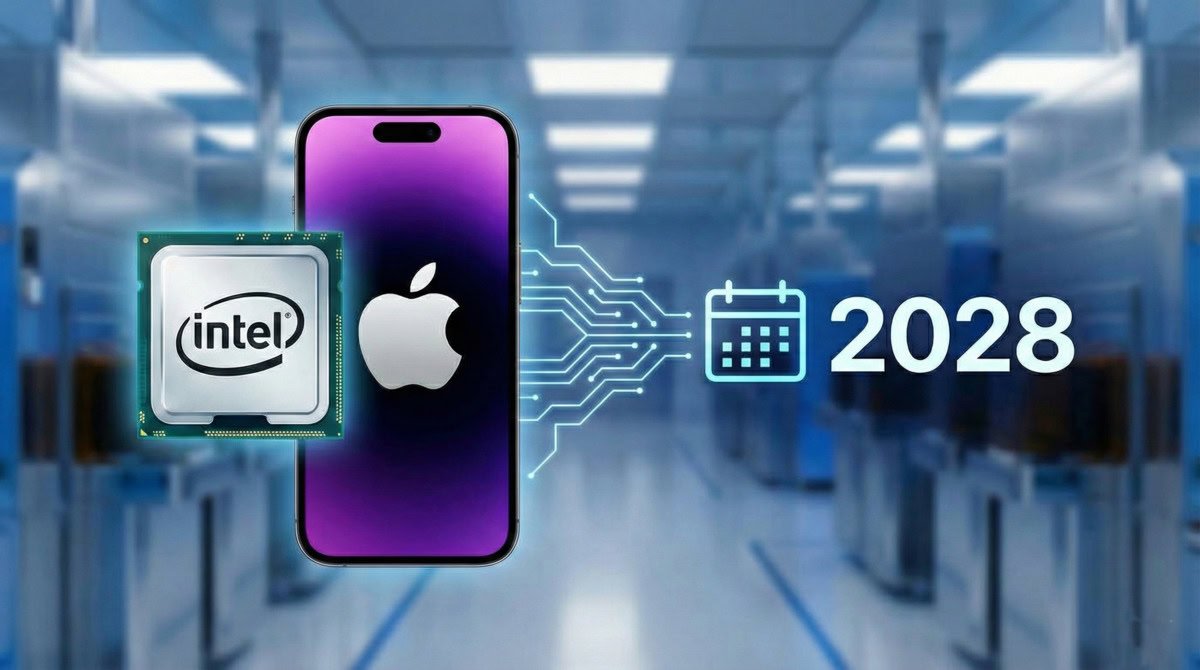
Apple and Intel are reportedly in talks to form a new partnership, marking a significant shift in their relationship. While Apple had previously moved away from Intel to develop its own ARM-based chips for Mac devices, the two companies are now considering working together again. This time, Intel would serve as a key manufacturer for future Apple Silicon, potentially including some iPhone chips by 2028.
Instead of designing the processors, Intel would act as a foundry partner, similar to Apple’s current chipmaker, TSMC. Apple would continue to design its powerful A-series processors, while Intel would handle the manufacturing process.
The collaboration is expected to start off small. Intel could begin manufacturing Apple’s lower-end M-series chips for select Mac and iPad models as early as mid-2027, using its advanced 18A process. This initial phase will serve as a trial run to demonstrate Intel’s manufacturing capabilities before potentially moving on to producing iPhone chips by 2028, such as the rumored A22 processor, using Intel’s forthcoming 14A fabrication process.
The decision to partner with Intel is part of Apple’s strategy to mitigate risks and diversify its supply chain. By adding Intel as a manufacturer, Apple aims to reduce its reliance on a single manufacturing partner in East Asia and increase its resilience against global supply chain disruptions. This move also aligns with US efforts to promote domestic chip production and reduce dependence on overseas facilities.
For Intel, securing Apple as a client would be a significant achievement, validating the company’s efforts to regain technological leadership in the foundry business. It would also showcase Intel’s advanced manufacturing nodes as competitive within the industry.
If successful, this partnership could redefine the relationship between two tech giants and strengthen the global supply chain for Apple’s most critical devices. The potential collaboration between Apple and Intel highlights the importance of supply chain security and domestic manufacturing in the tech industry.