
I’ve been traveling for close to twenty years. In that time, the airline industry has changed a lot. The use of points and miles has become widespread, round-the-world tickets have gone the way of the dodo, airlines have consolidated, and there has been an explosion of budget airlines.
Over the last few years, the cost of airline tickets has steadily risen. They get more and more expensive while their prices often seem illogical.
Since ticket pricing is an arcane and misunderstood subject, I want to take some time to explain why your airplane ticket costs what it does.
A Look at the Airline Industry
Ticket prices have increased over the decade for several reasons. For starters, the industry has consolidated a lot over the last few decades. Thanks to bankruptcies and mergers, there are now only three major alliance airlines (American, Delta, and United) in the United States. And, with the recent bankruptcy of Spirit and the merger of Alaska and Hawaiian, there’s even less competition outside the Big 3.
In Canada, there are only two major airlines – WestJet and Air Canada.
In Europe, Air France–KLM, British Airways IAG, and Lufthansa control the bulk of the market. (Though, thankfully, in Europe, there are lots of budget airlines to choose from.)
As airlines have partnered up, merged, or gone bankrupt, there is little incentive to provide low fares to win your business. After all, when only one or two airlines are flying a route, airlines know you don’t have much choice. Less competition means higher prices.
Secondly, the price of airline fuel has increased tremendously. Back in 2017, jet fuel cost $1.37 per gallon. In 2024, it is $6.49 per gallon! Airlines have simply passed that fivefold increase on to the consumer.
Thirdly, airline taxes and security fees have increased a lot, adding to the cost of your ticket. Ever fly into London? Half the ticket price is made up of fees and taxes!
Finally, demand fell following the 2008 recession, and to compensate, airlines reduced both the number of routes they offered and the frequency of their flights. Fuller planes mean more passenger revenue and fewer costs for the airline.
That trend greatly accelerated during COVID. When COVID shut down global travel, airlines mothballed many of their older planes and laid off many of their staff. When travel restrictions were lifted and more people started flying again, they didn’t have enough planes or staff to return to a pre-COVID schedule. This decrease in the supply of flights, coupled with the surge in demand for travel, meant that airlines had little incentive to lower prices.
According to Rick Seaney of Farecompare.com, “Before 2008, things were in favor of the passengers. After the 2009 crisis, the scale of justice tipped towards the airlines.”
Taken together, a consolidated airline industry that is facing more costs is simply less likely to generally offer lower fares.
How Airlines Determine Pricing
Prices go up and down for many reasons. There are four major factors that drive prices are competition, supply, demand, and oil prices.
Together, those four things affect something called “the load factor.” Airlines want to fill their planes and maximize profits, and they do this by calculating a plane’s load factor. Essentially, this is the percentage of seats sold on a flight. They want this number to be as high as possible.
To get the highest possible load factor, airlines will constantly change prices based on the four categories above in order to get people to buy tickets.
Airlines use dynamic pricing models and artificial intelligence (AI) to figure out the maximum value they can get for each seat. Have you ever wondered why airlines seem to callously raise their prices after a big event spikes demand? They aren’t. The AI is. All it sees is sky-high demand and adjusts accordingly to its programming. More demand = higher prices.
These advanced computer systems constantly compare booking trends to past sales history, major events, concerts, sporting events, weather, and competitor behavior. They can look at consumer searching and booking behavior and process lots and lots of data and change prices on the fly (no pun intended) in hopes of getting the best price possible.
All of this is why one day a flight may cost $100, then $400 the next, and then back to $100 the day after that. As people buy seats on a flight, airlines raise prices, and when demand falls (at a certain price point), they lower prices until fewer and fewer seats are available, then they will raise prices again. It’s a delicate balance designed to ensure maximum revenue. It’s why prices are cheapest for 5 AM flights, more expensive over the holidays, and through the roof during peak season or if there’s a major sports event in town.
After all, you can’t add more seats to a plane, so all they can do to raise revenue is charge higher fares!
It’s also why prices might change in seconds. It’s not because they are tracking your cookies, it’s because the AI is responding to real-time changes in seats. Think about it. How many booking companies are out there? Lots! All of them are reserving seats. Millions of people fly each day and, with limited routes, it’s easier to fill planes, so the AI doesn’t need to discount fares as much as it had to in the past.
On a US domestic flight, there might be 10–15 different price points. If the load factor is low and demand is low, an airline will increase the availability of cheap fares. If the load factor is high and demand is high, the airline will raise prices.
As Rick said, the airline is advantaged now.
But it’s not impossible to find a cheap ticket. There are many, many ways to find cheap airfare. To avoid being the person who paid the most for their ticket, the main thing to do is to be flexible.
Airlines are constantly changing prices to increase revenue, hoping to get people into the highest price buckets possible. “About three months before, airlines start to manage those bottom price points,” Rick says. That means airlines begin to look at historical trends and current seat sales to figure out whether they will release those really rock-bottom fares or keep prices high.
If you’re booking inside a month, you’re playing into the airline’s hands. When your dates are no longer flexible, you’ll pay whatever they charge.
To find out how to navigate this system and get a cheap flight, check out these articles I wrote:
The days of cheap airfares are long over. They aren’t coming back, and the prices you see now are the new normal for airline tickets. They are simply going to cost a lot more, especially if you don’t find the sweet spot when prices are their lowest.
But by understanding how tickets are priced, you can avoid being the person who pays the most.
How to Travel the World on $75 a Day
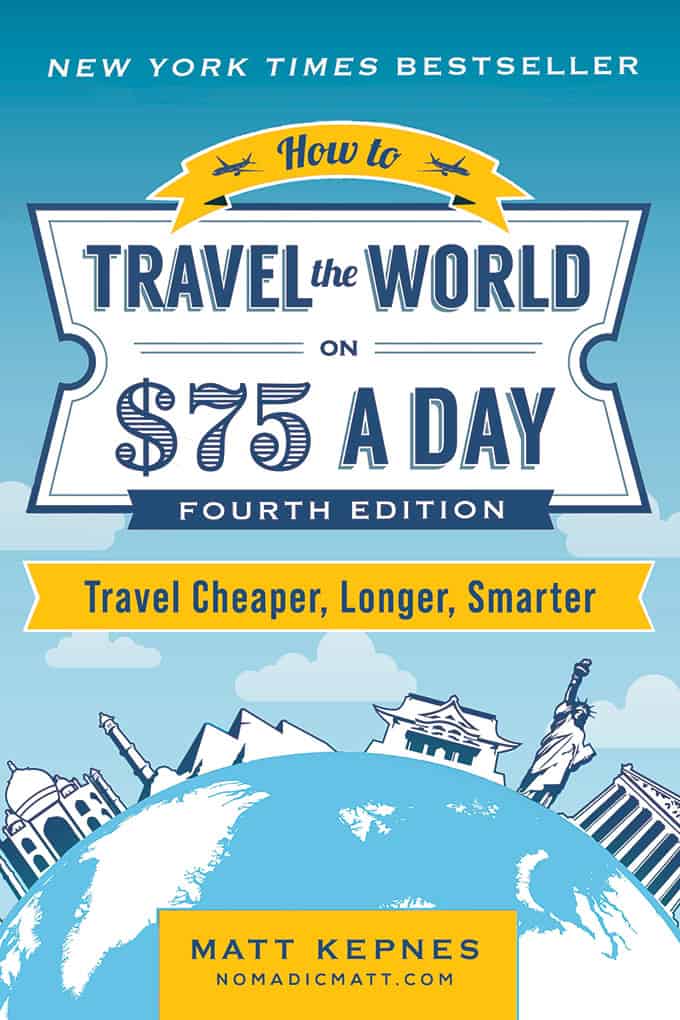
My New York Times best-selling book to travel will teach you how to master the art of travel so that you’ll get off save money, always find deals, and have a deeper travel experience. It’s your A to Z planning guide that the BBC called the “bible for budget travelers.”
Click here to learn more and start reading it today!
Book Your Trip: Logistical Tips and Tricks
Book Your Flight
Find a cheap flight by using Skyscanner. It’s my favorite search engine because it searches websites and airlines around the globe so you always know no stone is being left unturned.
Book Your Accommodation
You can book your hostel with Hostelworld. If you want to stay somewhere other than a hostel, use Booking.com as it consistently returns the cheapest rates for guesthouses and hotels.
Don’t Forget Travel Insurance
Travel insurance will protect you against illness, injury, theft, and cancellations. It’s comprehensive protection in case anything goes wrong. I never go on a trip without it as I’ve had to use it many times in the past. My favorite companies that offer the best service and value are:
Want to Travel for Free?
Travel credit cards allow you to earn points that can be redeemed for free flights and accommodation — all without any extra spending. Check out my guide to picking the right card and my current favorites to get started and see the latest best deals.
Need a Rental Car?
Discover Cars is a budget-friendly international car rental website. No matter where you’re headed, they’ll be able to find the best — and cheapest — rental for your trip!
Need Help Finding Activities for Your Trip?
Get Your Guide is a huge online marketplace where you can find cool walking tours, fun excursions, skip-the-line tickets, private guides, and more.
Ready to Book Your Trip?
Check out my resource page for the best companies to use when you travel. I list all the ones I use when I travel. They are the best in class and you can’t go wrong using them on your trip.