
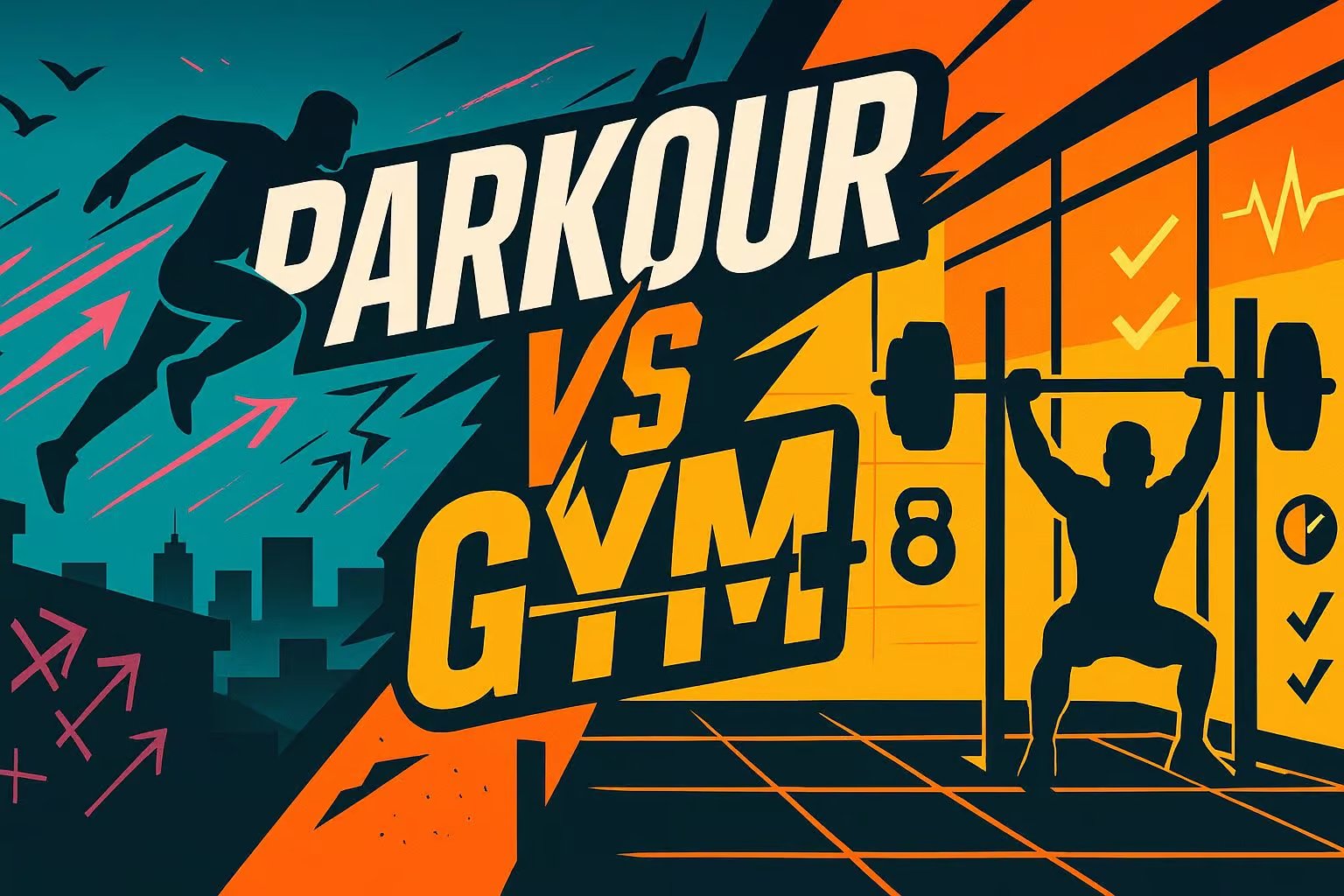
Are you torn between choosing parkour or gym workouts to sculpt your dream physique? It’s a common dilemma many fitness enthusiasts face.
Do you crave the thrill of conquering real-world obstacles with parkour, engaging in running, climbing, and jumping in outdoor environments? Or are you more inclined towards the structured strength and precision of indoor gym workouts?
We understand your dilemma. You want to make an informed decision that aligns with your fitness goals.
Let’s delve into the specifics of both training styles with concrete facts to help you navigate this decision-making process. Are you ready to discover which training method suits you best? Let’s dive in.
Key Takeaways
Parkour delivers intense full-body workouts using just your bodyweight, which skyrockets your core strength, endurance, and agility. A 2022 study showed that adolescent males in parkour training saw greater gains in peak oxygen uptake and explosive power compared to those in traditional gym training.
Gym workouts are fantastic for isolating specific muscle groups with machines or free weights. Using progressive overload with classic moves like the bench press and squat is the proven way to build muscle mass, but it can sometimes lack real-world functional movement unless you add specific mobility drills.
< Comparing Parkour and Gym Training: A Comprehensive Analysis
When it comes to fitness and physical activity, there are countless options available for individuals looking to improve their health and well-being. Two popular choices that offer unique benefits are parkour and gym training. Both forms of exercise have their own set of advantages and challenges, and understanding how they differ can help you decide which one is right for you. Here’s a detailed comparison of the sweat and results you can expect from parkour versus gym training.
Parkour:
– Offers full-body workouts that rely on your own body weight.
– Builds incredible core strength, as every vault, jump, and roll demands it.
– Develops endurance through constant, fast-paced movement over obstacles with minimal breaks.
– A 2022 study showed adolescent males had significant gains in peak oxygen uptake and explosive power.
– Trains muscle groups to work together as a single unit, improving functional strength.
– Uses plyometrics and bodyweight strength drills to build power for absorbing hard landings.
– Dramatically improves agility by forcing you to react to new barriers and changing environments.
Gym Training:
– Focuses on progressive overload with weights to target and grow specific muscles.
– Allows you to increase the challenge incrementally with curls, squats, and the bench press.
– Uses structured routines, like push-pull-legs splits, to isolate muscle groups for maximum hypertrophy.
– Endurance can be built with specific protocols, like the Tabata style of HIIT.
– Core work is often a separate, dedicated part of the workout.
– Builds immense raw strength but may require extra work on real-world movement patterns.
– Less emphasis on reactive agility and dynamic coordination unless functional training is included.
What are the flexibility and mobility benefits of parkour versus gym workouts?
When it comes to flexibility and mobility, parkour and gym training offer distinct advantages:
Parkour:
– Training style is dynamic and playful, involving real-world obstacles.
– Flexibility is built-in, with constant stretching and adapting to new shapes.
– Joint mobility improves naturally through varied, real-world movements.
– Enhanced flexibility and mobility help prevent injuries.
– Gains directly transfer to other sports and activities.
– Examples of movement include climbing fences, swinging from bars, and leaping over benches.
Gym Workouts:
– Flexibility often requires dedicated effort like post-workout stretching.
– Mobility work is often isolated and requires specific programs.
– Stretching routines can cut down on injuries, but neglecting mobility work can lead to muscle tears.
– While professional gymnasts show elite flexibility, average gym-goers often have average scores.
– Examples of movement include squats, bench presses, and deadlifts.
Research findings have shown that parkour athletes often outperform team sports athletes in flexibility and movement skill tests, highlighting the unique benefits of this form of exercise.
How do parkour and gym exercises improve coordination and balance?
Both parkour and gym training can improve coordination and balance, but they do so in different ways:
Parkour:
– Builds outstanding coordination through running, jumping, and vaulting.
– Forces the body to adapt quickly in milliseconds.
– Enhances body awareness by navigating complex environments.
– Improves balance with precise landings on narrow surfaces.
– Sharpens reflexes and motor skills rapidly.
Gym Training:
– Develops balance through specific tools like BOSU balls and free weights.
– Builds stability through controlled, precise movements.
– Boosts spatial awareness through form-focused workouts.
– Requires specific equipment like TRX or medicine balls for functional training.
– Provides immediate feedback through mirrors and trainers.
Both forms of exercise offer unique benefits for individuals looking to improve their coordination and balance, with parkour focusing on real-world movements and gym training emphasizing structured, controlled exercises.
Mental and Emotional Benefits:
In addition to physical benefits, both parkour and gym training offer mental and emotional advantages:
– Parkour challenges individuals with split-second decisions and sharpens reflexes.
– Gym training builds mental toughness through the grind of lifting heavy weights.
– Both forms of exercise can transform stress into sweat, leaving individuals feeling powerful and clear-headed.
How does parkour or gym training help build confidence?
– Nailing difficult vaults in parkour builds self-efficacy and confidence.
– Overcoming obstacles in the gym fosters grit and determination.
In conclusion, both parkour and gym training offer unique benefits for individuals looking to improve their physical fitness and overall well-being. Whether you prefer the dynamic, real-world challenges of parkour or the structured, controlled environment of gym training, there are opportunities to grow and develop in both forms of exercise. Ultimately, the choice between parkour and gym training comes down to personal preference and fitness goals. Whichever path you choose, remember to stay consistent, listen to your body, and enjoy the journey to a healthier, stronger you. Whether you prefer traditional sneakers or lifting shoes depends on your workout style.
Each setting has its own advantages and requires different gear, but the bottom line is that consistency and dedication are key no matter where you train.
Conclusion
Whether you’re flipping off walls or deadlifting heavy weights, the sense of accomplishment that comes from pushing your limits is unparalleled. Parkour and gym workouts offer unique avenues for building self-confidence, relieving stress, and achieving goals.
By immersing yourself in the practice, whether it’s navigating urban obstacles or lifting weights, you can cultivate a deep sense of focus and presence that carries over into your daily life. The feeling of progress and competence that comes from setting and crushing goals is a powerful motivator that keeps you coming back for more.
Ultimately, the choice between parkour and gym workouts comes down to personal preference and what suits your lifestyle best. Whether you prefer the controlled environment of a gym or the challenges of outdoor training, the most important thing is to keep moving forward and challenging yourself.
So, lace up your shoes, grab your gear, and get ready to push yourself to new heights, one rep at a time. The confidence and mental clarity you’ll gain from these practices will not only benefit your physical health but also your overall well-being. Embrace the journey and see where it takes you!
When it comes to choosing the right footwear for your workout, the debate between flat-soled sneakers and specialized weightlifting shoes with a raised heel continues. Many prefer flat-soled sneakers for deadlifts, as they provide a stable base and better grip on the ground. On the other hand, some opt for weightlifting shoes like Nike Romaleos for squats, as the raised heel can improve ankle mobility and help maintain an upright posture during the movement.
In the world of fitness, routines can vary greatly. Some draw inspiration from gymnastics, incorporating elements like rings and ropes into their workouts. However, not all gyms have these specialized equipment readily available. This limitation can challenge individuals to get creative with their training, using what resources they have to achieve their fitness goals.
For those looking to pack their gym bag with essentials, a comprehensive guide is a valuable resource. From the right workout attire to must-have accessories, being prepared with the necessary items can enhance your workout experience and ensure you have everything you need to stay focused and motivated.
When it comes to the adaptability of parkour and gym training to various locations, parkour takes the lead. Parkour is incredibly versatile, allowing athletes to train in almost any urban setting using only their imagination and a sturdy pair of shoes. This freedom to turn any environment into a training ground is a core principle of parkour, fostering creativity and problem-solving skills that traditional gym workouts may not provide.
In terms of community and social interaction, both parkour and gym training offer unique experiences. Gym workouts often involve group fitness classes that promote camaraderie through shared effort. Instructors lead the way, creating a sense of accountability and encouraging participants to push themselves. This structured environment can lead to higher retention rates and the development of strong social connections among gym-goers.
On the other hand, parkour communities are built on collaboration and support. During training sessions or “jams,” athletes spot each other, share tips, and celebrate each other’s progress. Online communities also play a significant role in fostering a sense of belonging and providing a platform for sharing advice and organizing meet-ups. The inclusive atmosphere of parkour communities makes it an inviting space for beginners to learn and grow in a safe and encouraging environment.
When it comes to achieving different fitness goals, both parkour and gym training can be effective. Whether you’re looking to lose weight, build muscle, or improve your overall fitness, the key is to choose an approach that aligns with your specific goals. Gym training excels in muscle building through heavy lifting and isolation exercises, while parkour focuses on functional fitness and movement skills through bodyweight exercises and dynamic movements. Ultimately, the choice between parkour and gym training depends on your individual preferences and fitness objectives. The philosophy of integrating functional fitness with traditional gym workouts, championed by pioneers like David Belle, emphasizes making athletic performance feel like second nature. This approach combines the raw strength gained from gym exercises with the dynamic power and agility required for activities like parkour.
Gym workouts are essential for developing foundational strength by targeting stabilizer muscles that protect joints and enhance movements. Exercises such as the farmer’s walk and kettlebell swings help build the strength needed for powerful jumps and safe landings in parkour training. On the other hand, mobility exercises like lunges in the gym complement the dynamic movements of parkour, creating a well-rounded and resilient athlete.
While both gym and parkour training offer numerous benefits, they also come with safety and injury risks that need to be managed. In the gym, overuse injuries, poor exercise techniques, overtraining, and accidents due to improperly set up equipment are common concerns. Similarly, in parkour, bad landings, slippery surfaces, and attempting high-risk stunts without proper preparation can lead to injuries. Practicing caution, wearing appropriate gear, and training with a focus on safety can help mitigate these risks.
When it comes to cost and time commitment, parkour offers a low barrier to entry as it can be practiced virtually anywhere with minimal equipment. In contrast, gym memberships can be a recurring expense, but they provide access to a variety of equipment and facilities. Understanding the costs and time flexibility of each training style can help individuals choose the option that best fits their budget and schedule.
Looking ahead to 2025, the fitness landscape is expected to see further evolution in training methodologies. Hybrid training styles that combine elements of gymnastics, weightlifting, and parkour are becoming more prevalent. Professional athletes are increasingly incorporating diverse training modalities to enhance their performance, emphasizing the importance of well-rounded strength, agility, and mobility in athletic pursuits. As the boundaries between different fitness disciplines continue to blur, the future of fitness training promises to be dynamic and multifaceted. The concept of cross-training is gaining popularity due to its ability to stave off burnout and cultivate more resilient athletes. This trend is further bolstered by the increasing role of wearable technology in fitness. Modern devices such as the WHOOP strap and Garmin watches now offer detailed insights into metrics like joint angles and recovery scores, enabling athletes to optimize their training regimens and proactively prevent injuries. The future of fitness revolves around intelligent, integrated training methods that not only build strength but also foster a versatile and adaptable physique.
As individuals delve into the realm of cross-training, they often have questions about the efficacy of different workout modalities. For instance, whether parkour or traditional gym workouts are more effective for muscle building, it’s essential to understand that while the gym facilitates faster muscle mass development through progressive overload, parkour primarily enhances lean, functional strength without significant bulk gain. Similarly, inquiries about calorie burning and flexibility gains through parkour versus gym routines highlight the diverse benefits associated with each training approach.
In terms of safety considerations for beginners, the controlled environment of indoor gym machines offers a safer starting point compared to attempting advanced parkour maneuvers outdoors without proper guidance. By understanding the nuances of various training methods, individuals can tailor their fitness journeys to align with their goals and preferences while minimizing the risk of potential injuries.
For those looking to explore the intersection of fitness and technology, the integration of wearable devices and smart training platforms presents a wealth of opportunities to enhance performance and overall well-being. By harnessing the power of data-driven insights and personalized training protocols, athletes can unlock their full potential and embark on a journey towards holistic fitness transformation.
References:
1. https://mainewarriorgym.com/the-benefits-of-ninja-warrior-and-parkour-as-cross-training-for-other-sports/
2. https://www.researchgate.net/publication/383496391_The_Effect_of_Parkour_Activities_on_Specific_Physical_Fitness_and_Grit_in_the_Population_of_Healthy_Youth_Football_Athletes
3. https://swift-movement.com/blog/gymnastics-vs-parkour-kids/
4. https://pmc.ncbi.nlm.nih.gov/articles/PMC11983557/
5. https://www.parknplaydesign.com/post/benefits-of-parkour-for-kids
6. https://www.mdpi.com/1660-4601/22/11/1632
7. https://wemovetoheal.com/article/training-environment-outdoors-vs-indoors/?srsltid=AfmBOopYVhpFm6AUmczbZB3–1f5Wbcrj7jGIQlgQuUGYtnGZXbL6FBI
8. https://parkour.com/parkour-gear-list/
9. https://pmc.ncbi.nlm.nih.gov/articles/PMC8554233/
10. https://www.americansportandfitness.com/blogs/fitness-blog/group-dynamics-making-the-most-of-your-fitness-class?srsltid=AfmBOopazETQOxu2dB6j3NZFSui5mLjqU1XBrOb2y7QgHShl3cC3sG6y
11. https://www.delawarefitfactory.com/blog/the-power-of-community-how-group-workouts-keep-you-motivated
12. https://www.researchgate.net/publication/254368782_Tracing_the_city_-_parkour_training_play_and_the_practice_of_collaborative_learning
13. https://eprints.whiterose.ac.uk/id/eprint/79203/2/Tracing%20the%20cityWhiteRose.pdf
14. https://www.researchgate.net/publication/349292172_Effects_of_Functional_Movement_Skills_on_Parkour_Speed-Run_Performance
15. https://pmc.ncbi.nlm.nih.gov/articles/PMC9565175/
16. https://www.parknplaydesign.com/post/rules-of-parkour
17. https://www.trxtraining.com/blogs/news/home-gym-vs-gym-membership?srsltid=AfmBOopcxyHxyPcTaSfo6dol5OgbEXk2MUsnm9m_wMOQb32aNCkeyvYU
18. https://pmc.ncbi.nlm.nih.gov/articles/PMC8449772/
19. https://sdgymnastics.com/blog/gymnastics-parkour-the-athletic-advantage/ Title: The Art of Sustainable Living: A Guide to Living a Greener Lifestyle
In today’s world, the concept of sustainability has become increasingly important as we continue to face the effects of climate change and environmental degradation. Living a sustainable lifestyle is not only beneficial for the planet, but it can also improve our overall well-being and quality of life. From reducing waste to conserving energy, there are many ways in which we can make a positive impact on the environment and create a more sustainable future for ourselves and future generations.
One of the key components of sustainable living is reducing our carbon footprint. This can be achieved by making simple changes to our daily habits, such as walking or biking instead of driving, using energy-efficient appliances, and reducing our consumption of single-use plastics. By making these small adjustments, we can significantly decrease our impact on the environment and help to combat climate change.
Another important aspect of sustainable living is minimizing waste. This can be done by practicing the three R’s: reduce, reuse, and recycle. By being mindful of the products we consume and choosing items with minimal packaging, we can reduce the amount of waste that ends up in landfills. Additionally, reusing items whenever possible and recycling materials such as paper, plastic, and glass can help to conserve valuable resources and reduce our overall environmental impact.
Conserving energy is another crucial component of sustainable living. By turning off lights and electronics when not in use, using energy-efficient light bulbs, and investing in renewable energy sources such as solar panels, we can reduce our energy consumption and decrease our reliance on fossil fuels. This not only helps to lower our carbon footprint, but it can also save us money on our utility bills in the long run.
In addition to these practices, sustainable living also encompasses making conscious choices about the products we buy and the companies we support. By choosing to purchase from companies that prioritize sustainability and ethical practices, we can help to drive positive change in the marketplace and encourage businesses to adopt more environmentally-friendly policies. Supporting local businesses and farmers can also help to reduce our carbon footprint and strengthen our communities.
Overall, living a sustainable lifestyle is about making mindful choices that prioritize the health of the planet and future generations. By reducing waste, conserving energy, and supporting sustainable practices, we can create a more sustainable future for ourselves and for the world around us. It may take some effort and adjustment at first, but the benefits of living a greener lifestyle are well worth it in the long run. Let’s all do our part to make a positive impact on the environment and embrace the art of sustainable living. The Art of Storytelling: Crafting Compelling Narratives
Storytelling has been a fundamental aspect of human communication since the dawn of time. From ancient myths and legends to modern novels and films, stories have the power to captivate, inspire, and provoke emotions in their audience. But what makes a story truly compelling? How can we craft narratives that resonate with readers and leave a lasting impact?
At the heart of every great story is a well-developed plot. A strong plot is essential for holding the reader’s attention and guiding them through the narrative. It should have a clear beginning, middle, and end, with a series of events that build tension and lead to a satisfying resolution. The plot should also be driven by the actions and decisions of the characters, creating a sense of cause and effect that keeps the reader engaged.
In addition to a compelling plot, memorable characters are also key to creating a successful story. Characters should be fully realized individuals with their own motivations, flaws, and desires. Readers should be able to empathize with the characters and understand their struggles, making their journey all the more engaging. Whether they are heroes, villains, or somewhere in between, well-developed characters are essential for bringing a story to life.
Another important aspect of storytelling is setting. The world in which the story takes place should be vividly described, with enough detail to immerse the reader in the story’s atmosphere. Whether it’s a bustling city, a remote wilderness, or a fantastical realm, the setting should feel like a character in its own right, shaping the events of the story and adding depth to the narrative.
Finally, effective storytelling requires skillful pacing and structure. The story should unfold at a pace that keeps the reader engaged, with well-timed revelations and twists that maintain suspense and momentum. The structure of the story should also be carefully planned, with a clear beginning, middle, and end that flow seamlessly from one to the next.
In conclusion, the art of storytelling is a complex and nuanced craft that requires a combination of skill, creativity, and imagination. By carefully crafting a compelling plot, developing memorable characters, creating a vivid setting, and mastering pacing and structure, writers can create narratives that resonate with readers and stand the test of time. So whether you’re writing a novel, a screenplay, or a short story, remember to put in the time and effort to craft a story that will captivate and inspire your audience. The world of fashion is constantly evolving, with new trends emerging every season. One trend that has been gaining popularity in recent years is sustainable fashion. Sustainable fashion is all about creating clothing and accessories in an environmentally and socially responsible way.
One of the key components of sustainable fashion is using eco-friendly materials. This can include organic cotton, hemp, bamboo, recycled polyester, and even materials made from algae. These materials are not only better for the environment, but they also tend to be more durable and higher quality than traditional materials.
Another important aspect of sustainable fashion is ethical production practices. This means ensuring that workers are paid fair wages, work in safe conditions, and are treated with respect. Many sustainable fashion brands also prioritize supporting local artisans and communities, helping to preserve traditional craftsmanship and create economic opportunities.
In addition to using eco-friendly materials and ethical production practices, sustainable fashion also focuses on reducing waste. This can involve using leftover fabric scraps to create new garments, or designing clothing that can be easily recycled or composted at the end of its life cycle.
Sustainable fashion is not just a passing trend – it is a movement that is here to stay. As consumers become more aware of the environmental and social impact of their clothing choices, they are increasingly seeking out brands that prioritize sustainability. By supporting sustainable fashion brands, consumers can help reduce their carbon footprint and support a more ethical and environmentally friendly fashion industry.
Whether you are a fashion lover looking to make more responsible choices, or a designer looking to make a positive impact, sustainable fashion is a trend worth embracing. With its focus on eco-friendly materials, ethical production practices, and waste reduction, sustainable fashion is not only stylish, but also better for the planet and its people.