
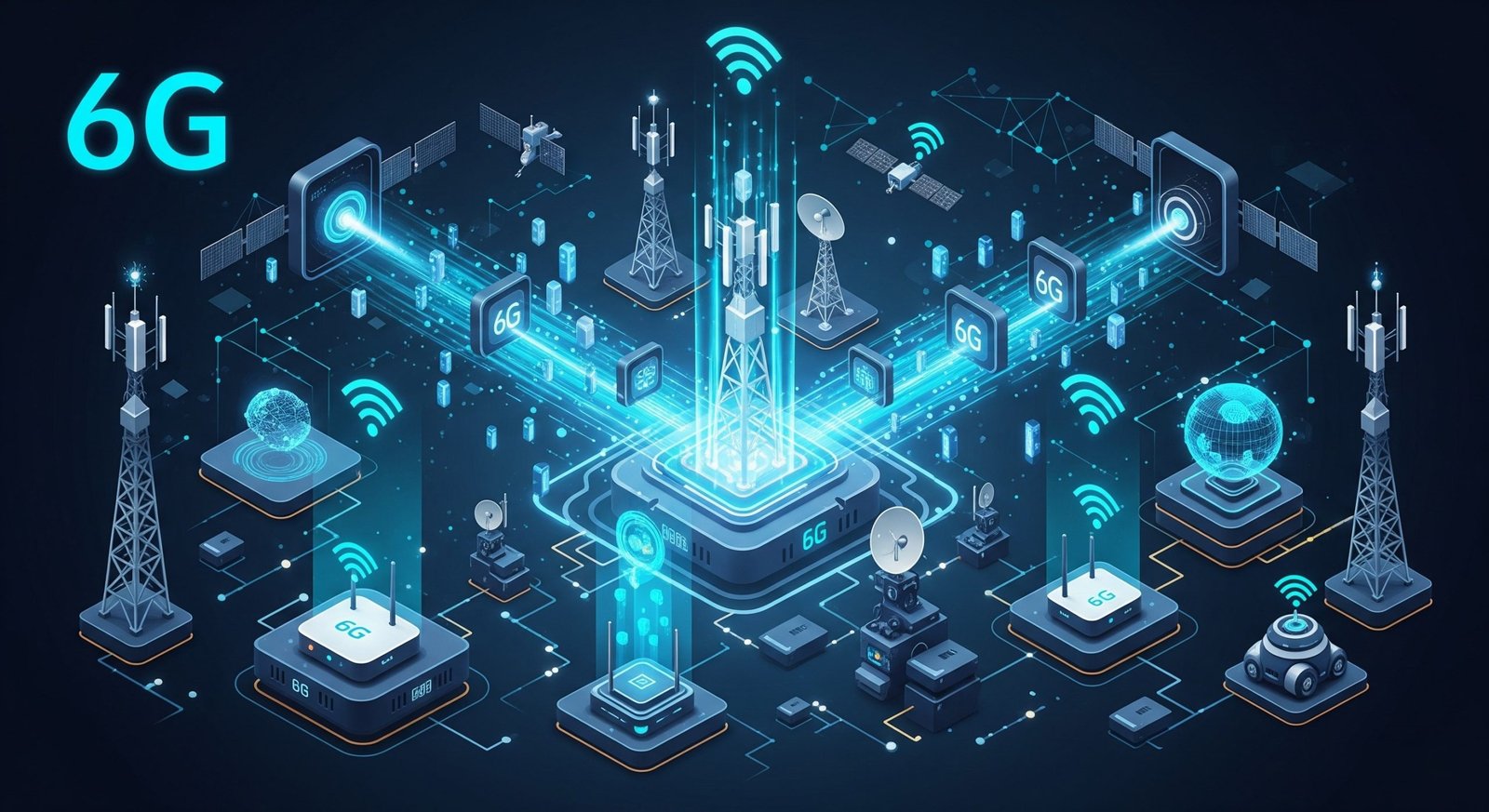
In today’s digital age, staying connected to the Internet is a constant part of our lives, whether through Wi-Fi at home, public networks, or mobile data. For many, that mobile data comes from 5G, the fifth generation of cellular network technology. While some still use older technologies like 3G or 4G, the next evolution on the horizon is 6G.
6G is not immediately arriving, but there is enough information available to discuss its potential impact. Expected to be a significant advancement over 5G, 6G promises faster data speeds and a wider range of capabilities. Companies like Ericsson, Qualcomm, and Nokia are at the forefront of 6G development, each outlining their vision for this next generation technology.
Anticipated to integrate AI, sensing technology, digital twinning, and other new features, 6G aims to be smarter and more efficient than its predecessors. With projected improvements in data speed, latency, device density, and network architecture, 6G is poised to revolutionize connectivity across various sectors.
While the exact timeline for 6G’s commercial release is around 2030, pre-commercial trials are expected to begin in 2028. The race for 6G dominance is ongoing, with countries like China, the US, Korea, Japan, and the EU investing heavily in research and development.
For end consumers, 6G promises a host of benefits, including faster speeds, seamless connectivity, ultra-low latency, improved power efficiency, and truly immersive experiences. From healthcare to transportation to entertainment, 6G is expected to unlock new possibilities and transform various industries.
In conclusion, 6G represents a significant leap forward in wireless technology, bridging the gap between the physical and digital worlds. While still in the early stages of development, the potential for 6G to revolutionize connectivity and enhance user experiences is immense. As we look towards the future, the expectations for 6G are high, and the possibilities are endless.