

What does a beauty queen have to do with school attendance? At one Maryland middle school, quite a bit.
Deborah Dennie, the principal of the 1,000-student Leonardtown Middle School in Leonardtown, Md., enlisted the winner of the Miss Maryland beauty pageant—Maria Derisavi—to help boost attendance in her school. Derisavi recorded a 30-second video encouraging students to show up every day, and later visited the school to talk with middle schoolers about the importance of attendance.
To drum up excitement, Dennie put up Derisavi’s picture on a screen in the main hallway a month before her visit. She quizzed passing students with trivia questions: Who was she? Where did she go to school? Who were her teachers? Students who guessed correctly won a prize.
The timing behind this visit was intentional, Dennie said. Students start the school year with enthusiasm, which fades by late winter.
The trivia game, the short encouragement videos, and incentives are all part of Dennie’s plan to get students excited about school.
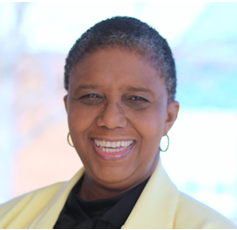
“If we want students to achieve, they have to be here in school,” said Dennie, one of the three finalists for the 2026-27 National Middle School Principal of the Year award, organized by the National Association of Secondary School Principals. The finalists for the awards, at both the middle and high school levels, were announced on Tuesday.
All three middle school leaders spoke about the need to foster connections with all students, and how teachers can play a role in making that happen. Nationwide, school leaders must tackle the thorny challenge of getting students to school and keeping them engaged. While chronic absenteeism rates have improved since the record, pandemic-era high of 29%, recent national data show that progress has stalled, according to a report published by the American Enterprise Institute, an economic policy research organization.
Research shows that a sense of belonging and feeling safe at school can go a long way in fighting absence and misbehavior, improving academic outcomes, and engaging students.
Dennie’s efforts have paid off, though: the school’s average attendance rate this year is 94.5%, up from 93% in the 2024-25 school year.
“We’re trying to impress upon them that they belong and should feel a part of the [school] community,” said Dennie.
Putting a sense of belonging into practice
For some school leaders, the path to better attendance begins with investing in ways to boost students’ sense of belonging in school.
Sonia Ruiz, the principal of the 540-student Jane Addams Middle School in Bolingbrook, Ill., and a finalist for the principal-of-the-year award alongside Dennie, uses formal and informal surveys to routinely capture how students feel about their school, their friends, and teachers.
“I’m a firm believer that we as the adults can’t decide what’s going to make a kid feel like they belong. We’ve got to find out from the kids feel like they belong.”

Two key questions guide the surveys: Can you name one person in the school you feel connected to? What would you like your teachers to know about you? The responses helped Ruiz identify students who felt marginalized or “not seen” by their teachers or peers.
Using these data, Ruiz and her team came up with a “2×10” plan to address students’ needs: teachers meet students for two minutes ten days in a row, and the focus is on students who can’t identify any adult or friend they can connect with in the survey.
Ruiz has also adjusted advisory periods to address students’ academic and social emotional needs.
Students who need academic support attend “future ready” classes, where teachers work on addressing gaps in math or reading. The other advisory class focuses on building social-emotional skills, including conflict resolution. Students in those groups work through questions such as, “What do I do the next time I’m in this situation?”
For the last three years, Jane Addams has received “exemplary” status, which means it’s in the top 10% of schools in Illinois. Ruiz credits this to the school’s “caring and responsive” culture. Her own experience as a first-generation multilingual learner informed how she wants students to feel every day.
“It wasn’t until a teacher went above and beyond to teach us English,” Ruiz said about her own student experience. “If it wasn’t for her, I wouldn’t be talking to you today.”
The power of recognition and peer bonding
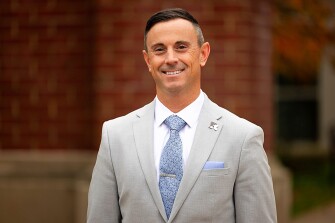
For students to feel welcome in school, it’s important that at least one adult knows them beyond simply their name and grade, said David Wiedlich, the principal of Radnor Middle School in Radnor, Pa., and the third finalist for the award.
Twice a year, Wiedlich and his staff review every student photo in the school directory to assess whether teachers know meaningful details about each student.
“If there are students who might not have any identifiers on their picture, we make sure that we are intentional about getting to know that child,” said Wiedlich.
Wiedlich also encourages his teachers to work on students’ “academic language” to improve classroom engagement.
Giving feedback is one example. “If an 11-year-old doesn’t like something, they’re going to say, ‘I hate this.’ That’s not feedback, that’s emotion,” said Wiedlich. Instead, teachers ask students—through online polls or simple Q&As—to describe what exactly they found tough or easy in class.
These strategies are Weidlich’s way of ensuring that every student can learn in a way that suits them. He’s woven this idea into professional development, where he helps teachers develop strategies to let students showcase their learning in different ways—from group work to presentations.
Developing a peer-to-peer nudge
Principals have found that the most effective people to nudge student belonging isn’t always teachers or counselors—it’s other students.
Dennie’s school has a strict bell-to-bell cellphone ban, with one exception. At the beginning of the day, Dennie encourages students to look around to check if a friend is missing. Students are allowed to use their phones to call their absent friend and ask them why they’re not in school.
“They tell their friends, ‘We miss you. We hope to see you in the next period,’” Dennie said. Students who convince their friends to show up win a prize.
Ruiz has used the peer-to-peer connection in a different way, by setting up a mentorship program between older and younger students at her middle school. Students in 8th grade who’ve worked on their own behavior issues throughout the year mentor younger peers.
Younger students may have a hard time navigating 6th grade; their older peers can coach them through problems they experienced when they entered middle school.
This relationship also promotes belonging, Ruiz said: “When a mentor can say, ‘Hey, you had this issue with another student. How can you handle it differently next time?’, it means a lot more for some of these kids.”