
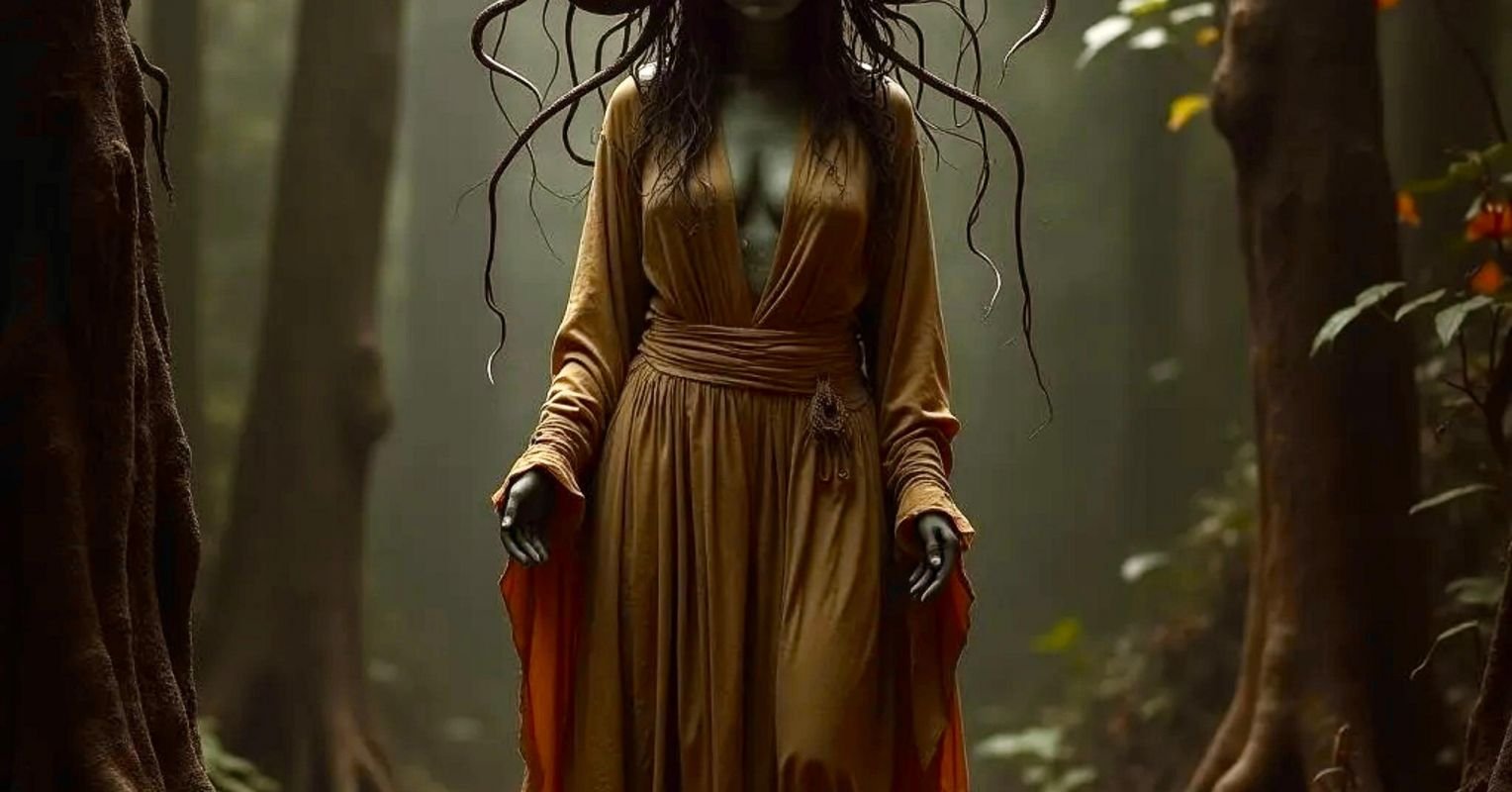
The tale of the “Bloofer Lady” from Bram Stoker’s renowned novel, “Dracula,” delves into the chilling story of Lucy Westenra, a deceased character who rises as a vampire to haunt the streets of London. Lucy, once a gentle soul, now preys on children under the cloak of night, instilling fear and terror.
A group of courageous vampire hunters discovers Lucy in a graveyard, witnessing her monstrous transformation. Clad in the pale garments of her burial, Lucy’s once gentle eyes now blaze with hellish fire, her features twisted into a ghastly semblance reminiscent of Medusa. The hunters are appalled by the sight of Lucy feeding on a helpless child, her inhuman nature laid bare before them.
The vampire Lucy attempts to ensnare one of the men before retreating to her tomb as the first light of dawn approaches. The following day, the hunters return to dispatch the vampire Lucy by driving a stake through her heart, ending her reign of terror.
The concept of the monstrous feminine, as explored by scholar Barbara Creed, delves into the archetype of the anti-mother figure prevalent in pop culture. These female monsters subvert the traditional nurturing role of mothers, embodying malevolence and domination over children and men alike.
Freud’s theory of the “phallic mother” is intertwined with the monstrous feminine trope, highlighting the fear of castration and dominance associated with maternal figures. The image of the monstrous mother-castrator has permeated mainstream villainous portrayals of mothers in various media.
Recent adaptations of the monstrous feminine, such as the HBO series “Sharp Objects,” offer intriguing reinterpretations of the trope. The character of Adora embodies the fearsome mother figure, inflicting harm on her own children for personal gain. The series subverts expectations by portraying a daughter as the protagonist and revealing the true identity of the “woman in white” as a troubled teenager.
While Freud’s influence may be waning, the enduring presence of the monstrous anti-mothers in popular culture signals a timeless fascination with these complex and terrifying figures. The reinterpretation of classic tropes like the Bloofer Lady continues to captivate audiences and provoke thought on the nature of female monstrosity.