
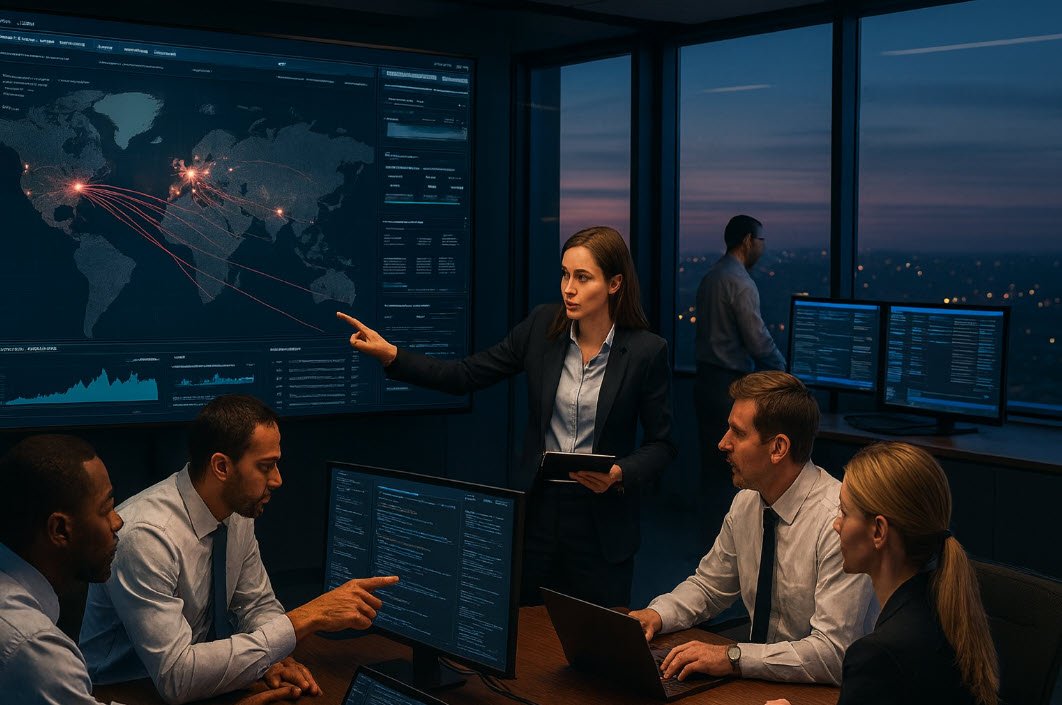
Adversarial AI attacks are happening at a rapid pace, outpacing the ability of SOC analysts to respond quickly. This has ushered in a new era of agentic AI cyberdefense, where automated responses are matching the speed of malicious actors. Security leaders are now looking to enhance their existing tools with AI capabilities to better handle the expanding threat landscape, as noted in Gartner’s 2025 Hype Cycle for Security Operations.
According to William Blair & Company’s predictions, agentic AI has the potential to secure a 100x increase in assets, with the total addressable market expected to grow from $140 billion this year to $300 billion by 2030. However, for agentic AI to reach its full potential, strong governance is essential. CrowdStrike CEO George Kurtz emphasized the importance of putting guardrails around AI agents to prevent unauthorized access to networks.
Enterprises are experimenting with different architectures to address governance challenges, with companies like Cato Networks using AI extensively to tackle IT challenges. Good AI starts with good data, and companies are enriching their data lakes with threat feeds to enable threat hunting, anomaly detection, and network degradation detection.
As organizations face the prospect of securing a significantly larger number of assets, ten agentic AI technologies will play a crucial role in safeguarding SOCs and ensuring proper governance:
1. Charlotte AI AgentWorks: CrowdStrike’s autonomous SOC orchestrator that deploys specialized agents trained on threat telemetry.
2. Threat AI Agents: Autonomous agents that detect, analyze, and respond to threats without human intervention.
3. Pangea Agent Protection: Enterprise-grade AI governance embedded directly into Falcon.
4. Falcon for IT: Intelligence-driven vulnerability prioritization based on real-world exploitation data.
5. Onum Streaming Telemetry: Real-time intelligence pipeline for sub-second threat detections.
6. Unified Enterprise Graph: Contextual intelligence linking assets, identities, and cloud resources.
7. Malware Analysis Agent: Automated malware reverse engineering for faster threat analysis.
8. Agentic Fusion SOAR: Intent-driven security orchestration without coding.
9. Hunt Agent: Proactive threat hunting through autonomous hypothesis generation.
10. Governance by Design: Transparent autonomous operations with full auditability.
In conclusion, the projected expansion of assets demands collaboration across the industry to effectively combat adversarial AI. Unified architectures, embedded governance, and strategic partnerships are key to the success of agentic AI in the SOC. Defenders must work together and leverage technology to stay ahead of sophisticated cyber threats.