
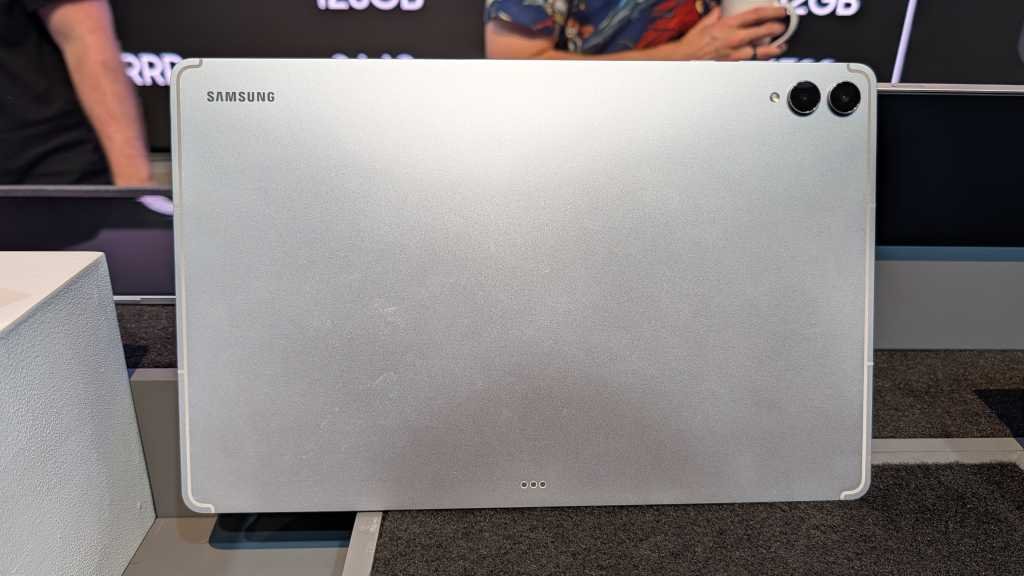
The arrival of Samsung’s latest behemoth tablet, the Galaxy Tab S11 Ultra, has caused quite a stir. Following the footsteps of its predecessors, the Tab S10 Ultra and Tab S9 Ultra, this new model boasts impressive specifications that make it one of the most powerful Android tablets to date.
Featuring a massive 14.6-inch AMOLED display housed in a sleek 5.1mm chassis, the Tab S11 Ultra is both stunning and durable, with an aluminum frame and IP68 water and dust resistance. Powering the device is MediaTek’s Dimensity 9400+ chipset, rivaling the Snapdragon 8 Elite in performance, and a substantial 11,600mAh battery with 45W charging support.
In addition to its impressive hardware, the Tab S11 Ultra comes equipped with quad speakers, three cameras, and Samsung’s magnetic S Pen stylus, making it a versatile tool for productivity and creativity. Early reviews suggest that it may even outperform its predecessor, the Tab S10 Ultra.
However, despite its impressive features, there are significant drawbacks that may deter potential buyers. The most notable issue is the high price tag, starting at £1,199/$1,199 for the base model and reaching £1,349 for the 5G variant. This steep pricing places the Tab S11 Ultra in a category where more affordable options, such as the M3 iPad Air, offer better value for money.
Furthermore, to fully utilize the Tab S11 Ultra, users may need to invest in additional accessories, such as the ‘Book Cover Keyboard Slim,’ which is essential for transforming the tablet into a laptop-like device. The cost of these accessories, like the keyboard cover, can further inflate the overall price of ownership.
Another drawback of the Tab S11 Ultra is its size, with a 14.6-inch screen making it unwieldy for handheld use. While it may serve well as a laptop replacement with the keyboard attached, the sheer dimensions of the device can hinder its portability and practicality.
The S Pen stylus, while offering an improved writing experience with its new design, lacks Bluetooth Low Energy (BLE) functionality found in previous models. This omission means that certain remote control features, like using the stylus as a camera shutter button, are no longer available, representing a downgrade in functionality.
Despite Samsung’s efforts to enhance the user experience with One UI 8 based on Android 16, the limitations of the Android ecosystem still hinder the Tab S11 Ultra’s potential as a laptop replacement. Many productivity apps lack optimized tablet versions, leading to a subpar experience for users seeking a seamless transition from laptop to tablet.
In conclusion, while the Galaxy Tab S11 Ultra boasts impressive hardware and features, its high price, additional accessory costs, unwieldy size, stylus downgrade, and software limitations may deter potential buyers. As the tablet market continues to evolve, it remains to be seen whether the Tab S11 Ultra can overcome these obstacles and deliver a compelling user experience.