
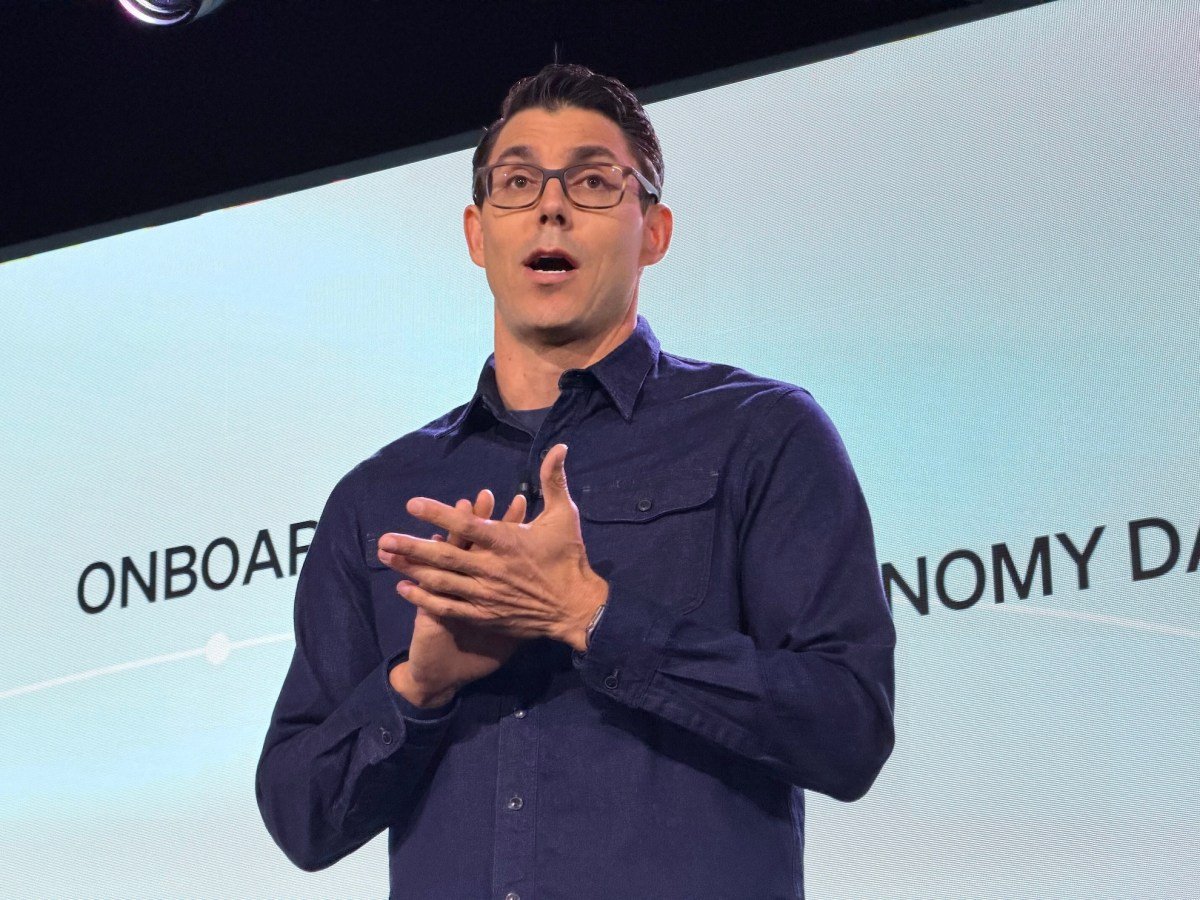
The bustling cafeteria of Rivian’s Palo Alto office was the setting for a comical yet telling scene. A robot navigated the shelves adorned with chilled canned coffees, only to come to a halt with the words “I’m stuck” flashing on its screen. A man had to intervene and push the robot out of the way, setting the tone for Rivian’s “Autonomy & AI Day.”
The event was meant to showcase Rivian’s ambitious plans to develop self-driving vehicles. However, the mishap with the cafeteria robot hinted at the challenges that lay ahead. CEO RJ Scaringe acknowledged the difficulty of the task, noting that the journey to autonomy is a complex one.
During a demo ride in a 2025 R1S SUV equipped with the new “Large Driving Model,” I witnessed both the promise and the pitfalls of Rivian’s autonomous technology. The vehicle smoothly navigated a switchback route near the company’s campus, reacting to obstacles like a Model S turning into a rival company’s lot. However, there were moments of disengagement, where the human driver had to take control due to unforeseen circumstances.
Rivian’s shift towards an AI-centric approach in 2021 marked a pivotal moment for the company. By embracing transformer-based artificial intelligence and developing a ground-up driving software, Rivian aimed to accelerate progress in self-driving technology. The introduction of the Large Driving Model (LDM) on second-generation R1 vehicles signified a significant step forward.
The goal for Rivian is to achieve “Universal Hands-Free” driving by early 2026, allowing owners to experience autonomous driving on designated roads. The company plans to gradually expand this capability to enable “point-to-point” driving later in the year. However, challenges remain, particularly with the rollout of new autonomy hardware for the upcoming R2 SUV.
The transition to a custom autonomy computer and lidar sensor presents a timing dilemma for Rivian. While customers may have to wait for full autonomy features, the company is transparent about the limitations of early R2 models. Scaringe emphasized the importance of aligning the vehicle timeline with the autonomy platform to manage customer expectations.
As Rivian navigates the complexities of self-driving technology, the vision of a fully autonomous future remains on the horizon. The company’s commitment to innovation and transparency sets the stage for a new era of mobility, where machines and humans coexist in harmony on the roadways.
Rivian’s Vision for Self-Driving Vehicles
When thinking about the future of Rivian’s vehicles, founder RJ Scaringe had a bold vision in mind. He wanted to create self-driving cars that were so advanced that they could meet you at the end of a hiking trail after you’ve completed your journey. This futuristic concept may have seemed like a far-fetched idea several years ago, but it perfectly encapsulates Rivian’s brand of adventure and innovation.
During a recent conversation, Scaringe reiterated his belief that Rivian could make this vision a reality in the near future. However, this ambitious goal is dependent on the development of more advanced R2 vehicles, which are still in the testing and production phase and may take at least a year to become available.
While self-driving technology has made significant strides, achieving a level 4 autonomy where a vehicle can navigate challenging terrains without the need for lane markings or other guiding features is essential for realizing this vision. Scaringe acknowledged that Rivian’s focus has not been solely on this specific use case, but as the company moves closer to level 4 autonomy, the possibility of a vehicle meeting you at the end of a hiking trail becomes more feasible.
When discussing the operational design domain (ODD) for self-driving capabilities, Scaringe highlighted that while navigating dirt roads or off-road terrain is within reach, extreme challenges like rock crawling are not a priority for Rivian. The primary focus remains on enabling the vehicle to transport you to the trailhead autonomously, rather than tackling extreme off-road obstacles.
While the idea of a Rivian vehicle autonomously driving up treacherous terrains like Hell’s Gate in Moab may not be on the immediate agenda, the concept of a vehicle meeting you at the end of a hiking trail represents the kind of innovative thinking that defines Rivian’s approach to adventure and technology.