
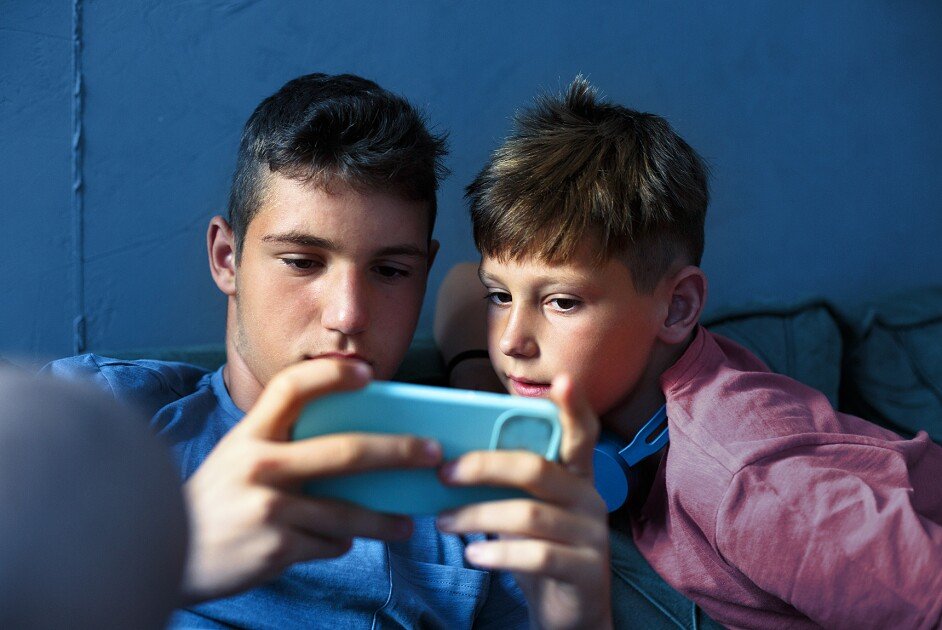
Young boys increasingly report seeing content online that promotes a particular view of masculinity and gender roles—like that boys must build muscle and have lots of money to impress girls, or that girls should focus on homemaking rather than jobs and careers. And exposure to that content on social media is associated with feelings of isolation, anxiety, and low self-esteem.
Those are the key takeaways from a new report by Common Sense Media that explores boys’ experiences online and the impact of the content they see on their self-perception and offline relationships. The report surveyed 1,017 boys between the ages of 11 and 17 in July 2025.
A number of data points from recent years have shown worsening mental health among adolescents, and particularly among girls. But the Common Sense Media reports dives into part of what could be behind the decline in boys’ mental well-being.
While the consumption of online content may seem like a phenomenon that primarily happens outside of classrooms and school hours—particularly as cellphone bans during school hours become more common—there are steps school districts can take to help educate boys about what they see online, model healthy male behaviors, and support boys with difficult or complex feelings, said Michael Robb, Common Sense Media’s head of research.
“It’s not any one person’s problem to solve,” Robb said. “But this is a community and social issue that we all have a role to play in, and schools are positioned to offer support in ways that can really help boys.”
And the report found that a majority of boys in middle and high school could benefit from such support.
Nearly three-quarters of boys (73%) regularly encounter masculinity-related content online, and nearly 1 in 4 (23%) are exposed to a lot of it.
Boys most commonly see messages about making money (44%), building muscle (39%), and fighting or using weapons (35%).
For boys who have seen such content online, about two-thirds say it just started showing up in their feeds without them searching for it, while 1 in 4 said friends shared it with them.
Exposure to masculinity content makes boys feel more lonely, less likely to share feelings
Nearly every boy said they had been exposed to content about male body image or appearance, including posts and videos about building muscle, having good fashion sense, having clear skin, or having a certain jawline or facial structure.
The majority of boys also reported seeing content that promotes what the report characterized as problematic gender roles. That includes messages that girls only want to date certain types of guys (28%), that girls use their looks to get what they want (25%), that boys are treated unfairly compared to girls (12%), or that girls should focus on home and family (12%).
Boys who said they saw these messages regularly were far more likely to report low self-esteem and feeling lonely, and were much less likely to be comfortable sharing their feelings.
About 26% of boys reported feeling lonely, but the percentage was higher for boys with “high exposure” to masculinity content (30%) than for their peers with low exposure (18%).
“High exposure” is defined as boys who said they were exposed to the content often or very often, while “low exposure” is defined as boys who said they saw the content never, rarely, or sometimes.
About 14% of boys with high exposure to masculinity-related content said they have low self-esteem, compared with 5% of those with low exposure. Thirty-four percent with high exposure reported feeling they’re “no good” compared with 16% of boys with low exposure.
Similarly, boys with high exposure to digital masculinity-related content were nearly four times more likely than those with low exposure to believe that sharing worries makes them look weak (40% vs. 11%), were more likely to hide hurt feelings from friends (50% vs. 30%), and were more likely to avoid discussing feelings altogether (67% vs. 53%).
On the other hand, 62% of boys said they believe in being friendly even to those who are unfriendly to them, 55% said they would put others’ needs before their own, and 51% said they care about others’ feelings more than their own.
“These findings point to a tension in boys’ relationships: They often feel comfortable caring for others, but less comfortable asking for care themselves,” the report said.
Schools can take small but meaningful steps to help
While schools shouldn’t alone be tasked with addressing the pitfalls of social media, they can take small, practical steps to help male students feel supported when they show up for class, Robb said.
Those steps can include ensuring existing digital literacy and digital citizenship courses include information about how social media algorithms work and how platforms target content to specific audiences, so that boys understand why they see certain posts.
“It’s not about banning technology. It’s about building critical-thinking skills, so boys understand that certain influencers or content creators are trying to sell them a lifestyle or worldview and they can make informed choices about whose advice they want to follow,” Robb said. “I think schools can be a good, safe space for discussion.”
Schools can also foster discussion among peers about identity and emotions in health classes, he said. And in literacy lessons, teachers can use classroom texts to discuss how male characters manage their emotions or navigate conflict.
Schools can also review existing anti-bullying programs to ensure they include lessons that specifically address the unique challenges boys might experience.
It’s important that districts also ensure boys have strong male role models to look up to at school—a perennial challenge for the female-dominated education profession. One suggestion in the report is to establish mentorship programs that connect boys with positive adult male role models who can provide guidance on healthy masculinity.
Robb said he understands that districts are juggling many competing priorities, and that it can be difficult to prioritize initiatives related to boys’ social media experiences.
But such efforts could have a big payoff, he said.
“Lonelier boys with lower self-esteem, with more suppressed emotions, who are less able to form authentic relationships—you might be risking boys disengaging from education entirely,” Robb said. “It’s not cost-free. Some of these things do require resources or policy changes. But they could be investments with significant returns.”
The report detailed other steps districts can take to support boys:
- Offer resources to families about how to discuss pressures to emulate a particular version of masculinity and related stereotypes.
- Train staff to recognize signs of social isolation, body image concerns, or restrictive masculine attitudes.
- Address terminology that could be problematic, like “alpha male” or “incel”—a member of an online group who is unable to attract women and who expresses resentment and hostility toward women—when it arises in classrooms, which could help students understand the complexity and potential harm of using the phrases.
“If I’m trying to figure out what an educator can take away from this research, I think they should be thinking that boys need adults and role models who can help them think critically about what they’re seeing online and also help to create space for them to be their their full and real selves,” Robb said.
“Boys haven’t lost their capacity for empathy or emotional connection. They’re just getting a lot of messages that contradict these qualities, and educators are positioned to model a broader, healthier version of what it means to be a young man.”