
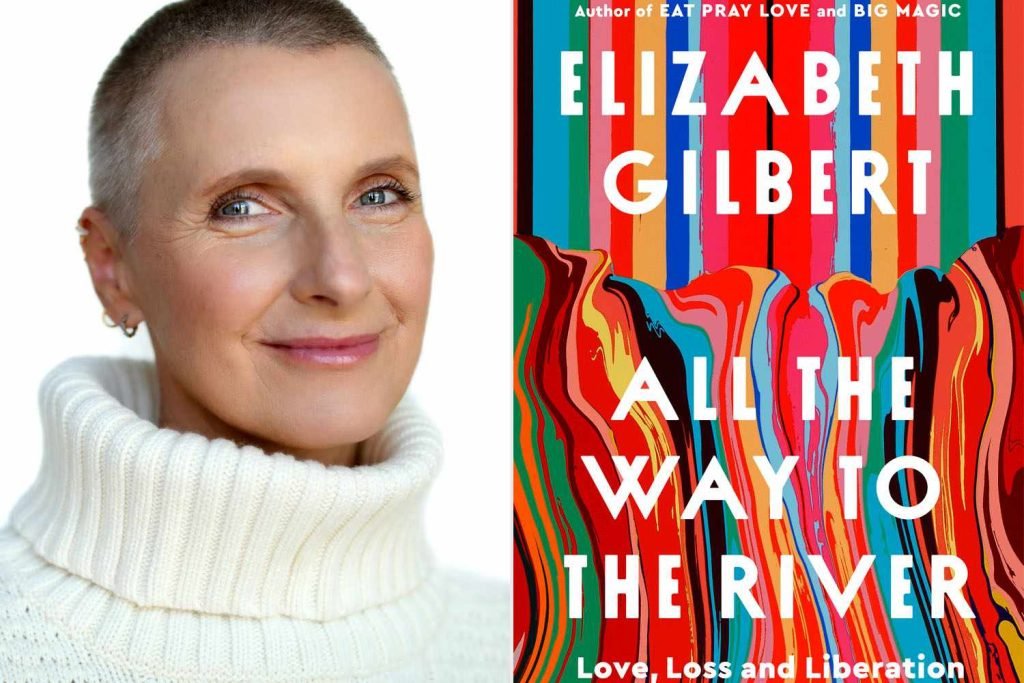
Elizabeth Gilbert’s latest memoir, “All The Way To The River,” delves into a tumultuous journey of love, addiction, and madness. As a fan of her previous work, particularly “Eat, Pray, Love,” I eagerly picked up this new book, only to be confronted with a raw and unfiltered account of Gilbert’s personal life.
The memoir begins with Gilbert’s marriage to a Brazilian man she met during her travels, only to have her world turned upside down when her best friend, Rayya, receives a terminal cancer diagnosis. What follows is a whirlwind of emotions, as Gilbert confesses her love for Rayya, divorces her husband, and embarks on a tumultuous relationship with her friend.
The narrative is unapologetically honest, detailing the highs and lows of their codependent and addictive behaviors. Gilbert’s writing pulls no punches, offering readers a glimpse into the darker aspects of love and loss. From drug addiction to thoughts of murder, the memoir is a rollercoaster of emotions that leave the reader questioning the boundaries of disclosure.
As I read through the pages, I couldn’t help but feel like a voyeur, peeking into the intimate struggles of two women. The line between brave vulnerability and overdisclosure blurs, leaving me conflicted about the ethics of sharing such personal experiences. Is it a boundary violation when invited to witness someone else’s pain? Or is it a necessary part of the healing process?
Ultimately, “All The Way To The River” is a challenging read that forces readers to confront their own beliefs about transparency and storytelling. While Gilbert’s writing is undeniably powerful, it raises important questions about the limits of self-disclosure and the impact it can have on those involved.
In the end, I found myself grappling with conflicting emotions – admiration for Gilbert’s courage in sharing her story, and concern for the potential consequences of such candid revelations. It’s a book that lingers long after the final page is turned, leaving readers to ponder the complexities of truth, storytelling, and the blurred lines between personal and public narrative. I had a visceral reaction while reading what felt like Liz’s personal journal, filled with intimate details about a deceased individual. The inclusion of doodle drawings and personal poems made it seem like a peek into her private thoughts, rather than a curated experience for the reader. It felt like I had paid for a book that wasn’t meant for me, but rather for Liz’s own healing process.
Reflecting on my own experiences with writing memoirs, I am grateful that my first attempt never made it to publication. Looking back, I realize the importance of writing to process emotions and experiences, even if they are not meant for public consumption. There is a fine line between sharing personal stories and respecting privacy, especially when it involves others who may be affected by the revelations.
The question of consent loomed large as I delved deeper into the narrative. Did Liz have permission to share such intimate details about a deceased individual? The idea that Rayya’s spirit came to Liz and instructed her to write the book raised ethical concerns about privacy and consent. It made me question the boundaries of storytelling and the responsibility of authors to respect the privacy of those they write about.
Reading memoirs like Liz’s made me reflect on the impact of sharing personal stories on others. When Glennon Doyle published her book “Love Warrior,” detailing her husband’s struggles with sex addiction, I couldn’t help but think about the implications for her family and her ex-husband. It made me more conscious of the need for consent and consideration when sharing personal narratives.
The discomfort I felt while reading Liz’s book also stemmed from a sense of unease about the concept of “priv-lit.” Coined as a genre of literature targeted at affluent, educated, white women, priv-lit blends empowerment rhetoric with consumerism and lifestyle branding. It raises questions about the intersection of privilege, personal transformation, and the commodification of spirituality.
As I navigated through the pages of Liz’s book, I grappled with the complexities of storytelling, consent, and privilege. It served as a reminder of the power of words and the importance of ethical storytelling. In a world where personal narratives are increasingly shared and consumed, it is crucial to consider the implications of our stories on others and to approach storytelling with empathy and respect.
This vulnerable revelation by Liz Gilbert showcases a side of her that is relatable and humanizes her as a spiritual leader. It is a reminder that even those who seem to have it all figured out still have inner struggles and wounds that need healing. This chapter resonates with many readers who have their own inner child wounds to address and shows that self-realization is a journey that involves facing and healing our past traumas.
Conclusion
In conclusion, the intersection of self-realization, spirituality, and consumerism in the priv-lit genre raises important questions about the commodification of personal growth. While self-help books and courses can provide valuable insights and tools for personal development, it is essential to critically examine the underlying messages and motivations behind the content. As readers, we should be discerning consumers of self-help material and be aware of the potential pitfalls of tying self-realization to consumption. True self-realization comes from within, through introspection, self-awareness, and meaningful personal growth, rather than through external products or services.
Ultimately, the journey to self-realization is a deeply personal and unique experience that cannot be bought or sold. It requires inner work, self-reflection, and a willingness to confront our deepest fears and insecurities. By being mindful of the influences of consumerism on our spiritual growth, we can cultivate a more authentic and fulfilling path to self-realization that is rooted in genuine transformation and self-discovery.
She pleaded with me to put an end to my lifelong habit of self-betrayal, as it was causing her pain and abandonment each time I sought solace in someone new.
Her desperation for my attention and assistance was the driving force behind my decision to fully commit to recovery. However, upon meeting this vulnerable side of myself, I found it challenging to accept her. She appeared to be a heavy burden, with numerous needs that I wasn’t sure I could handle. Initially, I held her responsible for the failures in my relationships, attributing them to her clinginess and constant search for love.
Her presence brought forth my sensitivity, leading to experiences of depression and anxiety. Unable to find peace or stability with anyone, I often found her to be fearful and tearful, qualities that I deemed unattractive. Consequently, I spent years trying to ignore or discard her, believing that without her, I could showcase only the positive aspects of myself that would draw admiration and affection.
I realized that I had been neglecting this inner child, whom I affectionately named Lizzy, or expecting others to care for her on my behalf. By seeking validation and comfort from strangers, I attempted to erase her needs and struggles. After reading about Lizzy’s journey, I developed a deep sense of compassion for her, hoping that she has found solace with Liz, the one person capable of providing her with unconditional love.
If you’re interested in exploring your own inner work, consider joining my upcoming Zoom Peer To Peer Parts Processing training with Emma Harper. For more information and registration, visit the provided link.
I invite you to share your thoughts on Liz’s story by joining the discussion on my Facebook thread linked here.
By rewriting this article, I have aimed to maintain its essence while offering a fresh perspective on the importance of acknowledging and nurturing our vulnerable selves. Embracing our inner child, like Lizzy, can lead to healing and self-acceptance, ultimately enriching our relationships and well-being. Have you ever wondered what it would be like to live in a world where technology controls every aspect of your life? Imagine a future where artificial intelligence governs society, dictating everything from what you eat to where you work. This dystopian vision is the premise of the novel “Brave New World” by Aldous Huxley.
In this futuristic world, citizens are genetically engineered and conditioned to fit into specific social classes, from the highly intelligent Alphas to the intellectually stunted Epsilons. People are taught to embrace consumerism and hedonism, indulging in mindless entertainment and promiscuity to distract themselves from the harsh realities of their existence.
One of the most striking aspects of this society is the use of a drug called soma, which serves as a form of escapism for its citizens. Soma is used to suppress negative emotions and enhance feelings of pleasure, allowing people to numb themselves to the oppressive nature of their reality.
The novel also explores the dangers of a society where individuality is discouraged and conformity is prized above all else. People are conditioned to believe that happiness is synonymous with conformity, leading to a lack of critical thinking and a blind acceptance of the status quo.
As the protagonist, Bernard Marx, begins to question the principles of his society, he is met with resistance from those around him who are content to live in ignorance. His journey to uncover the truth about this world leads to a confrontation with the ruling elite and a decision that will change the course of his life forever.
“Brave New World” serves as a cautionary tale about the potential consequences of a society that prioritizes control and conformity over individuality and freedom. It challenges readers to consider the implications of a world where technology reigns supreme and human agency is all but eradicated.
In today’s world, where technology continues to advance at a rapid pace, the themes explored in “Brave New World” are more relevant than ever. As we grapple with the ethical implications of artificial intelligence and genetic engineering, it is important to consider the potential repercussions of a society that sacrifices individuality for the sake of efficiency and control.
Ultimately, “Brave New World” reminds us of the importance of questioning authority and challenging the status quo. It serves as a stark reminder of the dangers of complacency and conformity, urging us to strive for a future where individuality and freedom are cherished above all else.