

Software development costs can often exceed initial plans as products become more complex and user expectations rise. However, cutting costs in software development doesn’t have to compromise quality, standards, or innovation.
Efficient teams demonstrate daily that delivering high-quality software while controlling spending is achievable. The real challenge lies in identifying where time, effort, and resources are being wasted without notice.
Hidden inefficiencies, unclear requirements, and unnecessary complexities can inflate costs before they are detected. Addressing these areas strategically not only saves money but also enhances development speed, product stability, and team productivity.
This article delves into practical strategies for reducing software development costs without compromising user expectations. Whether you are a startup looking to extend your runway or an enterprise optimizing large projects, these strategies will help you develop smarter, faster, and more efficiently.
Key Takeaways
- Focus on eliminating waste, streamlining workflows, and ensuring every effort supports real product value to reduce software development costs effectively.
- Complex projects, poor tech choices, lack of clarity, and mismanagement of infrastructure or testing demands lead to the fastest cost escalation.
- Hidden costs like scope creep, technical debt, communication overheads, API integrations, compliance, maintenance, and technical support quietly inflate budgets.
- Opt for smarter methods like Agile, MVP-first development, automation, open-source tools, code reuse, and continuous optimization to reduce software development costs.
Key Factors That Affect Software Development Cost
The cost of software development is influenced by various factors such as project complexity, chosen technologies, team composition, project management effectiveness, infrastructure requirements, testing depth, and contingency planning.
1. Project Complexity
The complexity of a software project significantly impacts development costs. Advanced features, custom integrations, and complex workflows require specialized skills, thorough testing, and more time for development.
As complexity increases, project coordination becomes more challenging, and additional effort is needed to ensure stability and performance.
2. Technology Stack
The choice of programming languages, frameworks, tools, and services can affect development costs. Some technologies require rare skills, leading to higher salaries, while others may involve licensing fees or lengthy setup processes.
Strategic selection of technologies helps prevent compatibility issues, rework, and expensive maintenance down the line.
3. Team Composition & Location
The size, experience level, and location of the development team directly impact the budget. Hiring developers from countries with lower living costs can result in savings. Distributed teams also offer cost advantages but may pose communication challenges.
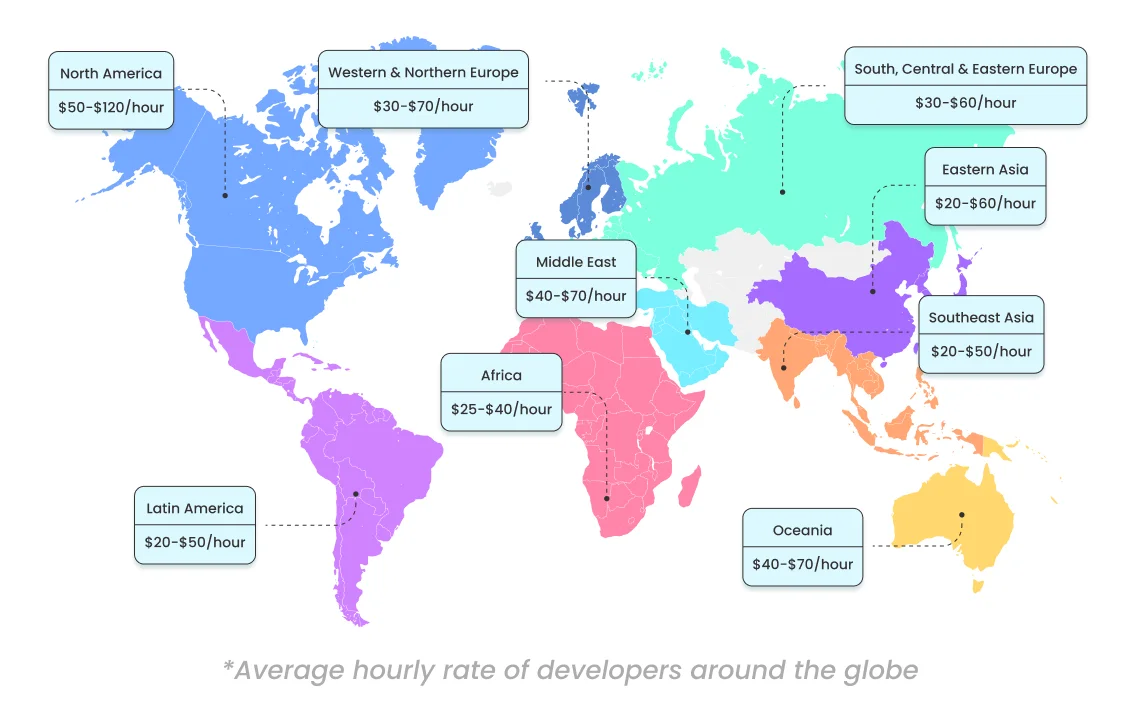
Location differences can introduce communication challenges that require proper management.
4. Project Management & Requirements Clarity
Unclear requirements can lead to cost overruns. Effective project management ensures progress, prevents scope creep, and provides a structure for decision-making.
Clear requirements and effective planning reduce surprises during development, protecting the budget and timeline.
5. Infrastructure & Deployment
Infrastructure choices impact development costs significantly. Scalable cloud environments can reduce long-term spending, while poor configuration can lead to overspending on unused resources.
Deployment pipelines, security setups, and monitoring systems add to the cost. Careful planning ensures infrastructure supports the product effectively without unnecessary expenses.
6. Quality Assurance & Testing
Quality assurance is crucial for reliable software. Larger systems require more test cases, automation, and security checks.
Skimping on testing can lead to higher costs later due to bugs and failures. Proper QA planning ensures stable releases and minimizes rework.
7. Contingency Planning
Unexpected issues can increase costs if contingency plans are lacking. Allocating time and budget for potential risks helps teams stay prepared.
Proper contingency planning ensures control over disruptions that could otherwise lead to costly setbacks.
Effective Strategies for Software Development Cost Reduction
Strategies for cost optimization in software development include Agile practices, MVP development, component reuse, automation, cost-effective tools, skilled teams, optimized infrastructure, and strong vendor agreements.
1. Adopt Agile Methodology
Agile methodologies break projects into smaller increments, improving visibility, feedback loops, and preventing rework. Continuous delivery ensures development efforts align with user needs, reducing waste.
With rapid iteration, teams stay aligned, priorities remain clear, and unnecessary features are identified early.
2. Build a Minimum Viable Product (MVP)
Developing an MVP allows quick validation of ideas without full-scale investment upfront. Launching early and gathering user feedback prevents overspending on unwanted features.
An MVP ensures investment follows proven demand rather than assumptions.
3. Leverage Open-Source Tools
Open-source tools reduce licensing and development costs. These tools are well-supported and tested, accelerating development without starting from scratch.
Choosing open-source technology shortens time-to-market, lowers expenses, and provides flexibility.
4. Automate Testing & Deployment
Automation reduces manual work, ensuring consistent results. Automated testing catches bugs early, preventing costly fixes later. Automated deployment streamlines releases and speeds up delivery.
Efficient processes free teams from routine tasks, improving efficiency and cost-effectiveness.
5. Outsource Strategically
Strategic outsourcing provides access to specialized skills without long-term costs. When done right, outsourcing offers scalability, flexibility, and cost advantages.
Choosing the right partner and collaboration model ensures cost savings without compromising quality.
6. Reuse Code & Modular Architecture
Code reuse reduces development time and effort. Building modular components allows reuse across features and projects, improving maintenance and scalability.
A modular architecture accelerates delivery, lowers costs, and ensures consistency.
7. Optimize Infrastructure Costs
Optimizing cloud resources, servers, and deployment environments prevents overspending. Auto-scaling, right-sizing resources, and eliminating unused services reduce waste.
Efficient infrastructure aligns with actual needs, improving stability and efficiency.
8. Negotiate Contracts Well
Negotiating contracts with vendors and partners lowers long-term costs. Clear pricing, defined deliverables, and performance-based terms prevent surprise charges and hidden expenses.
Good negotiation ensures more value for the budget and fosters cost-efficient relationships.
9. Invest in Skill Development
Investing in team training improves productivity, reduces dependency on external consultants, and minimizes errors. Keeping developers updated with modern tools and practices leads to higher-quality work.
While training may incur initial costs, it pays off through improved efficiency and lower long-term expenses.
10. Monitor Metrics & Continuous Optimization
Tracking key metrics identifies inefficiencies early. Monitoring velocity, defect rates, and resource usage guides continuous improvement.
Continuous optimization aligns development with evolving needs, resulting in significant cost savings and smoother delivery.
Hidden Costs That Increase Software Development Budgets
Hidden costs like scope creep, onboarding and training expenses, communication overheads, technical debt, tooling costs, security and compliance requirements, and maintenance and support for both developers and users can escalate software development budgets.
Scope Creep
Uncontrolled changes in project requirements inflate budgets. Additional features or modifications require extra development and testing, consuming resources not initially planned for.
Onboarding and Training Costs
Bringing new team members up to speed requires time, documentation, and training. These costs add up, especially in larger teams or projects with specialized technologies.
Communication and Coordination Overheads
Collaboration challenges like distributed teams or remote work can lead to inefficiencies. Time spent clarifying requirements or resolving misunderstandings adds indirect costs.
Technical Debt and Rework
Rushed development or unclear requirements result in technical debt, requiring rework and additional testing. Addressing these issues increases project costs.
Tooling and Integration Expenses
Tool licenses, integrations, and compatibility issues can require extra time and resources to resolve, adding to costs.
Security and Compliance
Meeting regulatory and security standards involves certifications and additional development. Ignoring requirements may lead to penalties or breaches.
Maintenance and Technical Support
Ongoing maintenance and support require continuous developer involvement, adding recurring costs. Technical user support and improvements also consume resources not always included in the initial budget.
Conclusion
Reducing software development costs involves smarter planning, clearer priorities, and consistent optimization. Focusing on user needs, efficient workflows, and the right tools and skills prevents wasteful spending.
Cost efficiency becomes a competitive advantage when teams build intentionally and discipline. With effective strategies in place, high-quality software can be delivered within budget.
Why MindInventory Is Your Partner for Quality Software Development
MindInventory is a trusted software development company known for reliable delivery, transparent processes, and lasting solutions. Clear cost estimates from the start provide visibility into project investment.
Eliminating waste, improving workflows, and selecting the right tools and architecture keep projects lean without compromising quality. Prioritizing meaningful features and modular development ensures every effort adds value to the product.
With expertise in web, mobile, cloud engineering, and emerging technologies, MindInventory delivers scalable, secure solutions aligned with business goals.
FAQs on Software Development Cost
Software development costs vary from $25,000 to over $300,000, depending on complexity, features, and team location. Simple apps may cost less, while complex systems can exceed hundreds of thousands of dollars. Design, development hours, testing, and maintenance influence the total cost.
Most software projects take 6 to 24+ months. Larger systems with multiple modules or advanced features may extend beyond 24 months. Timelines vary based on project scope, requirements clarity, and team size.
Software development costs can be expensed or capitalized based on project stage. Research expenses are incurred early, while functional development costs can be capitalized. Treatment depends on accounting standards and company policy.
Complex requirements, custom features, skilled labor, design, coding, testing, and integration efforts contribute to high software development costs. Advanced technologies and security measures further increase expenses.
Unclear requirements, scope creep, technical debt, poor project management, and security vulnerabilities are common risks in software development. Managing these risks early ensures smoother development and lower costs.