
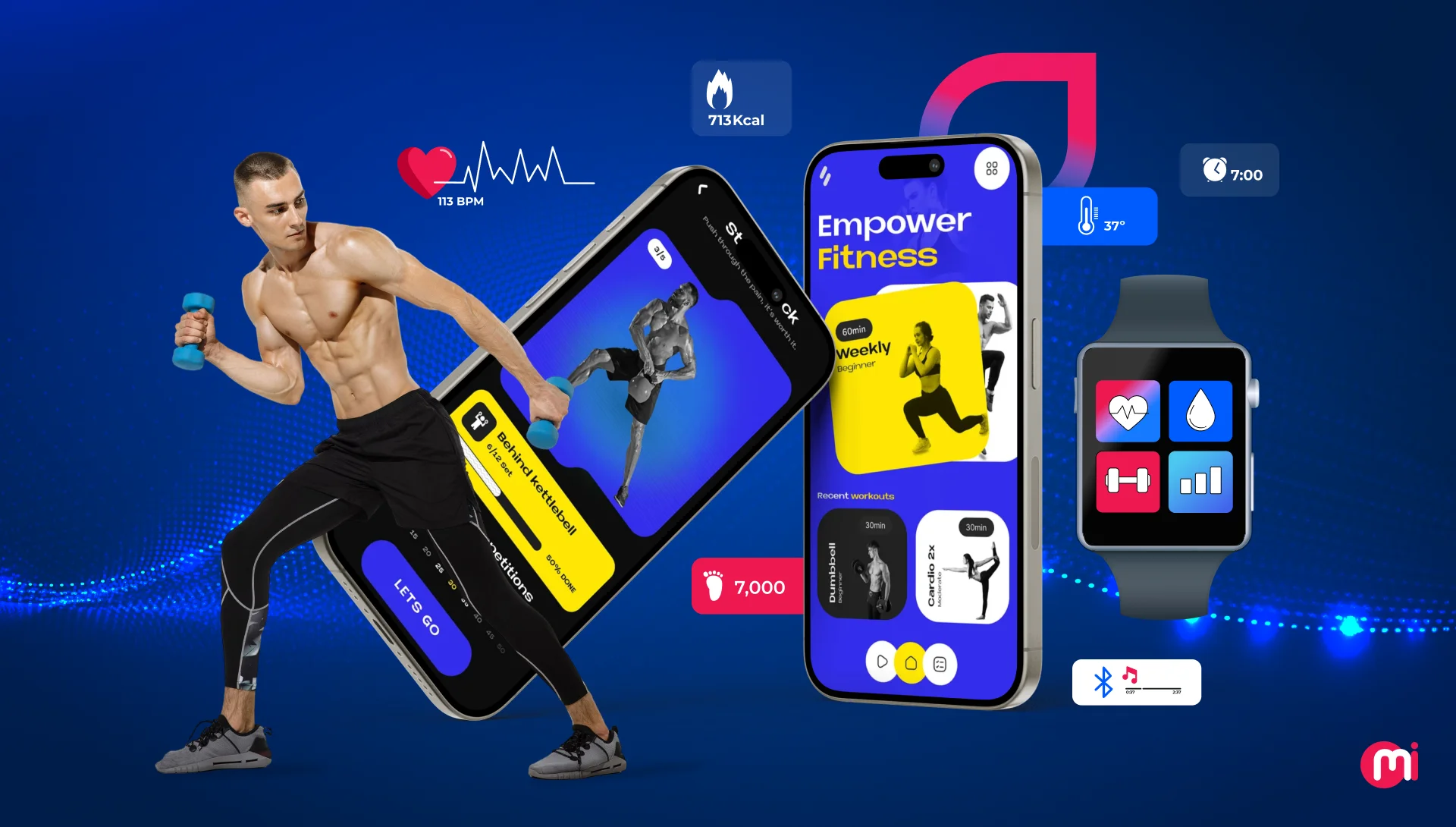
In the realm of personal health and well-being, there has been a notable surge in awareness, especially since the onset of the 2019 pandemic. This heightened consciousness has led people to pay closer attention to what they eat, how active they are, and their overall wellness. As a result, the fitness app market has experienced significant growth, generating $3.98 billion in revenue in 2024, marking an 11.1% increase from the previous year. This growth presents a lucrative opportunity for businesses to tap into this expanding market through strategic investments in fitness app development.
Successful fitness apps are those that seamlessly combine intuitive tracking, personalized plans, and a user-friendly experience. These apps not only engage users effectively but also generate recurring revenue and provide valuable insights into consumer behavior. However, creating a standout fitness app requires careful planning, deliberate feature selection, and scalable development strategies.
To build a high-impact fitness app in 2025 and beyond, it is essential to consider essential features, workflow considerations, and cost insights. According to McKinsey, 56% of US Gen Z individuals prioritize fitness, indicating a growing and engaged user base for digital wellness apps. Understanding different categories of fitness apps, such as exercise, nutrition, activity tracking, and more, is crucial for strategic positioning in the market. Features like intuitive tracking, personalized plans, analytics, and community engagement leveraging AI and wearable integrations can boost user retention and set your app apart from the competition.
According to Grand View Research, the global fitness app market was valued at $10.59 billion in 2024 and is projected to reach $23.21 billion by 2030, growing at a CAGR of 13.88% from 2025 to 2030. North America led the market in 2024, with the US holding a significant share. The market is segmented by type, with the Exercise & Weight Loss segment expected to grow at a CAGR of 12.5% and the Activity Tracking segment at 14.9% between 2025 and 2035.
The preferred device for fitness apps is smartphones, accounting for 66.91% of usage, emphasizing the trend towards mobile-first engagement. The Asia Pacific region, particularly India, is expected to witness rapid growth in the fitness app market due to urbanization, rising disposable income, and a digitally active young population.
When it comes to the types of fitness apps, there is a wide range to choose from, including workout and exercise apps, nutrition and diet apps, activity tracking apps, yoga apps, social fitness apps, meditation and mindfulness apps, fitness studio apps, specialized fitness apps, personal trainer apps, and mood tracking apps. Each category addresses different aspects of health and wellness, offering users personalized tools and experiences to support their fitness journey and overall well-being.
To build a successful fitness app, it is essential to consider a range of features categorized as basic, intermediate, and advanced. These features collectively enhance user engagement, support personalized fitness journeys, and provide scalable solutions for growth. Basic features include user registration, user profile management, pre-designed workout routines, activity tracking, push notifications, basic progress visualization, social media integrations, and payment integrations. Intermediate features encompass a custom workout builder, video tutorials, meal planning, calorie tracking, wearable devices integrations, and goal setting. Advanced features include AI-driven personalized workout and nutrition plans, virtual coaching, AR/VR immersive workouts, geolocation integrations, advanced analytics, gamification, offline access, and syncing, integration with advanced sensors, and a premium content library.
The process of creating a fitness app involves software discovery, app design, app development, QA testing, app deployment, and proactive maintenance. The cost of developing a fitness app can range from $30,000 to $200,000+ depending on the complexity and features of the app. It is crucial to plan carefully and consider cost-saving strategies to optimize the development process.
In conclusion, fitness apps play a significant role in the digital wellness revolution by offering users accessible tools to stay healthy and engaged. By leveraging intelligent features, adaptive workflows, and actionable insights, businesses can innovate, lead markets, and create lasting impact in the fitness industry. MindInventory, a reputable fitness app development company, is dedicated to delivering innovative and scalable digital solutions tailored to the dynamic fitness industry. With a robust portfolio of personalized workout apps, gym management systems, and wellness platforms, MindInventory has demonstrated expertise in creating user-centric applications that promote healthier lifestyles.