
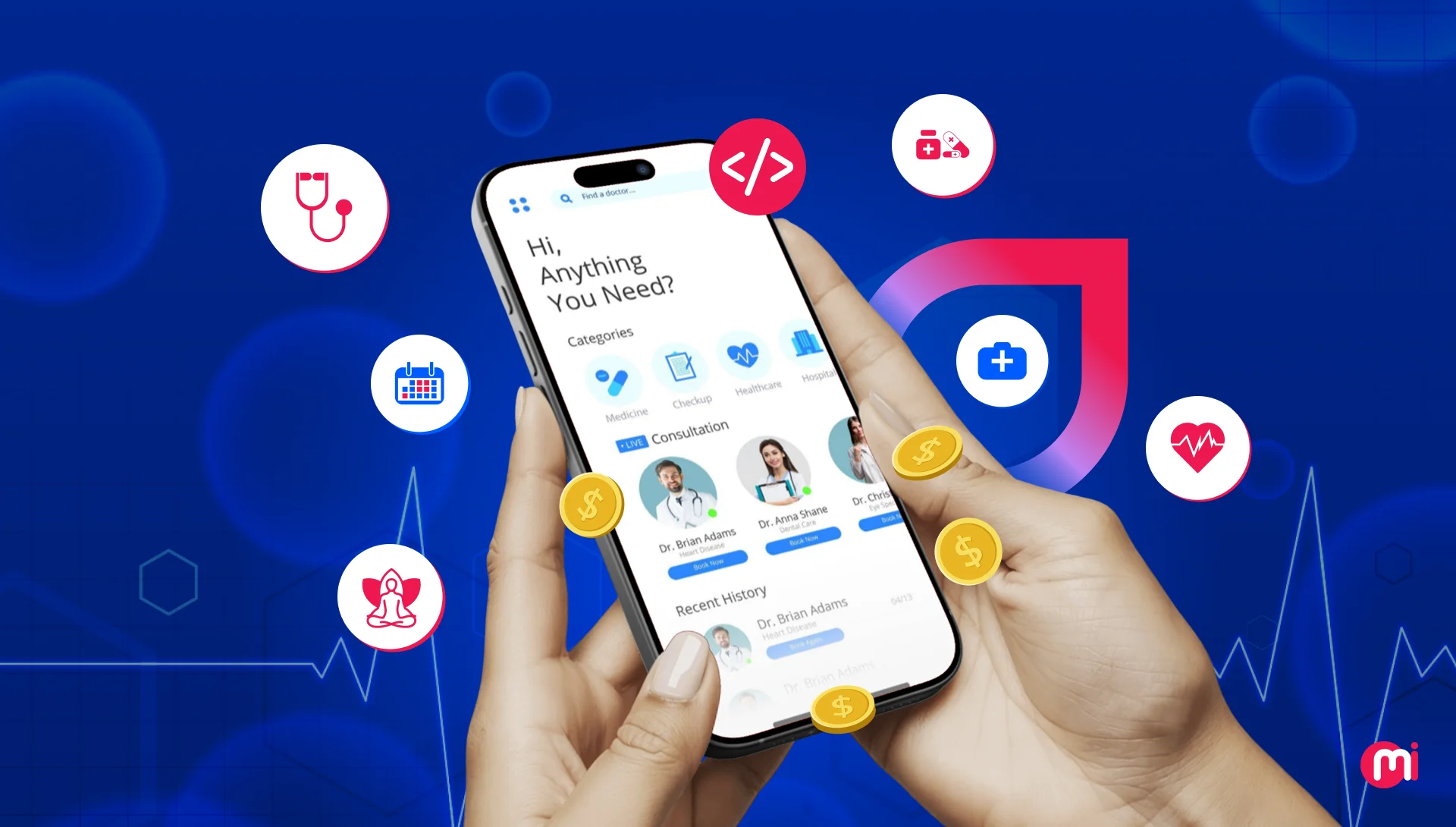
Developing a healthcare mobile app has become essential in modern medicine, and understanding the development process, core features, and associated costs is crucial for anyone looking to innovate in this field. In this article, we will provide a detailed roadmap on how to create a healthcare app that is engaging, compliant, and effective.
In the wake of the COVID-19 pandemic, mobile health solutions have been empowering patients, streamlining medical workflows, and making healthcare more accessible than ever before. According to recent studies by Grand View Research, the global mHealth market size was estimated at USD 62.7 billion in 2023 and is projected to reach USD 158.3 billion by 2030, with a CAGR of 14.1% from 2024 to 2030.
These statistics indicate a rapid growth in mobile app development within the global mHealth market. This growth is driven by the increasing adoption of smartphones and the rising demand for remote patient care. From telehealth platforms to chronic disease management apps, the possibilities in this space are endless.
However, creating a top-tier healthcare app requires more than just a great idea. It involves a deep understanding of user needs, adherence to regulatory standards like HIPAA, and a robust development process. In this article, we will simplify the complexities and provide a clear step-by-step guide for building a high-impact healthcare solution.
Types of Healthcare Apps
Healthcare apps offer patients easy access to medical information, medication reminders, symptom tracking, telemedicine services, and more. Let’s explore the different types of healthcare apps:
- Telemedicine Apps: Facilitate remote consultations between patients and healthcare providers.
- Patient Management Systems: Manage patient data, track treatments, and streamline workflows.
- Appointment Booking Apps: Integrate scheduling for medical appointments.
- Medication Apps: Provide dosage information, reminders, and refill alerts.
- Chronic Disease Apps: Targeted at patients with chronic conditions for tracking symptoms and medication adherence.
- Wellness Apps: Focus on proactive health management through fitness tracking and personalized health insights.
- Health Education Apps: Provide educational information on various health topics.
- Women’s Health Apps: Focus on women’s health issues specifically.
Benefits of Healthcare App Development for Patients and Providers
Healthcare apps offer numerous benefits to both patients and healthcare providers. Some key advantages include:
- Built-in Diagnostic Systems: Allow for easy analysis, diagnosis, and treatment tracking for remote patients.
- Telemedicine and Telehealth: Provide remote services and online communication for efficient medical care delivery.
- Better Service and Equipment Management: Monitor medical equipment in real-time for optimal patient care.
- Resource Optimization and Cost Reduction: Cut down on expenses and staff overtime by digitizing processes.
- Improved Patient Compliance and Follow-up: Send medical reminders for treatment plans, reducing emergencies.
The Healthcare App Development Process
Developing a healthcare app involves several phases, each contributing to the overall cost and timeline. The process includes:
- Market Research: Analyze market gaps, target audience, and regulatory standards.
- Define Functionalities and Features: Identify core features for the Minimum Viable Product.
- Choose the Right Stack of Technology: Select programming languages and frameworks that support healthcare app needs.
- Design UI/UX: Create an intuitive and accessible user interface for diverse users.
- Develop and Conduct QA: Divide development into sprints and conduct rigorous testing.
- Deploy, Maintain, and Modernize the App: Launch the app, monitor performance, gather user feedback, and release updates.
Must-Have Features for Healthcare Apps
Key features for healthcare apps include:
- User-Friendly UI/UX: Simple and clear interface for easy navigation.
- Telemedicine & Video Consultation: Remote consultation capabilities with high-quality video calls.
- Appointment Reminders & Scheduling: Intuitive calendar for booking and managing appointments.
- Prescription Management & Refills: Manage prescriptions, request refills, and scan medication barcodes.
- Wearable Device Integration: Gather patient health data from wearable devices.
- EHR/EMR Integration: Access patient data within the app for streamlined workflow.
- Symptom Checker: Structured assessment of symptoms for self-care decisions.
- 24/7 Support: Instant access to healthcare professionals for consultations.
Conclusion
Healthcare app development presents a revolutionary opportunity to enhance patient care and improve provider efficiency. Building a successful app requires thorough research, strategic planning, and a strong development partner. At MindInventory, we specialize in providing end-to-end healthcare solutions to help you develop a competitive healthcare app.
FAQs
- What features should be used in developing a healthcare app?
Important features include appointment scheduling, user authentication, prescription management, telemedicine integration, symptom checkers, real-time chat support, and payment integration. - How much does it cost to develop a healthcare app?
The cost varies based on factors like app complexity, features, UI/UX design, platform selection, backend complexity, and team size. Customizing the app will influence the final cost. - How to choose an app development company for a healthcare app?
Look for a company with a proven track record in healthcare app development, compliance expertise, relevant project portfolio, and knowledge of trending technologies. - How can I estimate ROI for my healthcare app development?
Calculate ROI by subtracting total costs from total benefits, dividing by total costs, and multiplying by 100 to get the percentage.In conclusion, developing a healthcare app requires careful planning, adherence to regulatory standards, and a deep understanding of user needs. By following the outlined steps and incorporating key features, you can create a successful and impactful healthcare solution that benefits both patients and providers.