
In the realm of futuristic payment methods, the concept of making purchases with a simple hand gesture was once reserved for the pages of science fiction. However, Amazon One, a contactless palm recognition service, has shattered this notion by clocking in over 8 million uses, as reported by the tech giant. While predominantly in use at Amazon and Whole Foods Market locations in the U.S., Amazon One has also made its mark in a limited number of third-party establishments.
On the flip side, emerging fintech companies like Handwave from Latvia are entering the scene with the aim of offering similar contactless payment solutions to retailers. By capitalizing on the groundwork laid by industry giants like Amazon, these startups are paving the way for faster and more convenient checkout experiences. In countries like China, biometric palm payments are already gaining traction, signaling a shift towards a more seamless payment ecosystem.
The technology behind palm scanning, much like Apple’s Face ID, goes beyond capturing static images. By analyzing unique palm vein patterns and ensuring the physical presence of the user during the transaction, this method not only facilitates secure payments but also extends to identity verification across various scenarios. Companies like Keyo are leveraging this technology for secure access to buildings and other applications beyond retail.
Unlike Amazon, Handwave’s focus is squarely on revolutionizing the retail landscape. With the necessary hardware and software in place after three years of development, this Latvian startup is gearing up to pilot its palm scanning devices at retail outlets. Merchants adopting Handwave’s technology would incur a transaction fee comparable to or lower than traditional payment methods, with the promise of expedited checkouts and reduced operational costs.
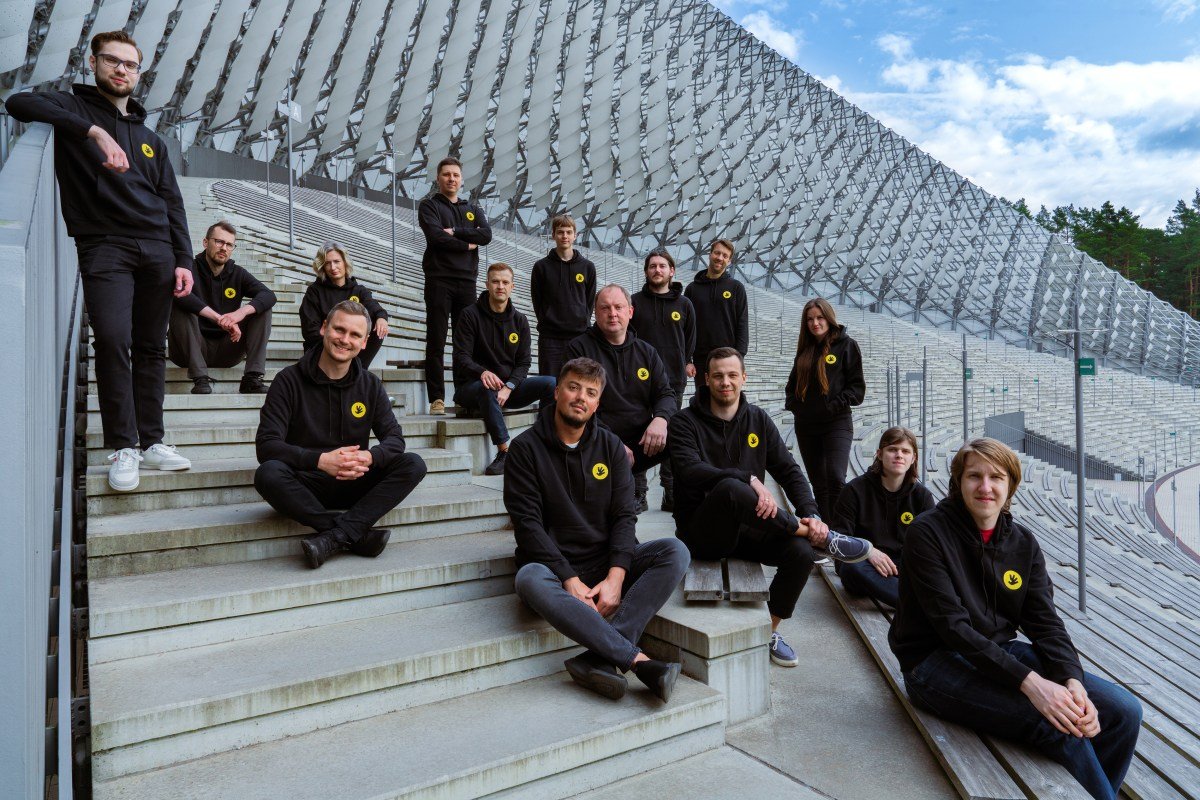
The brains behind Handwave, CEO Janis Stirna, and Sandis Osmanis-Usmanis, bring a wealth of experience from their tenure at Worldline, a major player in the global payment industry. Despite their industry connections, the team is committed to fostering collaboration with financial institutions and acquiring banks to create a robust ecosystem for their solution. By forging partnerships with prominent financial institutions in Europe and securing an agreement with Visa, Handwave is poised for rapid deployment across multiple markets.
While eyeing the lucrative U.S. market, Handwave recognizes the strategic advantage of establishing compliance in the stringent European Union first before expanding globally. Operating out of Riga has enabled the startup to operate efficiently with limited capital, leveraging a mix of angel investments, non-equity funding, and grants to fuel its R&D efforts. With a recent $4.2 million seed funding round led by Practica Capital and other prominent VC firms, Handwave is primed to make a significant impact in the realm of biometric payments.
The Baltic region, known for its burgeoning fintech ecosystem and abundance of scientific talent, provides a fertile ground for startups like Handwave to thrive. By tapping into the region’s pool of skilled AI engineers and technical experts, Handwave is poised to overcome technical challenges and carve a niche in the global payment landscape. With a clear vision and a dedicated team, Handwave is set to revolutionize the way we make payments, one palm scan at a time. Only time will tell if the market will embrace this innovative technology and usher in a new era of seamless payments.