
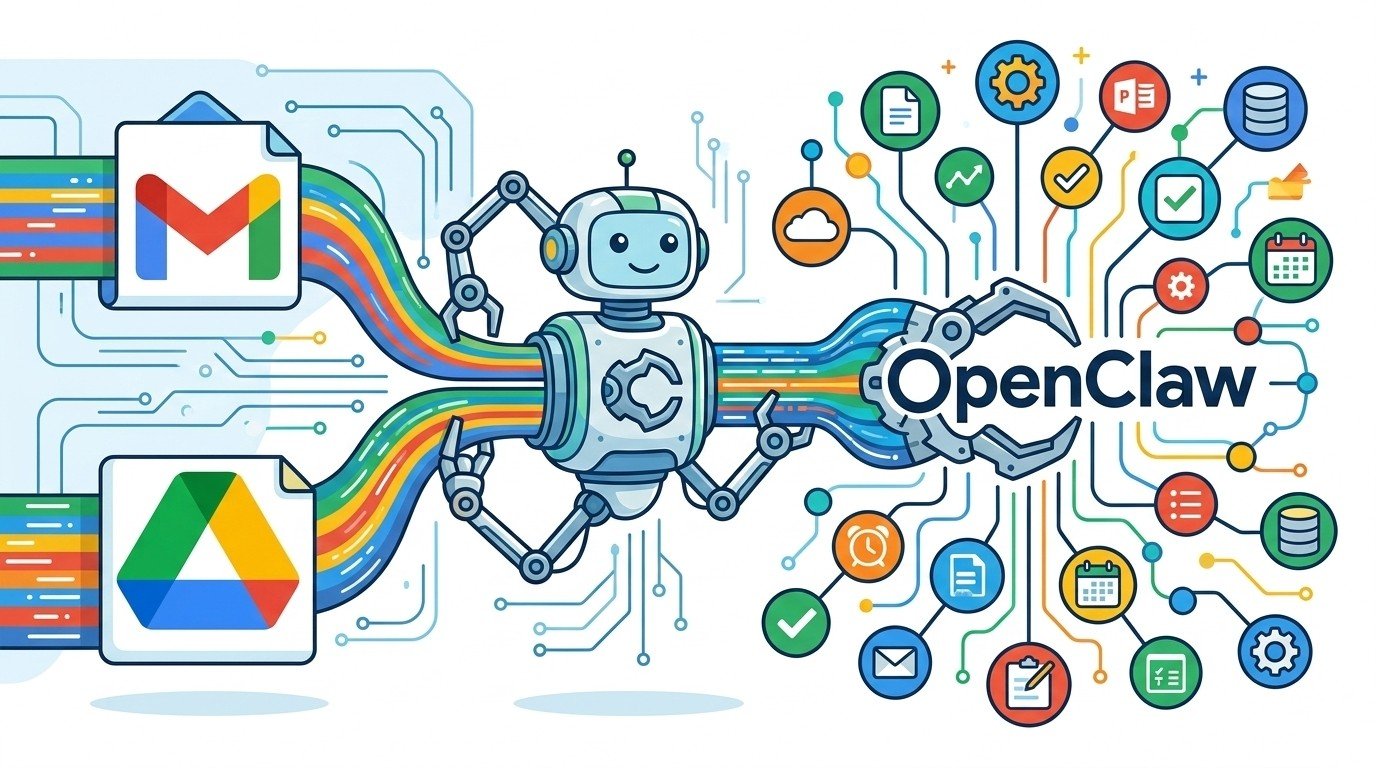
Google has quietly made a significant move to embrace the viral success of OpenClaw, a platform that has been praised by NVIDIA CEO as the most important software release ever. In a recent development, Google has unveiled a new Command-Line Interface (CLI) on GitHub, specifically tailored to facilitate the integration of Google Workspace apps—such as Gmail, Drive, and Docs—with OpenClaw, the AI agent that has been making waves in the tech industry.
How Google Workspace is simplifying the OpenClaw integration
Previously, OpenClaw struggled to interact with Google services due to the complexity of juggling multiple APIs for each service. However, with the introduction of the new CLI, as highlighted by PCWorld, developers now have a streamlined tool that serves as a unified solution for accessing all Workspace apps. This enhancement significantly reduces the challenges of integrating OpenClaw with a user’s documents and communications, making the process much smoother.
Google’s new strategy, although with a catch
Google’s decision to release this CLI indicates a shift towards a more open ecosystem, enabling third-party tools like OpenClaw to seamlessly integrate with its core services. This move becomes even more crucial as OpenClaw transitions into an open-source project following its founder’s acquisition by OpenAI. However, it’s worth noting that Google has characterized this tool as a “developer sample” and explicitly stated that it is not an officially supported product. Users who opt to grant OpenClaw access to their Gmail or Drive should proceed with caution.
Despite being labeled as “experimental,” the launch of this CLI signifies Google’s recognition of the evolving landscape. By providing a text-based CLI for OpenClaw integration, Google aims to enhance the agent’s data navigation capabilities, enabling it to perform tasks like finding files, composing emails, and organizing folders with greater accuracy.
Overall, Google’s initiative to streamline the integration of OpenClaw with Workspace apps reflects a forward-thinking approach towards AI development and collaboration. While the tool is currently in its early stages, it showcases Google’s commitment to fostering a more inclusive and accessible AI ecosystem for developers and users alike.