
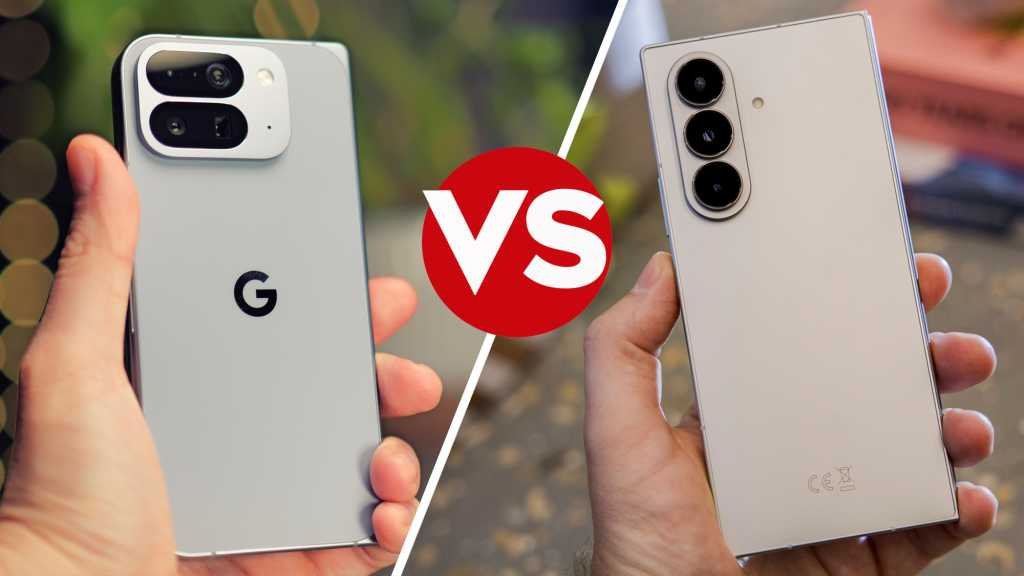
The arrival of the Google Pixel 10 Pro Fold has introduced new features like an IP68 rating and Pixelsnap magnets to the world of foldable devices. If you’re considering an upgrade, now might be the perfect time to explore the world of foldable phones.
While Google has made a splash with the Pixel 10 Pro Fold, Samsung recently impressed with the sleek and powerful Galaxy Z Fold 7. With both major players in the foldable phone market, it’s essential to compare and contrast these two devices to determine which one suits your needs better.
Design-wise, the Galaxy Z Fold 7 boasts a slim and lightweight profile that resembles a regular flagship phone when folded. Its super-slim bezel and sharp angular design maximize screen space on both the interior and exterior displays, making it one of the best folding phones in terms of design.
On the other hand, the Pixel 10 Pro Fold takes a different approach with a slightly thicker and heavier build. Despite its chunkier bezel and softer, rounded corners, the Pixel feels incredibly durable and is the first foldable device to receive an IP68 rating, making it dust and water-resistant. Additionally, the Pixel 10 Pro Fold features Pixelsnap magnets, offering compatibility with Apple MagSafe accessories without the need for a case.
In terms of displays, the Pixel 10 Pro Fold sports a 6.4-inch cover display, while the Galaxy Z Fold 7 features a 6.5-inch screen, both with 8-inch foldable panels on the inside. The differences in display design, such as curved corners on the Pixel and sharper edges on the Samsung, impact the overall user experience. While the Pixel offers a slightly higher maximum brightness, the Samsung screen feels larger due to content extending into sharper corners.
Performance-wise, the Samsung Galaxy Z Fold 7 is powered by the Qualcomm Snapdragon 8 Elite, while the Pixel 10 Pro Fold utilizes Google’s Tensor G5 chip. While the Tensor G5 chip offers improved performance over its predecessor, it falls short of the Snapdragon in terms of speed. The difference in performance is most noticeable during demanding tasks like gaming or video editing, where the Z Fold 7 outshines the Pixel.
Both devices come with 256GB of storage as a base configuration, with the Pixel offering 16GB of RAM across all models. The Z Fold 7 comes with 12GB of RAM in the 256GB and 512GB versions, requiring the 1TB model for 16GB of RAM. In terms of multitasking, both phones perform excellently, with the Pixel showing signs of struggle during more intensive tasks.
Cameras on both devices feature a triple camera setup on the rear, with the Pixel offering a 5x lens and the Samsung a 3x lens. The higher resolution and low-light performance of the Z Fold 7’s main sensor give it an edge in image fidelity, while the Pixel’s camera app stands out for its simplicity and ease of use.
Software differences between the two devices include Samsung’s One UI skin versus Google’s vanilla Android experience. The Pixel benefits from quick software updates and features like Google’s Now Playing, while Samsung offers advanced multitasking capabilities and more in-depth manual controls in its camera app.
In terms of pricing, the Pixel 10 Pro Fold starts at a slightly lower price than the Galaxy Z Fold 7, but the Samsung device may offer better deals due to its longer presence in the market. Both devices come in various storage options, with the Samsung models costing slightly more across the board.
Ultimately, choosing between the Pixel 10 Pro Fold and the Galaxy Z Fold 7 comes down to personal preferences and priorities. While the Z Fold 7 excels in design, performance, and camera capabilities, the Pixel 10 Pro Fold offers durability, convenience features like Pixelsnap magnets, and ease of use. Power users may prefer the Z Fold 7, while those looking for a user-friendly experience may lean towards the Pixel 10 Pro Fold.