
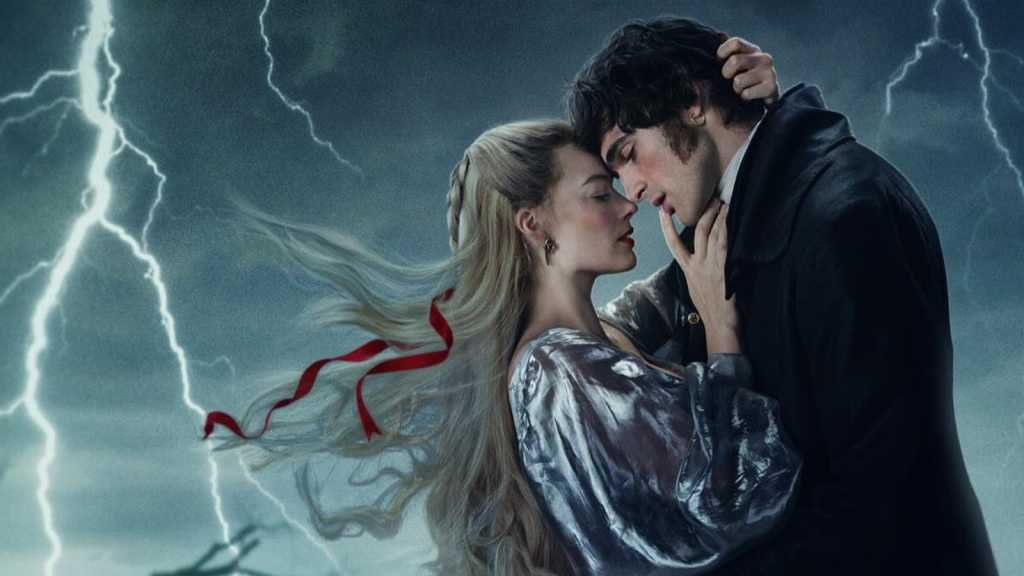
Emerald Fennell’s Wuthering Heights Adaptation: A Critical Analysis
Summary created by Smart Answers AI
In summary:
- Tech Advisor highlights six critical errors in Emerald Fennell’s Wuthering Heights adaptation, including controversial casting of Jacob Elordi and Margot Robbie that deviates from the source material.
- The film removes essential characters like Hindley and Hareton while abandoning core themes of race and class struggle for superficial aesthetics resembling music videos.
- Despite rumors of erotic content, the adaptation fails as both romance and social commentary, transforming Brontë’s complex novel into a hollow spectacle.
From the moment it was announced, Emerald Fennell’s adaptation of Wuthering Heights has been an emotional rollercoaster for me.
My initial joy was quickly overshadowed by the bizarre decision to cast Jacob Elordi and Margot Robbie as Heathcliff and Catherine. The on-set photos and the first trailer left me even more confused. However, the excellent marketing campaign dissolved my scepticism to some extent. I even started to think that I would take back the claim I made after the first trailer aired, that Fennell’s Wuthering Heights is made for the TikTok generation.
Sadly, my first impression turned out to be correct. The new adaptation of a novel that’s beloved to me feels like a music video or a very long perfume ad. It’s not that the director departs from the writer’s vision – she brutally guts it, offering nothing in return but a hollow set of over-aestheticised shots.
But what really went wrong? Here are six mistakes Fennell made that turned the new Wuthering Heights into an awful film and even worse adaptation.
1. Erasing Hindley Earnshaw
Emily Brontë’s novel is a complex patchwork of personalities and motivations. The previous adaptations often omitted characters to condense the story; these cuts mainly affected second-generation characters.
Emerald Fennell, however, goes a step further, getting rid of Catherine’s obnoxious older brother, Hindley. In the film, alcoholism and gambling are the vices of Catherine’s father Mr Earnshaw, who becomes the abusive figure tormenting the children.
The conflict with Hindley is one of the driving forces behind Heathcliff’s vendetta. Removing Catherine’s brother is to pull out a cornerstone of that motivation – and a degenerate father can’t fill that void.
Along with Hindley’s disappearance, his son, Hareton, Catherine’s daughter, Cathy, and Heathcliff’s son, Linton, are erased as well. Omitting all of them means that the story lacks the theme of male rivalry and plot line involving the struggle for the Earnshaw estate.
Warner Bros. Discovery
Without this storyline, Fennell’s film wobbles from the very beginning. What’s worse, its second part lacks any substance – where there should be a story of class battle and generational trauma, there’s merely a colourful video clip.
At some point, the question arises that, since Catherine’s brother and his son don’t exist, her father is dead, and Heathcliff owns the manor and his own estate, what exactly is preventing the lovers from getting together?
2. The misconception of Catherine Earnshaw
There was a lot of controversy around the casting of Jacob Elordi as Heathcliff, a person of colour. But fans of the novel also weren’t happy with Margot Robbie as Cathy, pointing out that, unlike the Australian actress, the heroine was dark-haired and, more importantly, a teenager for a key section of the action.
Elordi, infusing his role with a mixture of madness and charm, is a decent Heathcliff
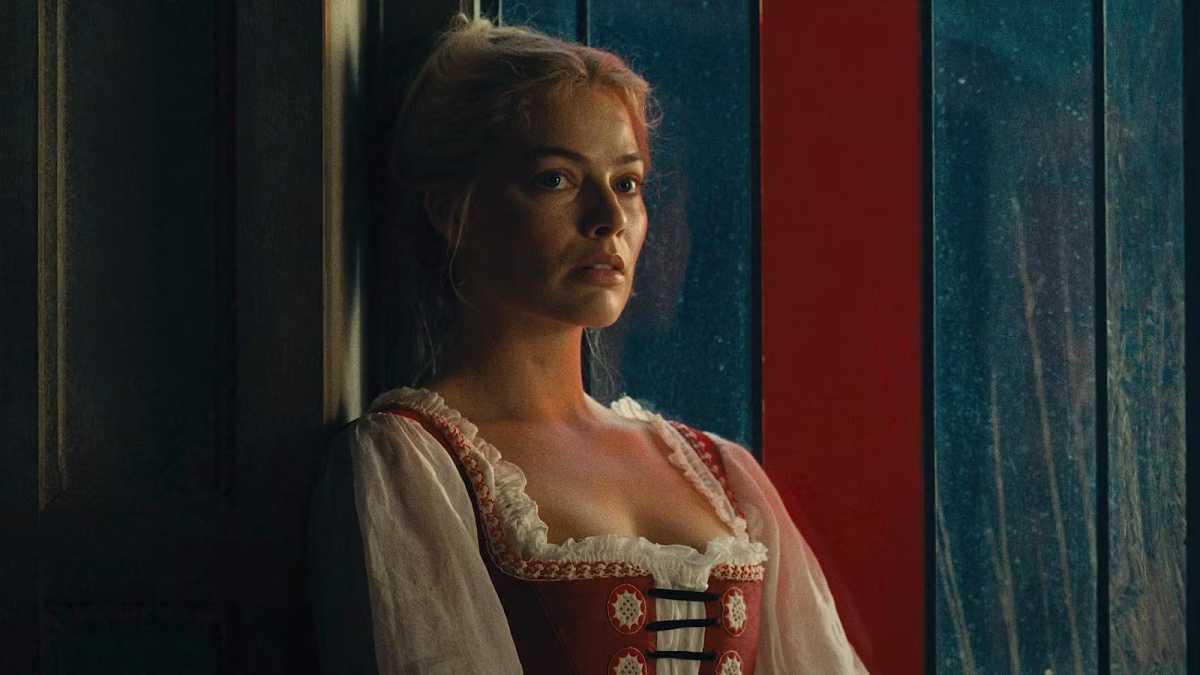
The film’s plot offers no justification for those changes – they seem completely random. Luckily, Elordi, infusing his role with a mixture of madness and charm, is a decent Heathcliff and, with a better script, might have flourished. However, the same can’t be said for Margot Robbie.
Warner Bros. Discovery
Despite her beauty, the actress definitely doesn’t look like a teenage girl – yet she tries to act like one. Catherine, in the book, was a wild child of nature: stubborn, violent and spoiled. There was a certain logic behind her behaviour, not to mention the social commentary on women’s position in society. In Fennell’s film, Cathy is nothing more than an irritating brat – and her childish behaviour, played out by a clearly adult woman, seems odd.
3. Marginalising Edgar Linton
Ironically, kind and sensible Edgar Linton isn’t a fan favourite. However, in the novel, he’s a well-rounded character who, in both personality and appearance, contrasts with Catherine and Heathcliff, highlighting their restless natures.
In Emerald Fennell’s Wuthering Heights, Edgar is demanding and despotic, yet feels insignificant in the love triangle. Before the proposal, he and Catherine don’t share a single scene, which makes their relationship seem absurd. It’s difficult to believe in any feelings between him and Cathy – good or bad.
When she shares her reasons for marrying Edgar with Nelly and Heathcliff, Linton’s true motivations remain a puzzle.
The decision between Edgar’s gentle yet dull demeanor and Heathcliff’s violent yet captivating nature could serve as a platform for exploring society’s fascination with rough men. However, Fennell chooses not to delve into meta-commentary. Instead, she sidelines Linton and focuses all her attention on Heathcliff, making the iconic Wuthering Heights love triangle seem superficial.
In Brontë’s original novel, Isabella Linton faces a tragic fate, but Fennell takes it a step further in the film. Rather than portraying her as a naive and sweet girl, Isabella is depicted as a quirky and irritating individual trapped in a woman’s body.
Fennell seems to take pleasure in ridiculing Isabella, turning her scenes into comedic moments. The character is portrayed as emotionally immature and embarrassingly unintelligent, bordering on cringeworthy rather than humorous.
Furthermore, Fennell strips away the psychological nuances carefully crafted by Brontë. Isabella’s sexual awakening is portrayed in a blatant manner, altering the dynamics of her relationship with Heathcliff.
While Brontë’s novel weaves themes of desire for sex, revenge, and social advancement into a complex web that drives the characters, Fennell’s adaptation feels devoid of depth and emotion. The film lacks the passionate intensity of the original story, coming across as cold and shallow.
Feminist reflections are also abandoned in Fennell’s adaptation, with female characters lacking emotional depth and complexity. The portrayal of women in the film seems one-dimensional, focusing mainly on their sexual desires, cruelty, or ignorance.
Despite pre-release buzz about the film’s alleged sexual content and BDSM themes, Fennell’s adaptation falls short in delivering on the erotic tension between the characters. While there are numerous sex scenes, they lack the sensuality and depth expected in a story driven by desire.
The long, stylized, and conservative sex scenes in the film feel more like music videos than intimate moments between characters, failing to capture the essence of the romance and passion in the original story.
In conclusion, Fennell’s adaptation of Wuthering Heights may have missed the mark in exploring the complex themes of Brontë’s novel. The film lacks depth, emotional resonance, and fails to engage viewers on a deeper level beyond the surface narrative. The History and Significance of the Taj Mahal
The Taj Mahal is one of the most iconic and recognizable landmarks in the world. Located in Agra, India, this stunning white marble mausoleum was built by Emperor Shah Jahan in memory of his beloved wife, Mumtaz Mahal. Construction of the Taj Mahal began in 1632 and was completed in 1653, with over 20,000 artisans and craftsmen working on the project.
The Taj Mahal is renowned for its exquisite beauty and symmetrical design. The main structure is set upon a raised platform, with four minarets framing the central dome. The mausoleum is surrounded by a lush garden, reflecting pools, and intricately carved marble screens. The white marble of the Taj Mahal changes color throughout the day, appearing pink in the morning, white in the afternoon, and golden in the moonlight.
The Taj Mahal holds great significance in Indian history and culture. It is considered a symbol of love and devotion, as Shah Jahan built it as a tribute to his wife. The mausoleum is also a masterpiece of Mughal architecture, blending elements of Persian, Indian, and Islamic design. The Taj Mahal is recognized as a UNESCO World Heritage Site and attracts millions of visitors from around the world each year.
Visitors to the Taj Mahal can explore the main mausoleum, which houses the tombs of Shah Jahan and Mumtaz Mahal, as well as the surrounding gardens and structures. The intricate marble carvings, inlaid gemstones, and calligraphy inside the Taj Mahal are a testament to the skill and artistry of the Mughal craftsmen.
Despite its enduring beauty, the Taj Mahal has faced challenges in recent years, including pollution, overcrowding, and threats from climate change. Conservation efforts are ongoing to preserve this architectural marvel for future generations to enjoy.
In conclusion, the Taj Mahal is a masterpiece of architecture and a symbol of love and devotion. Its beauty and significance continue to captivate visitors from around the world, making it a must-see destination for anyone interested in history, culture, and art.