
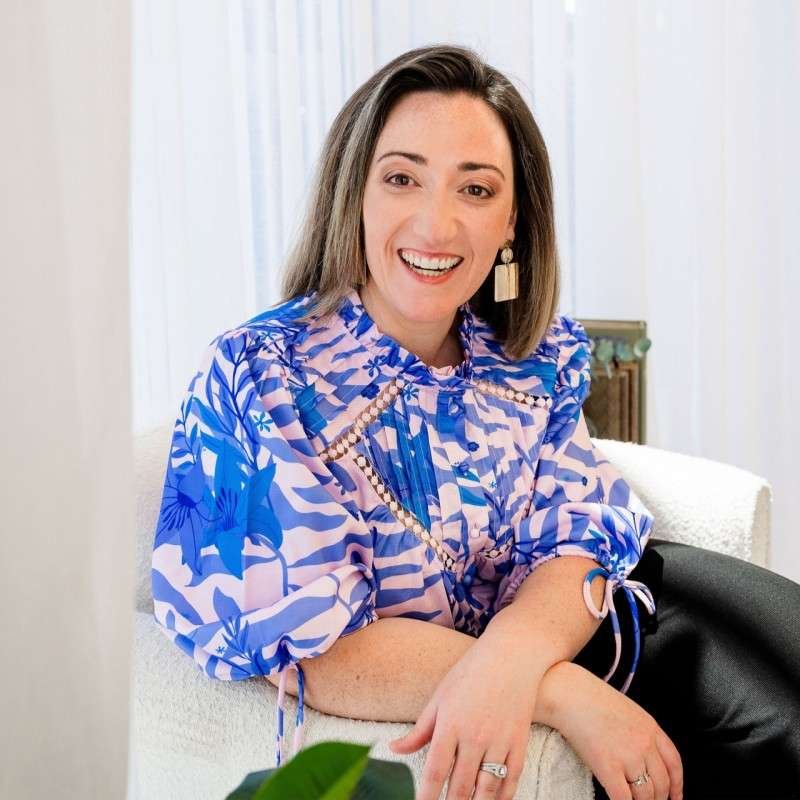
In the latest installment of the Morning Lazziness series that celebrates women who are making a significant impact with their innovative ideas, I had the pleasure of conversing with Elizabeth Bancroft.
Elizabeth, also known as Liz, is a clinical and counseling psychologist, an EMDR accredited practitioner, and the mastermind behind Hope Affirm Thrive, Australia’s and the world’s first neurodivergent psychological support program for women undergoing IVF treatment. With a wealth of experience in trauma-informed care spanning over 14 years and as a late-diagnosed autistic woman who went through 6 years of infertility treatment, Liz fills the crucial void between fertility medicine and mental health.
Her groundbreaking program, "Your route map through IVF," integrates neuroscience, trauma therapy, and practical tools to aid women in regulating their nervous systems, processing grief, and advocating for themselves throughout the IVF process. Tailored with neurodivergent individuals in mind, the program offers visual structure, sensory regulation strategies, and evidence-based techniques for building emotional resilience, emphasizing that psychological safety is a non-negotiable aspect of reproductive well-being.
Liz’s pioneering work has garnered attention from media outlets such as Australia’s ABC News, ABC Radio National, as well as publications like IVF Babble and Reframing Autism. She has also shared her insights at esteemed events like the EMDR Association of Australia, the Neurodiversity Affirming Therapy Conference, and the Fertility Society of Australia and New Zealand conferences, advocating for systemic changes to secure funding for psychological care for IVF patients. Additionally, she is spearheading a national Change.org petition to endorse Medicare-funded mental health support for fertility treatments.
Blending clinical expertise with a touch of candid humor, Liz’s approach underscores that even in the most challenging moments, healing can be hopeful, humane, and profoundly empowering. Through her work, she is creating the support network she yearned for and ensuring that individuals embarking on this journey do not feel shattered by a system designed to assist them.
In our discussion, Liz delves into the mindset shifts, bold actions, and lessons that propelled her ideas into impactful online ventures.
Key Questions:
1. What inspired your transition into entrepreneurship, and what personal experiences sparked the concept behind your current initiative?
The inception of Hope Affirm Thrive stemmed from a dire need. Observing the lack of preparedness within the system for neurodivergent patients during my own IVF journey as a late-diagnosed autistic woman, I developed a program that amalgamates clinical rigor, genuine empathy, and practicality.
2. What core issue does your venture address, particularly for women or underserved communities – and how does your approach distinguish itself in today’s competitive landscape?
Hope Affirm Thrive supports women undergoing IVF who feel isolated, overwhelmed, and unseen, especially neurodivergent women. By bridging the divide between fertility medicine and mental health through trauma-informed, evidence-based tools, the program offers affirming and accessible resources, serving as a psychological infrastructure for survival.
3. What were some of the most formidable hurdles you encountered early on as a female entrepreneur, and how did you navigate through them?
Launching a mental health startup sans investor backing necessitated a methodical and deliberate approach. I learned to reframe setbacks as valuable insights rather than defeats and prioritized sustainable growth over fleeting moments of virality. There is immense power in building something ethical rather than exploitative.
4. When faced with challenges, what keeps you grounded and motivated to forge ahead?
The resilience and transformation I witness in my clients serve as a constant reminder of the significance of this work. Additionally, indulging in a well-timed Mary Street Bakery donut never fails to infuse strategic joy into my endeavors.
5. What daily rituals or non-negotiable routines aid you as a founder in staying focused, creatively charged, and balanced?
Commencing my day with morning snuggles with my son, utilizing noise-cancelling headphones for undisturbed work sessions, and unwinding with reality TV evenings post-clinical days form the cornerstone of my balance. Creativity thrives on structure, while survival thrives on guilt-free indulgence.
6. What was the most impactful growth catalyst for acquiring new customers or broadening your customer base?
Embracing radical transparency proved to be a game-changer. Sharing the raw, unfiltered aspects of my journey – the highs, lows, failures, and hopes – resonated more profoundly than presenting a curated facade. Vulnerability breeds trust, and trust fosters community. People seek guidance from those who have weathered the storms, not from unreachable gurus.
7. Which branding or marketing decision had the most significant impact on propelling your business forward and nurturing trust with your audience?
Embracing my authentic voice was a pivotal moment. The shift from writing in a clinical tone to conversing as a relatable individual who has traversed similar experiences transformed the dynamics. People crave expertise wrapped in empathy, not jargon camouflaged as authority.
8. How do you define personal success – not just as a business owner, but as a woman leading a purpose-driven life?
Success, to me, entails building something that outlasts my fatigue. Hearing someone express, "I finally feel understood," after grappling with systems that were meant to support them encapsulates the profound impact that transcends mere statistics.
9. Can you recount a mistake or misstep that imparted a lesson you still carry with you today?
Initially, I expended excessive emotional, temporary, and energetic resources until I teetered on the brink of burnout. This experience taught me the importance of establishing clear boundaries for sustainable impact. You cannot pour from an empty cup, especially not from a disordered nervous system.
10. What advice would you offer women embarking on their entrepreneurial journey, particularly first-time entrepreneurs grappling with uncertainty or overwhelm?
Commence before you feel fully prepared. You needn’t possess the entire blueprint; simply take the next step and be willing to course-correct with self-compassion. Progress seldom follows a linear trajectory, and perfection often disguises procrastination.
11. How do you approach risk and innovation, particularly when venturing into uncharted territory in a male-dominated or swiftly evolving industry?
As a solo practitioner, my "team" comprises myself, my thoughts, and my patient nervous system. The culture I cultivate within my company mirrors the environment I strive to create for my clients – one that exudes inclusivity, safety, and authenticity, allowing individuals to heal amidst the messiness.
12. If you lead a team, how do you foster a culture of trust, inclusivity, collaboration, and growth?
We prioritize curiosity over assumptions. Fostering a neurodivergent culture involves honoring flexibility, sensory needs, and psychological well-being. People deliver their best work when they can show up authentically, not just professionally.
13. What are the top five mindset shifts or personal practices that have aided you in conquering self-doubt and cultivating confidence as a female entrepreneur?
- Self-doubt signifies a call for growth, not a signal to give up.
- Rest is a strategic necessity, not a luxury.
- You can be exceptional even in moments of exhaustion.
- Feedback serves as a tool for refinement, not a mark of failure.
- Build for lasting impact, not ephemeral applause.
14. If you could ignite a global movement through your work, what would it entail – and why does that mission hold significance for you?
My aspiration is for trauma-informed, neurodivergent fertility care to evolve into an inherent human right, rather than a privileged service. Access to compassionate psychological support during IVF should not hinge on one’s zip code or income level; reproductive justice demands a focus on dignity, autonomy, and emotional security for all.
15. Share a quote, philosophy, or guiding principle that epitomizes how you lead, innovate, and live each day.
"Hold hope for others until they can grasp it themselves." This mantra acts as the bedrock of my clinical practice and entrepreneurial journey, reminding me that transformation germinates within relationships, not in isolation.
For those eager to connect with Liz, explore her initiatives, or track her entrepreneurial voyage online, she can be reached at [insert contact information here].
This reimagined piece encapsulates the essence of Elizabeth Bancroft’s groundbreaking work, offering a fresh perspective on her journey as an entrepreneur empowering women navigating the intricate landscape of IVF and mental health support.