
Are you interested in receiving insightful updates directly in your inbox? Subscribe to our weekly newsletters tailored for enterprise AI, data, and security leaders to stay informed about what truly matters in the industry.
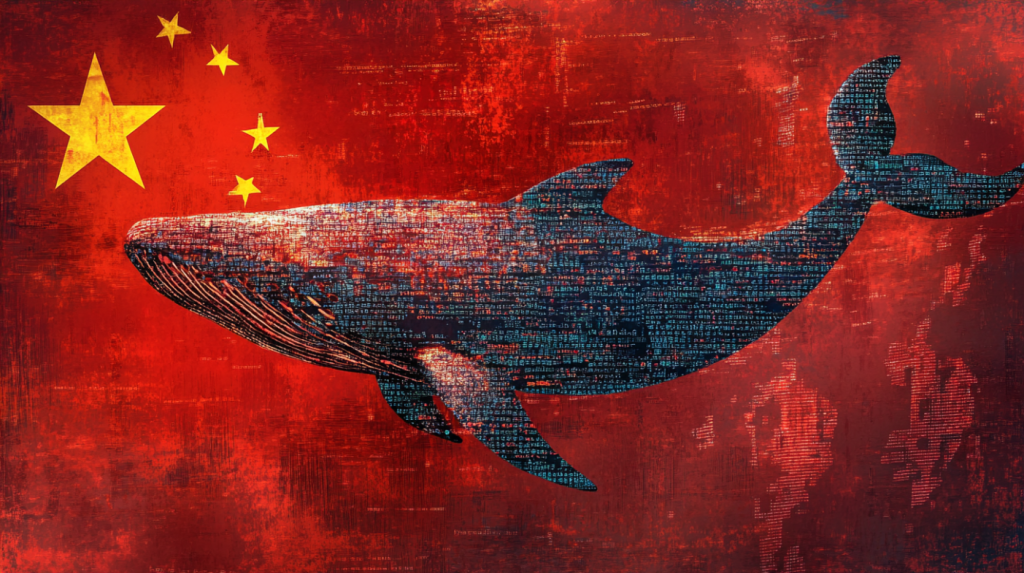
Chinese startup DeepSeek has recently caught the attention of the global AI community with the release of its groundbreaking model, DeepSeek V3.1. This 685-billion parameter system, quietly launched on Hugging Face, has quickly garnered praise for its performance that rivals top proprietary systems from American giants like OpenAI and Anthropic. What sets DeepSeek apart is its open-source accessibility, allowing anyone worldwide to utilize its capabilities without restrictions.
DeepSeek V3.1 has not only raised the bar for AI model performance but also signaled a shift in how advanced AI systems are developed and distributed. The model’s impressive benchmark scores and innovative features have impressed researchers globally, positioning DeepSeek as a formidable player in the AI landscape.
The release of DeepSeek V3.1 strategically challenges American AI dominance, offering comparable performance while embracing an open-source philosophy. The company’s approach contrasts with the proprietary models of American firms, reflecting differing perspectives on AI development and accessibility between the two superpowers.
By integrating chat, reasoning, and coding functions into a single model with a hybrid architecture, DeepSeek V3.1 has achieved remarkable efficiency and cost-effectiveness. The model’s ability to deliver high-quality results at a fraction of the cost of other systems positions it as a disruptive force in the AI industry.
DeepSeek’s open-source strategy not only democratizes access to advanced AI capabilities but also disrupts traditional AI economics by challenging the need for premium pricing and strict usage restrictions. This approach could revolutionize how AI systems are developed, distributed, and deployed, offering exciting opportunities for organizations to leverage cutting-edge technology without financial barriers.
The success of DeepSeek V3.1 signifies a shift in the competitive landscape of AI development, where smaller teams can now achieve comparable results to industry giants through innovative strategies. This democratization of AI could lead to a more inclusive and accelerated adoption of AI technologies worldwide, challenging the dominance of American tech platforms.
In conclusion, DeepSeek V3.1’s emergence marks a significant milestone in the evolution of artificial intelligence, breaking down artificial barriers that once restricted access to advanced AI systems. As the industry moves towards greater accessibility and democratization, the future of AI competition may hinge on who can make these powerful tools more widely available. The global AI race has transformed, emphasizing accessibility over exclusivity, and DeepSeek’s innovative approach may set a new standard for the industry.