
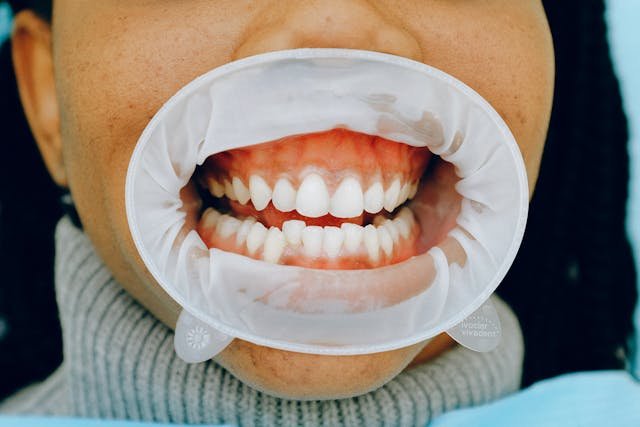
Achieving a brighter smile is a common goal for many individuals seeking cosmetic dental treatments in Australia. However, for those with gum recession, there may be concerns about the safety and feasibility of teeth whitening procedures. The good news is that teeth whitening is indeed possible for individuals with gum recession, but it requires a cautious approach and professional guidance to ensure optimal results.
Before embarking on any teeth whitening treatment, it is crucial to have your gums evaluated by a skilled dental team such as Clover Dental. Gum recession alters the structure of your teeth and exposes areas that may react differently to whitening agents, necessitating a customized plan for treatment.
Gum recession occurs when the gum tissue recedes from the tooth, revealing more of the tooth surface, and in some cases, the root. This condition can develop gradually and may not be immediately noticeable. Common causes of gum recession include gum disease, aggressive brushing, teeth grinding, age-related changes, orthodontic movement, and genetics. When gums recede, the protective enamel layer may no longer cover the entire visible tooth surface, resulting in the exposure of dentine, a softer layer beneath enamel.
Teeth whitening treatments primarily target enamel, the outer layer of the tooth. Professional whitening gels contain peroxide-based agents that penetrate the enamel to break down stain molecules. However, exposed root surfaces, which lack enamel and are covered in cementum, behave differently when exposed to whitening agents. Tooth roots, covered in cementum, are thinner and more porous than enamel, absorbing whitening agents more quickly but not lightening as predictably. Additionally, individuals with gum recession may experience increased tooth sensitivity and a higher risk of gum irritation when undergoing whitening treatments.
While whitening teeth with gum recession can be safe in many cases, it is essential to undergo a thorough dental evaluation before proceeding. Factors such as the stability of the gum recession, the presence of active gum disease, the severity of tooth sensitivity, and the extent of exposed roots must be considered. If gum disease is present, whitening may need to be postponed until it is treated, as gum health should always take precedence over cosmetic procedures. Dentists may also recommend desensitizing treatments before whitening to minimize discomfort.
Professional whitening conducted by dental professionals is strongly recommended for individuals with gum recession, as it offers several advantages over over-the-counter whitening kits. Custom trays used in professional whitening minimize contact between the whitening gel and the gums, ensuring a controlled concentration of the gel and a supervised treatment duration. In contrast, over-the-counter kits with one-size-fits-all trays pose a higher risk of gum irritation and may yield uneven results.
If teeth whitening is deemed suitable for individuals with gum recession, dentists may recommend using desensitizing toothpaste before treatment, spacing out whitening sessions, using lower-concentration whitening gel, applying fluoride or remineralizing agents, and opting for shorter whitening sessions to manage sensitivity effectively.
In cases where whitening may not be the best option due to persistent discoloration of exposed roots, alternative cosmetic treatments such as composite bonding, veneers, or gum grafting may be recommended. A comprehensive consultation with a dentist can help determine the most suitable approach based on individual oral health and cosmetic goals.
Individuals with active periodontal disease, severe untreated sensitivity, extensive exposed roots, cracked enamel, or ongoing gum inflammation should avoid teeth whitening until these issues are addressed. Whitening should be viewed as a final step in a comprehensive oral health plan, with a focus on long-term care to maintain results and protect gum health. Using a soft-bristled toothbrush, avoiding aggressive brushing, scheduling regular professional cleanings, addressing teeth grinding with a night guard if needed, and limiting consumption of stain-causing foods and drinks are essential steps in preserving whitening results and preventing further gum recession.
In conclusion, while teeth whitening is possible for individuals with gum recession, it is crucial to approach the treatment carefully and seek professional guidance to ensure safety and effectiveness. Prioritizing gum health and undergoing a personalized assessment can help individuals achieve a brighter smile without compromising their long-term dental well-being. If you are considering teeth whitening and have concerns about gum recession, scheduling a consultation with a dental professional is recommended to determine the most appropriate course of action.