

The UAE is entering a pivotal stage in its circular economy journey, with the EPR Pilot for glass recovery marking a major step toward producer accountability and system-led recycling. Breaking Travel News met up with Ziad Karam, Head of Corporate Relations, Diageo MENA and Mohamed Daoud, Founder & CEO, Development Inc. to find out more about the pilot’s impact, its potential to shape national policy in the UAE, and how industry and ecosystem partners can drive meaningful circular progress.
BTN: Diageo’s partnership with the World Sustainable Travel & Hospitality Awards signals a clear commitment to sustainability beyond your core business. Why was it important for Diageo to support this initiative, particularly at Terra, a venue dedicated to regeneration and circular thinking?
Ziad Karam, Head of Corporate Relations, Diageo MENA: “Diageo’s participation reflects our belief that sustainability progress is accelerated through credible partnerships and practical action. Terra is a relevant venue because it is dedicated to regeneration and circular thinking, bringing together stakeholders who can move from ambition to implementation. For us, World Sustainable Travel & Hospitality Awards is an opportunity to support a constructive dialogue around scalable solutions, responsible recovery systems, and measurable outcomes, particularly across high-impact sectors such as hospitality and tourism.”
Mohamed Daoud, Founder & CEO, Development Inc.: “Terra creates the right context for a systems-level discussion: how circularity is designed, governed, and delivered in practice. What makes World Sustainable Travel & Hospitality Awards valuable is its ability to convene policy-aligned stakeholders, industry leaders, and implementers around real execution: collection design, operational discipline, and transparent reporting. This is where circular economy commitments can translate into working models that are credible, measurable, and scalable.”
BTN: From a corporate relations and policy perspective, how do partnerships like World Sustainable Travel & Hospitality Awards help global producers play a more constructive role in national sustainability agendas across the region?
Ziad Karam: “They provide a structured platform for producers to engage responsibly with government-aligned agendas and local ecosystems, while supporting systems that can deliver measurable progress. In practice, effective partnerships create alignment around targets, governance, and reporting expectations, helping EPR initiatives move beyond concept into scalable models. They also encourage knowledge sharing and transparency, which are essential for building trust and accelerating adoption across the region.”
BTN: You have worked across multiple markets designing and delivering environmental systems. What makes the UAE EPR Pilot a particularly important moment for the region’s circular economy journey?
Mohamed Daoud: “The UAE EPR Pilot represents a shift from fragmented efforts to a more structured and accountable approach to material recovery. It places emphasis on producer responsibility, performance measurement, and system design, elements that determine whether recycling works at scale. The UAE also has the institutional capacity to translate pilot learnings into national frameworks. If the pilot demonstrates credible recovery and reporting, it can set a regional benchmark for how circular economy systems should be governed and implemented.”
BTN: Why is glass recovery such a strategic focus for Diageo within the EPR Pilot, and what responsibility do producers have in ensuring materials they put into the market are recovered effectively?
Ziad Karam: “Glass is a key packaging material in our category and offers strong circular potential when it is recovered and processed correctly. Producers have a responsibility to help enable recovery systems that are practical, inclusive of key collection channels, and supported by credible reporting. The EPR Pilot is an opportunity to demonstrate how producers can contribute to building systems that improve recovery performance, strengthen recycling pathways, and support policy development through evidence and transparency.”
BTN: From an ecosystem and systems design viewpoint, what are the biggest technical and behavioural barriers to effective glass recovery in the UAE today?
Mohamed Daoud: “Technically, the main barriers are capture quality, contamination, and the need for consistent collection coverage across high-yield generation points, particularly hospitality. Behaviourally, the system must be convenient and trusted; participation improves when separation is simple, collection is reliable, and outcomes are visible. From a design standpoint, glass recovery works best through multi-channel collection models supported by operational controls and measurable KPIs.”
The EPR Pilot and glass recovery
BTN: How do producer commitment and ecosystem innovation need to work together for EPR pilots to move from proof of concept to scalable national systems?
Ziad Karam: “Scaling requires long-term commitment, robust governance, and transparency. Producers can support this by aligning on clear targets, contributing to funding mechanisms, and prioritising credible reporting. Ecosystem innovation then ensures delivery, optimising collection models, improving material quality, and enabling learning through data. The objective is to build systems that are repeatable, efficient, and policy-relevant.”
Mohamed Daoud: “Producer commitment makes the system investable and performance-driven; ecosystem innovation makes it operationally deliverable. The bridge is data and accountability, ensuring pilots evolve through evidence rather than assumptions. In parallel, we are developing the Dubai Glass Recovery Project as an industry-led model aligned with UAE stakeholders and authorities, designed to demonstrate how multi-channel recovery, real-time visibility, and operational KPIs can support scalable outcomes.”
Ziad Karam, Head of Corporate Relations, Diageo MENA
Collaboration and ecosystem design
BTN: You work closely with multiple stakeholders across the waste value chain. What does effective collaboration actually look like in practice when building a functioning EPR ecosystem?
Mohamed Daoud: “Effective collaboration is structured: clear roles, shared KPIs, and aligned incentives across the value chain. Regulators define the framework, producers align on targets and reporting requirements, operators deliver collection and sorting standards, and recyclers confirm quality and verified end use. Collaboration becomes effective when there is a single operational truth supported by consistent data, allowing performance to be managed, improved, and scaled.”
BTN: Diageo operates across highly regulated markets. How does your experience in public policy and stakeholder engagement help align government, industry, and consumers around a shared sustainability goal?
Ziad Karam: “Stakeholder engagement helps ensure that priorities are aligned and that implementation is practical, credible, and coordinated. In regulated markets, progress depends on clarity of expectations, responsibilities, and shared measurement. Effective engagement builds trust and creates the conditions for sustained collaboration between government, industry partners, and the wider public.”
BTN: What lessons from this pilot could be applied to other materials streams, or even other sectors beyond packaging?
Ziad Karam: “The principles are transferable: clear governance, stable funding, credible data, and transparent reporting. Once those foundations are established, it becomes easier to replicate system design across other packaging streams and, potentially, other sectors that require accountability and verifiable outcomes.”
Mohamed Daoud: “The key lesson is that circularity must be engineered end-to-end – not only collection, but also quality control, traceability, and verified recycling pathways. This model applies across materials. Where systems are designed with performance management and transparent reporting, scaling becomes more realistic and sustainable.”
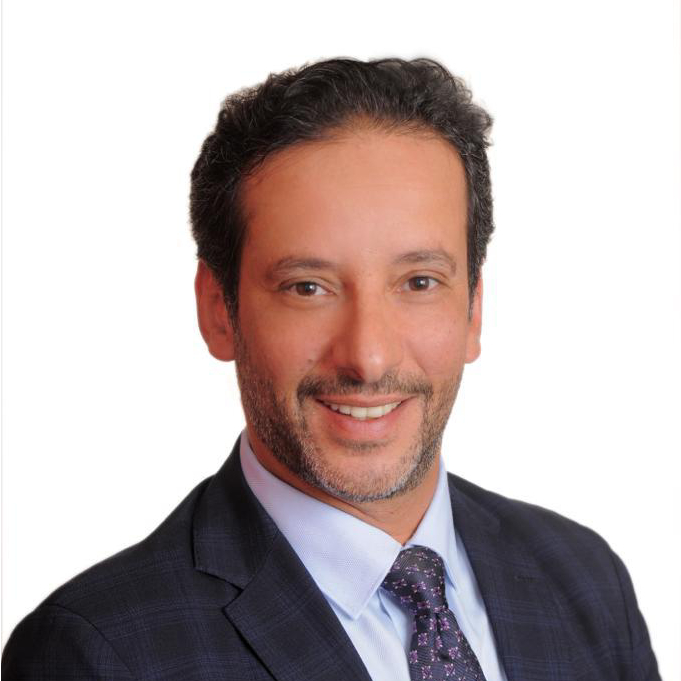
Mohamed Daoud, Founder & CEO, Development Inc.
Data, measurement, and accountability
BTN: How important is credible data and reporting in ensuring EPR schemes deliver real environmental outcomes rather than becoming box ticking exercises?
Ziad Karam: “It is essential. Without credible data and reporting, EPR risks becoming a compliance exercise rather than an environmental solution. Transparent measurement enables accountability, improves system performance, and builds trust among government, industry, and consumers. It also ensures that progress is evidence-based and that recovery outcomes can be validated.”
BTN: How can technology and innovation improve transparency, traceability, and confidence in recycling systems?
Mohamed Daoud: “Technology strengthens governance by making recovery measurable. It enables end-to-end visibility, from collection points to sorting and verified recycling pathways. In our work, we use operational monitoring systems such as Field Eye to strengthen traceability and performance management, supported by controls like GPS-tracked routes, location-based verification, and KPI reporting. This type of transparency increases confidence and allows for continuous optimisation.”
BTN: What metrics should industry and government be watching most closely to judge whether the EPR Pilot is truly succeeding?
Ziad Karam: “Recovery rates against targets, material quality outcomes such as contamination, and verified recycling pathways. Also important are the integrity of reporting and the scalability of the model beyond pilot conditions.”
Mohamed Daoud: “Capture rate by channel, contamination rate, verified end-market confirmation, traceability coverage, and cost-per-ton with transparency. These metrics demonstrate both environmental outcomes and system maturity.”
Consumer engagement and behaviour change
BTN: Infrastructure alone is not enough. What role does consumer behaviour play in the success or failure of recycling systems, particularly for glass?
Mohamed Daoud: “Behaviour is critical because glass recovery depends on clean separation at source. However, behaviour improves when systems are well designed: clear separation infrastructure, consistent collection, and visible feedback on outcomes. In hospitality settings specifically, light incentives and performance reporting can reinforce correct separation and improve material quality, provided they are tied to verified outcomes rather than marketing claims.”
BTN: How can brands with strong consumer trust influence better disposal behaviours without greenwashing or oversimplification?
Ziad Karam: “By communicating responsibly and transparently, focusing on practical behaviours supported by real systems, and reporting progress with credible evidence. Brand influence is most effective when it aligns with measurable outcomes and avoids oversimplified claims. Trust is maintained through accuracy, consistency, and accountability.”
BTN: What practical steps can hospitality, travel, and tourism businesses take today to support better waste separation and recovery?
Ziad Karam: “Hospitality businesses can drive immediate progress by institutionalising separation: clear back-of-house processes, staff training, and simple operational checks that sustain consistency. What also helps is linking participation to credible measurement, regular reporting and verified recovery outcomes. In parallel, recognition mechanisms such as benchmarking or circularity rankings, tied to transparent KPIs, can motivate venues to maintain standards over time without drifting into greenwashing.”
Mohamed Daoud: “Hospitality can act immediately by implementing a simple separation SOP, placing bins where operations actually happen, and working with partners who can provide traceability and periodic KPI reporting. Where appropriate, light incentive mechanisms and venue recognition, based on verified performance, help keep teams engaged and improve consistency. The key is that rewards and rankings must be linked to measured recovery and material quality, not just participation.”
The UAE and the future of circular economy
BTN: How does Diageo see the UAE’s sustainability ambitions aligning with global best practice, and where can the country lead rather than follow?
Ziad Karam: “The UAE is well positioned to lead by developing EPR systems that are performance-based, digitally enabled, and transparent. Where the UAE can lead is in translating pilot learnings into scalable national frameworks, setting a benchmark for governance, reporting, and public-private collaboration.”
BTN: Based on your regional experience, what would success for the UAE’s circular economy look like five to ten years from now?
Mohamed Daoud: “Success means circularity is institutionalised: structured EPR systems across key materials, high capture rates, verified recycling pathways, and transparent reporting that builds confidence. It also means building a local circular economy, jobs, end markets, and operational capability, so recovery is sustainable, economically viable, and scalable long term.”
BTN: If this EPR Pilot succeeds, how transformative could it be for waste management policy and private sector accountability in the UAE?
Ziad Karam: “It could be highly transformative by establishing evidence for policy design and raising the standard for accountability. It would demonstrate how producer responsibility can be implemented practically and measured credibly, supporting national policy evolution and long-term system performance.”
Mohamed Daoud: “It would accelerate the transition from fragmented efforts to system-led recovery. When accountability is measurable and outcomes are verified, the market aligns around performance. That shift can enable national-scale circular infrastructure and a more mature recovery ecosystem.”
BTN: What gives you the most optimism about the future of sustainable waste management in the region?
Ziad Karam: “The growing focus on systems, accountability, and collaboration. We are seeing increased willingness to align around credible targets and transparent reporting. That creates the foundation for scalable change.”
Mohamed Daoud: “The transition from awareness to implementation. When industry commitment, policy direction, and operational capability are combined with credible data, circularity becomes something we can deliver consistently and scale responsibly.”
BTN: And finally, for organisations attending the World Sustainable Travel & Hospitality Awards, what is the single most important action they can take after leaving Terra to accelerate real circular impact?
Ziad Karam: “Commit to measurable action: choose a material stream, set a clear target, support credible recovery systems, and report progress transparently. Consistency and accountability turn momentum into impact.”
Mohamed Daoud: “Prioritise traceability and verified outcomes. Separation is important, but verification is what makes circularity credible. Work with systems that can demonstrate where material went and what was genuinely recovered and recycled.”
Find out more about Diageo, Development Inc. and the other organisations redefining responsible travel in the Sustainability Special Issue of Best in Travel.