
Bio Age Testing: The Latest Trend in Anti-Aging
When it comes to the world of anti-aging, billionaire Bryan Johnson is a name that often comes up in conversation. Known for his quest to achieve the lowest possible “biological age,” Johnson has become a prominent figure in the realm of bio age testing.
Featured in the Netflix documentary Don’t Die, Johnson spares no expense when it comes to his anti-aging regimen. With millions of dollars spent annually on treatments ranging from daily supplements to plasma infusions extracted from his own son, Johnson is dedicated to reversing the aging process.
One of the key components of Johnson’s anti-aging journey is bio age testing. These tests, which assess biological markers of aging, have shown Johnson’s age to be 5.1 years younger than when he first began his quest—suggesting that he may be aging in reverse.
However, not everyone is convinced of Johnson’s claims. A New York Times exposé alleges that Johnson’s biological age has actually increased by 10 years, casting doubt on the effectiveness of his anti-aging treatments.
Despite the controversy, Johnson’s “don’t die” crusade has garnered attention from popular figures such as Peter Attia, Joe Rogan, and Andrew Huberman, who frequently discuss bio age testing on their podcasts. With the rise of affordable mail-order testing kits claiming to reveal biological age and pace of aging, the question remains: is bio age testing worth it?
For those considering bio age testing, the first step is understanding what bio age actually means.
Decoding Bio Age: What It Means for You
Bio age, or biological age, is a measure of how your cells function—distinct from your chronological age, which simply reflects the number of years you’ve lived. To illustrate this concept, consider two 50-year-old men: Chang, who leads a sedentary lifestyle in a polluted city, and Jabari, who maintains a healthy routine in a pristine environment.
Despite being the same age, Jabari’s bio age is likely younger than Chang’s due to his healthier habits and environment.
How Bio Age Tests Work
Bio age testing kits analyze biological markers of aging, known as biomarkers, to calculate your bio age. These markers can range from telomere length to DNA methylation, providing insight into how your body is aging on a cellular level.
While some biomarkers, such as blood pressure and cholesterol levels, are routinely monitored by healthcare providers, bio age testing offers a more comprehensive view of your overall wellness.
The Benefits of Biomarker Testing
Biomarker testing allows individuals to proactively monitor their health and make informed lifestyle choices. By identifying areas of improvement, such as muscle strength or balance, you can take steps to optimize your well-being and potentially extend your lifespan.
Moreover, biomarker testing serves as a motivator for many, highlighting the impact of healthy habits on biological age and overall longevity.
5 FREE Biomarker Tests You Can Try Today
Contrary to popular belief, tracking biomarkers of aging doesn’t have to break the bank. In fact, there are several scientifically validated tests that you can perform at home to gain insight into your bio age—for free.
These tests, which have been used by researchers for decades, offer valuable information about the pace of aging and overall health status.
FREE Biomarker Test #1: The Sitting-Rising Test (SRT)
Assessing both strength and balance, the SRT is a simple yet effective way to gauge your physical fitness. By measuring how easily you can transition from sitting to standing without assistance, this test provides valuable information about your muscle strength and coordination.
Individuals with lower scores on the SRT have been shown to have a higher risk of cardiovascular disease, highlighting the importance of strength and balance in overall health.
FREE Biomarker Test #2: Grip Strength Assessment
Your grip strength can serve as a predictor of overall muscle health and physical fitness. Weakness in the muscles of the hands is often indicative of weakness throughout the body, making grip strength a valuable biomarker of aging.
By squeezing a ball or handheld device, you can assess your grip strength and gain insight into your muscle function and potential risk for future muscle weakness.
In a recent study, researchers found that individuals with weak grip strength were more likely to experience a decline in physical function over a 25-year period. These individuals were more prone to walking slowly, struggling to rise from a chair, perform rigorous housework, and climb stairs. This highlights the importance of grip strength as a predictor of overall physical health and mobility in the long term.
Furthermore, low grip strength has been linked to a variety of health issues, including low bone mineral density, an increased risk of falls, poor nutritional status, depression, and poor sleep quality. It has also been associated with cognitive decline, reduced quality of life, and an elevated risk of heart disease, cancer, and premature mortality. In fact, grip strength has been shown to be a better predictor of longevity than blood pressure in some studies.
To measure grip strength, individuals can use a standard tennis ball and squeeze it as hard as they can for as long as possible. A hand-held dynamometer can also be used to assess grip strength more accurately. Individuals should aim to maintain their grip for at least 15-30 seconds, with scores above 90 indicating above-average strength.
In addition to grip strength, balance is another important biomarker of overall health and fitness. The ability to stand on one foot for an extended period can help reduce the risk of falls, a common cause of injury among older adults. Balance requires coordination between various bodily systems, including the eyes, inner ear, skeletal muscles, and brain. Conditions like diabetes, heart disease, and cancer can impair balance, making it a valuable indicator of overall health.
To measure balance, individuals can stand near a wall or chair for support and lift one leg while timing themselves. A study from Duke University provides average times for standing on one leg based on age and gender, allowing individuals to compare their performance to peers.
Fatigue is another important biomarker that can indicate underlying health issues. Persistent exhaustion that interferes with daily life may be a sign of fatigue, which can be caused by various factors such as sleep disorders, anemia, obesity, depression, or diabetes. Fatiguability, or how quickly one becomes fatigued after an activity, can predict future health outcomes and mortality risk.
To measure fatiguability, individuals can use the Pittsburgh Fatigability Scale, rating their perceived fatigue levels after various activities. Scores below 15 are considered normal, while scores above 25 may indicate severe fatigue that should be discussed with a healthcare professional.
Body composition, including body fat percentage and muscle mass, is also a crucial biomarker of health. Both excess body fat and inadequate muscle mass can increase the risk of various health issues, including heart disease, high blood pressure, cancer, and diabetes.
While traditional methods of measuring body composition may be costly, a simple tape measure can provide a relatively accurate estimate of body fat percentage. By measuring the neck, waist, and hips and inputting this data into a body fat calculator, individuals can track changes in body composition over time.
Overall, these biomarker tests offer valuable insights into an individual’s health and fitness levels, helping them make informed decisions about their well-being. While some tests may require professional assistance or equipment, others can be easily performed at home to monitor progress and identify potential health concerns. Monitoring blood markers annually can provide valuable insights into your overall health and potential cardiovascular disease risk. These markers, such as total cholesterol, LDL, HDL, triglycerides, and others, can help you and your healthcare professional assess the effectiveness of lifestyle or medical modifications you may have made. By understanding what your numbers mean and comparing them to optimal ranges, you can take proactive steps to improve your health and well-being.
In addition to blood markers, bone density is another crucial aspect of health to monitor, especially as you age. Strong bones are essential for overall health and longevity, and issues with bone density can lead to fractures and other health problems. High-risk individuals, such as postmenopausal women, sedentary individuals, and those with certain medical conditions, should pay particular attention to their bone health.
One way to measure bone density is through dual-energy X-ray absorptiometry (DEXA) scans, which can provide valuable information about your bone mineral content and density. Understanding your DEXA results, including your T-score, can help you assess your bone health and take appropriate steps to maintain or improve it.
For those interested in a more in-depth understanding of their biological age, commercial bio age tests offer advanced insights into the aging process. Tests such as DNA methylation and telomere analysis can provide information about how your body is aging at a cellular level. While these tests can be valuable tools for understanding aging patterns, it’s essential to interpret the results in the context of your overall health and lifestyle habits.
Keep in mind that biological age can vary between organs and over time, and commercial tests may not always accurately reflect the changes you’re making. It’s vital to focus on proven health-promoting behaviors, such as diet, exercise, stress management, and regular check-ups, rather than solely relying on test results. Additionally, be cautious of companies that may try to sell you unnecessary supplements or treatments based on your test results.
Ultimately, monitoring blood markers, bone density, and exploring commercial bio age tests can provide valuable insights into your health and help you make informed decisions about your well-being. By staying proactive and informed, you can take control of your health and age gracefully. Commercial test #3: VO2 Max: A Measure of Aging and Health
For a long time, only professional athletes paid attention to their VO2 max, which measures the maximum amount of oxygen your body can use during exercise. However, recent studies suggest that VO2 max can also serve as a valuable tool for tracking the aging process in both athletes and non-athletes.
Individuals with high VO2 max levels tend to not only be more physically fit but also have a lower risk of developing heart disease, diabetes, cancer, or stroke. In fact, a comprehensive observational study of 5,107 Danish men over 46 years found that those with above-average VO2 max in middle age lived, on average, five years longer than those with below-average levels. Additionally, for each unit increase in VO2 max, there was a corresponding 45-day increase in longevity. The researchers involved in the study even suggested that VO2 max may be a more accurate predictor of overall mortality compared to factors like high cholesterol, obesity, high blood pressure, and insulin resistance.
Think of VO2 max as a canary in a coal mine for your aging body. As you get older, various physiological changes occur, such as decreased chest wall flexibility, weakened lung muscles, and less elastic blood vessels, among others. These changes not only increase the risk of various diseases but also impact VO2 max, which tends to decline by 10 percent per decade starting around age 30.
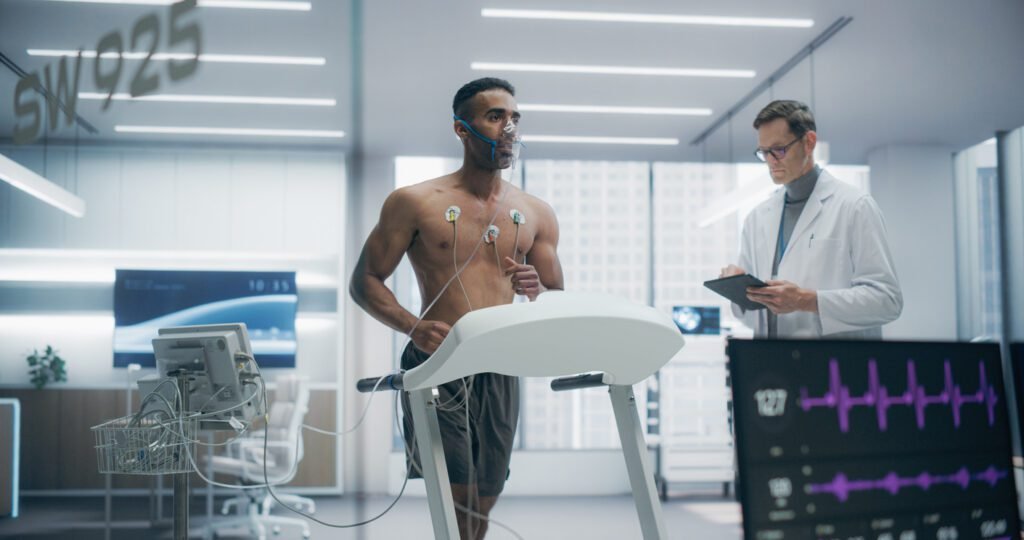
Traditionally, measuring VO2 max required a visit to a fitness lab, where individuals would undergo testing while wearing a metabolic mask and heart monitor during exhaustive exercise. This lab testing remains the most accurate method for assessing VO2 max and other essential fitness metrics like max heart rate, ventilatory thresholds, and tidal volume.
While lab testing may not be accessible to everyone, there are alternative methods available. The 1-mile walk test, smartwatch estimations, and the PR test (such as the Cooper test) offer somewhat less accurate but still valuable insights into your VO2 max levels.
It’s essential to remember that the information you gather about your body is just that—information. It’s not a reflection of your worth as a person or a permanent state. If you find that your biological age is higher than your chronological age, take proactive steps to improve your health and fitness. Whether it’s strength training, managing cholesterol levels, or making lifestyle changes, there are always options available to help you live a longer, healthier life. Most individuals tend to overlook two significant errors when it comes to making lifestyle changes that impact longevity.
Error #1: Disregarding Timeless, High-Impact Strategies
It is often the mundane, repetitive health habits that, when maintained consistently, contribute to a lengthy and healthy life. These practices include:
– Choosing minimally processed foods over ultra-processed ones
– Increasing consumption of colorful fruits and vegetables
– Engaging in regular physical activity
– Ensuring an adequate amount of rest and sleep
– Participating in community activities, spending time in nature, and engaging in meaningful activities
– Limiting alcohol consumption
– Avoiding tobacco use
– Applying sunscreen
– Practicing proper dental hygiene, such as flossing
This list is only a fraction of the numerous strategies that can positively impact longevity. Research shows that individuals who adhere to these and other high-impact strategies not only live longer but also live better. They experience greater strength, happiness, and a reduced likelihood of suffering from disability or chronic pain in their later years.
Unfortunately, many individuals tend to focus on options with minimal impact when it comes to health, fitness, and longevity. Rather than making substantial behavioral changes, they opt for the latest trendy supplements or quick fixes. However, it is essential to understand that significant lifestyle changes require genuine shifts in behavior. If achieving optimal health were as simple as taking a pill, the streets would be filled with individuals walking and cycling to maintain their well-being.
This is why many individuals benefit from the guidance of a certified health coach trained in the science of behavior change to help them navigate the journey towards a healthier lifestyle effectively.
Error #2: Failing to Translate Data into Action
Biomarker aging tests can provide valuable insights and empower individuals to take control of their health. However, data alone does not lead to a longer life. Merely collecting information without implementing changes is akin to seeing a piece of spinach stuck in your teeth in the mirror but choosing not to remove it.
To make biomarker testing worthwhile, individuals must use the data to inform behavioral changes. Consider the biomarker data as a starting point or baseline. Utilize this information to evaluate whether the lifestyle modifications or medical interventions you adopt are moving you closer to your goal of achieving a longer, healthier life.
In conclusion, to enhance longevity and overall well-being, it is crucial to prioritize timeless, high-impact strategies and leverage data-driven insights to drive meaningful behavioral changes. By avoiding these common mistakes, individuals can embark on a journey towards a healthier, more fulfilling life. If you are passionate about helping others improve their overall health and well-being through sustainable nutrition and lifestyle habits, then becoming a coach could be the perfect fit for you. By guiding individuals on their journey to better physical and mental health, you can make a positive impact while also enjoying a fulfilling career doing what you love. If you want to delve into this rewarding field, consider enrolling in the PN Level 1 Nutrition Coaching Certification, which is currently available at a discounted rate.
The field of biological age assessment has seen significant advancements in recent years, with DNA methylation-based measures emerging as promising indicators of health and longevity. Studies such as Lu et al.’s research on GrimAge and Belsky et al.’s work on DunedinPACE have demonstrated the strong predictive power of these biomarkers in estimating lifespan and healthspan. Additionally, Alder et al.’s study on telomere length testing and Vaiserman and Krasnienkov’s review on telomere length as a marker of biological age further highlight the importance of these molecular indicators in assessing aging processes.
In the realm of fitness and mortality, research has shown a strong correlation between cardiorespiratory fitness and overall health outcomes. Imboden et al.’s study on cardiorespiratory fitness and mortality in healthy individuals, as well as Cai et al.’s research on the causal associations between fitness and type 2 diabetes, underscore the importance of maintaining good physical fitness for long-term health. Furthermore, Aker et al.’s findings on the relationship between cardiorespiratory fitness and cardiovascular events in middle-aged patients emphasize the protective effects of exercise on heart health.
Longitudinal studies, such as Prestgaard et al.’s investigation into changes in cardiorespiratory fitness and the risk of stroke and death, provide valuable insights into the long-term benefits of maintaining good fitness levels. Similarly, Clausen et al.’s research on midlife fitness and mortality risk over 46 years of follow-up underscores the enduring impact of physical activity on overall health. Kim et al.’s study on the effect of aging on lean body mass and VO2max in rowers, as well as Strasser and Burtscher’s review on VO2max as a predictor of longevity, further highlight the importance of fitness in promoting longevity and well-being.
Recent advancements in technology, such as smartwatch-based estimation of maximum oxygen uptake, as studied by Caserman et al., offer new opportunities for monitoring and improving fitness levels. By leveraging these innovative tools, individuals can track their progress and make informed decisions about their health and wellness goals.
In conclusion, the intersection of DNA methylation-based measures, fitness assessments, and technological advancements offers a comprehensive approach to understanding and improving health outcomes. By staying informed about the latest research and trends in these areas, coaches can better support their clients in achieving optimal health and well-being. The Importance of Supporting Local Businesses
In today’s fast-paced world, it’s easy to get caught up in the convenience of big box stores and online retailers. However, it’s important to remember the value of supporting local businesses. These small, independently owned shops play a vital role in our communities and contribute to the overall well-being of our cities and towns.
When you support a local business, you’re not just making a purchase – you’re investing in your community. Local businesses create jobs, boost the economy, and help to build a sense of community pride. By choosing to shop at a mom and pop shop instead of a chain store, you’re helping to keep money circulating within your local economy.
In addition to the economic benefits, supporting local businesses also helps to preserve the unique character of a community. Small businesses often offer a more personalized shopping experience, with owners who are passionate about their products and dedicated to providing top-notch customer service. When you shop locally, you’re not just buying a product – you’re supporting a dream.
Furthermore, local businesses are more likely to give back to the community through charitable donations, sponsorships, and other forms of support. By supporting these businesses, you’re helping to create a cycle of giving that benefits everyone in the community.
In a world dominated by big corporations, it’s easy to overlook the importance of supporting local businesses. But by choosing to shop at small, independently owned shops, you’re making a conscious decision to invest in the future of your community. So next time you need to make a purchase, consider supporting a local business – you’ll be glad you did.