
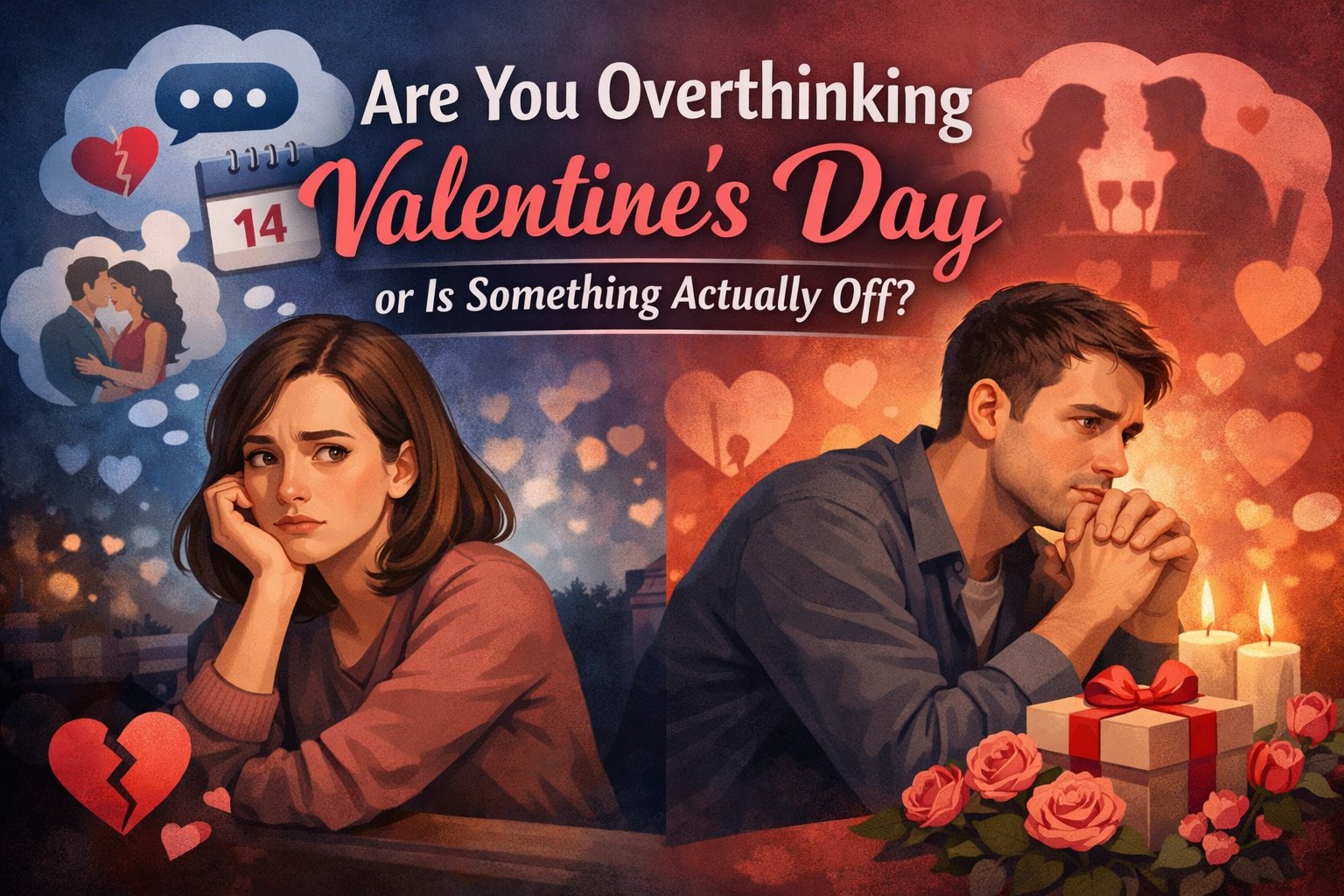
Valentine’s Day has a way of turning small thoughts into big questions. It can amplify quiet doubts, turning normal thoughts into emotional over-analysis or revealing deeper relationship concerns. You start wondering why they have not mentioned plans yet. You notice how other couples seem more excited. You catch yourself rereading messages, analyzing tone, timing, and emojis.
So here is the real question many people quietly ask every February: Am I just overthinking Valentine’s Day, or is something actually wrong in this relationship? Let’s break this down using psychology, relationship research, and current dating trends in 2026.
Valentine’s Day is not just a date. It is a social pressure amplifier. Psychologists explain that holidays tied to romance activate what is called social comparison. We subconsciously measure our relationship against others, even if we normally do not care. Research in social psychology shows that comparison increases anxiety and self-doubt, especially when expectations are unclear or unspoken. On Valentine’s Day, this pressure comes from social media highlight reels, cultural expectations of romance, past relationship experiences, and fear of being undervalued or overlooked. If you already tend to overthink, Valentine’s Day acts like fuel. That does not automatically mean something is wrong.
One of the hardest parts of dating is telling anxiety apart from intuition. Overthinking feels like rapid looping thoughts, imagining worst-case scenarios, needing constant reassurance, and anxiety that rises without new information. Intuition feels like a calm but persistent sense of unease, patterns, discomfort even when you try to rationalize it away, and a feeling rooted in observed behavior, not imagined outcomes. Overthinking shouts. Intuition whispers but does not go away. Valentine’s Day tends to make overthinking louder, which can drown out what intuition is actually trying to say.
You are likely overthinking if things felt stable before February arrived, your partner is consistent in everyday behavior, the stress appears only around Valentine’s Day, and your worries are mostly about how it looks rather than how it feels. In modern dating, not everyone assigns the same meaning to Valentine’s Day. Some people see it as symbolic. Others see it as commercial or unnecessary. Different values do not automatically equal emotional distance.
On the other hand, Valentine’s Day can highlight issues that already existed. Pay attention if emotional effort has been declining for weeks or months, communication has become vague or avoidant, you feel lonely even when you are in contact, you are afraid to express your needs, and Valentine’s Day anxiety is part of a larger pattern of doubt. Relationship researchers often note that people rarely become anxious without reason. Anxiety is sometimes the body responding to subtle emotional inconsistency. Valentine’s Day does not create problems. It reveals them.
One major dating trend in 2026 is a shift away from performative romance. More couples are having honest conversations instead of grand gestures, choosing low-pressure experiences, defining expectations early, and valuing emotional safety over spectacle. From a psychological perspective, this aligns with research on secure attachment, where partners feel comfortable expressing needs without fear of rejection. In secure dynamics, Valentine’s Day feels optional. In insecure dynamics, it feels like a test.
Instead of spiraling inward, try this grounded approach: Pause the mental movie and ask yourself what facts you actually have versus what you are imagining. Zoom out and ask if this is about one day, or about how you feel most days. Name the feeling, not the holiday and communicate simply. Healthy communication does not require dramatic confrontation. A peaceful check-in can unveil a plethora of insights.
Therapists consistently discover that clarity is more effective in alleviating anxiety than mere reassurance.
Valentine’s Day has a unique way of shining a spotlight on our relationships, amplifying our emotions.
At times, this intensified focus can make our usual nerves seem overwhelming. Other times, it can bring to light long-standing discomfort that we may have been ignoring.
It’s important to remember that questioning your feelings does not make you weak, and seeking clarity does not make you dramatic. Feeling conflicted on Valentine’s Day does not mean you are failing at love.
The true objective is not to have a flawless Valentine’s Day, but rather to understand how secure, understood, and valued you truly feel in your relationship.
This question holds significance every day of the year, not just on February 14th.