
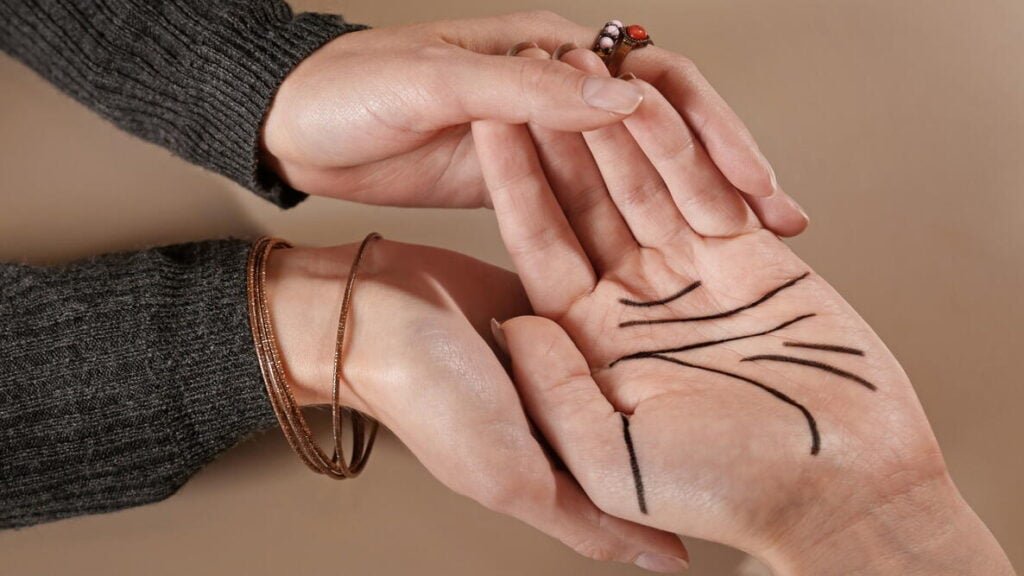
Palmistry, also known as Chiromancy, is an ancient practice of divination that has intrigued people for centuries. The lines etched on our palms and fingers are believed to hold secrets about our personality, relationships, and future. If you’ve ever been curious about palm reading, this beginner’s guide is for you!
Origins of Palmistry
The origins of palmistry are shrouded in mystery, with roots in ancient India before spreading across Asia to regions like China, Tibet, Persia, Egypt, and Greece. The Greek philosopher Aristotle mentioned palm reading over 2,500 years ago, emphasizing the significance of the lines on the human hand.
Although palmistry saw a decline in the West during the Middle Ages, it experienced a revival in the 19th century with the rise of occult interests. Figures like William John Warner, known as Cheiro, helped popularize palmistry, leading to its place in mainstream American culture by the mid-20th century.
Learning Palmistry
You can learn how to read palms from the comfort of your home with resources and books available online and offline. By investing time and energy, you can start your journey into this mystical craft.
How To Read Palms
Palmistry involves analyzing the lines and physical features of the palms and fingers to understand personality traits and predict future outcomes. Start by observing palm shapes, which indicate elemental types:
– Earth: Square palms and short fingers (practical, grounded)
– Air: Square palms and long fingers (intellectual, analytical)
– Water: Long palms and long fingers (emotional, intuitive)
– Fire: Square palms and short fingers (energetic, confident)
Which Hand to Read in Palmistry
Both hands are examined in palmistry, with the dominant hand reflecting the present and future shaped by current actions, while the non-dominant hand represents past influences and natural potential.
Palm Lines
Major palm lines include the fate line, life line, heart line, money line, and head line. Each line provides insights into career, health, relationships, financial prospects, and intellect, respectively.
Mounts and Plains
Examining mounts and plains on the palm adds depth to a palm reading. Mounts under each finger and along the palm’s edges, along with plains, reveal personality traits and life experiences.
Prominent mounts suggest strength in corresponding traits, while flat mounts may indicate underdevelopment. Understanding the landscape of your palm enhances your palmistry skills.
Conclusion
Learning how to read palms takes time and practice, but it offers a fascinating insight into personality traits and potential future outcomes. Palmistry is not just about fortune-telling; it’s a tool for self-awareness and personal growth. Start by observing your own hands and exploring the lines and features that reveal unique insights about yourself. Happy palm reading!