
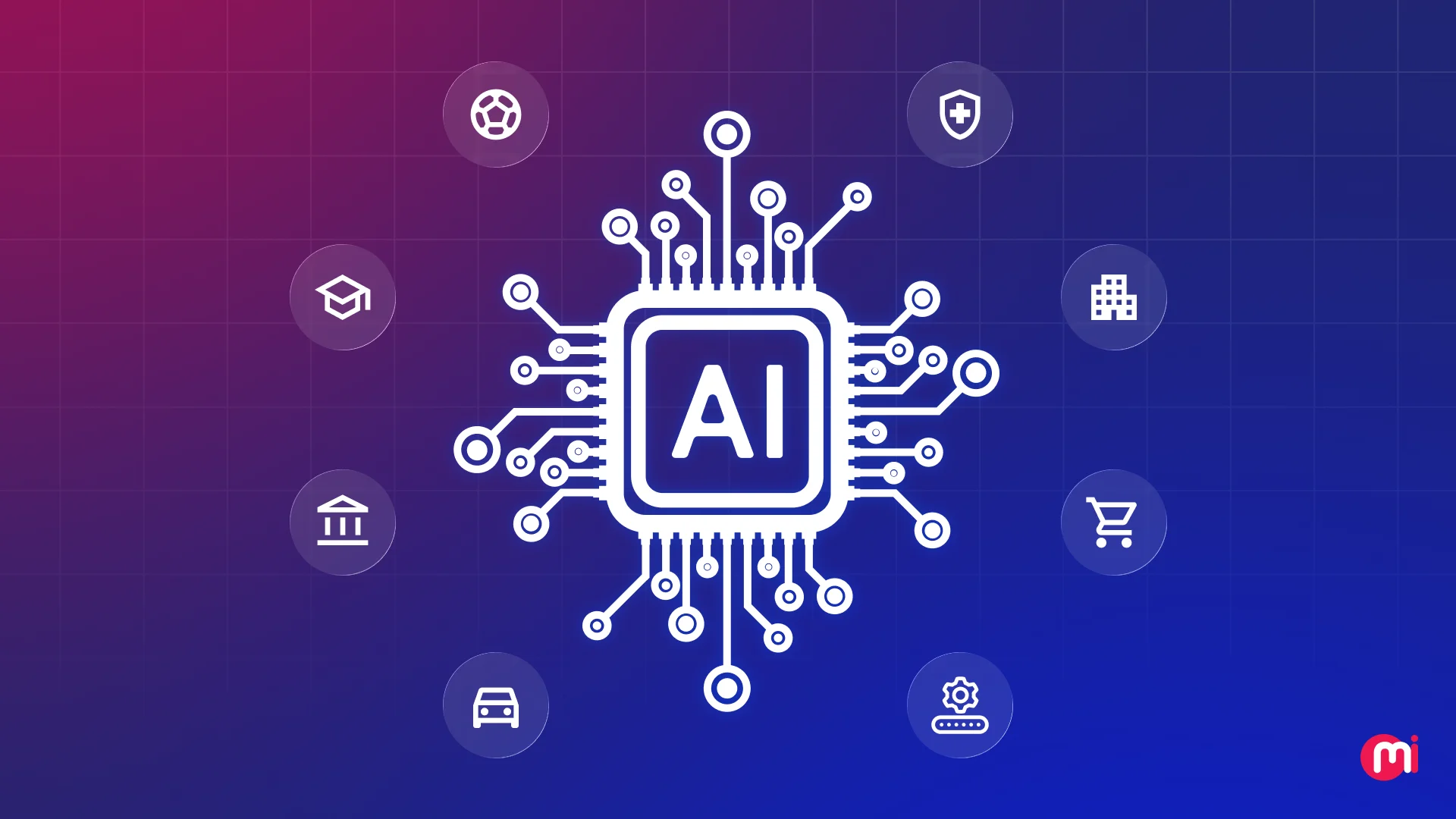
Artificial intelligence (AI) is revolutionizing industries across the globe, offering incredible opportunities for growth and innovation. As technology continues to advance rapidly, businesses that fail to adopt AI risk falling behind in terms of efficiency and competitiveness. The global AI market is projected to reach a staggering $3,497.26 billion by 2033, highlighting the massive growth potential of this transformative technology.
From predicting diseases before symptoms appear to optimizing manufacturing processes and revolutionizing shopping experiences, AI use cases are diverse and impactful. Traditional sectors that do not embrace AI face inefficiencies, unplanned downtime, and delays in healthcare treatments. However, with the right AI integration services, businesses can unlock the full potential of this cutting-edge technology.
In this article, we will explore the key takeaways of AI, understand how AI applications work, and delve into the top AI use cases across various industries. By leveraging machine learning, deep learning, and natural language processing, AI systems can analyze data, recognize patterns, and make informed decisions, driving efficiency and innovation in sectors such as healthcare, education, real estate, construction, manufacturing, fintech, and retail.
In healthcare, AI is transforming diagnostics, patient data analysis, and medical record summarization with over 90% accuracy in imaging analysis. The global AI in healthcare market is expected to reach $613.81 billion by 2034, demonstrating the significant impact of AI on improving healthcare outcomes. AI-powered systems can extract essential information from lengthy medical records, aid in diagnosing conditions accurately, and flag inconsistencies in patient data to prevent errors and enhance safety protocols.
In education, AI is reshaping the way students learn and teachers instruct, with intelligent tutoring systems, automated grading, and personalized learning experiences. By analyzing student responses and providing real-time feedback, AI algorithms can tailor educational content to individual needs, promote problem-solving skills, and enhance student engagement.
In real estate and construction, AI is optimizing property recommendations, predicting market trends, and streamlining processes for energy-efficient buildings. AI algorithms can analyze buyer behavior, forecast investment returns, and offer virtual property tours to enhance the buying experience. By automating tasks such as data entry and defect detection, AI systems can reduce errors, improve efficiency, and enhance safety protocols in these industries.
In manufacturing, AI is driving predictive maintenance, process optimization, and material research to improve production efficiency and quality. By analyzing equipment data in real time, AI systems can predict equipment failures, streamline workflows, and accelerate product development cycles. Wearable technologies integrated with AI further enhance workplace safety and situational awareness in high-risk environments.
In fintech, AI is enhancing fraud detection, credit risk assessment, and customer service through virtual assistant chatbots. By analyzing complex data patterns, AI models can identify fraudulent activities, assess credit risks, and provide personalized customer service experiences. AI-powered voice interfaces enable secure transactions through voice commands, while algorithmic trading algorithms capitalize on market opportunities with speed and accuracy.
In retail, AI is revolutionizing merchandising, store operations management, and inventory forecasting to deliver personalized recommendations and optimize product assortments. By leveraging predictive analytics and virtual assistant chatbots, retailers can enhance customer engagement, reduce operational expenses, and improve inventory management processes. AI-powered video analytics further enhance loss prevention efforts and security measures in retail environments.
In conclusion, AI use cases are reshaping industries and driving measurable efficiency gains worldwide. Businesses that leverage AI technologies can unlock new efficiencies, enhance risk management capabilities, and deliver superior customer experiences. If you are looking to harness the power of AI for your business, consider partnering with an experienced AI development company like MindInventory. Their experts can help you develop tailored AI solutions and scalable models to meet your unique needs and drive innovation in your industry.
From predictive analytics in healthcare to predictive maintenance in manufacturing, AI use cases offer endless possibilities for growth and innovation. By embracing AI technologies, businesses can stay ahead of the curve and unlock new opportunities for success in today’s rapidly evolving digital landscape.