
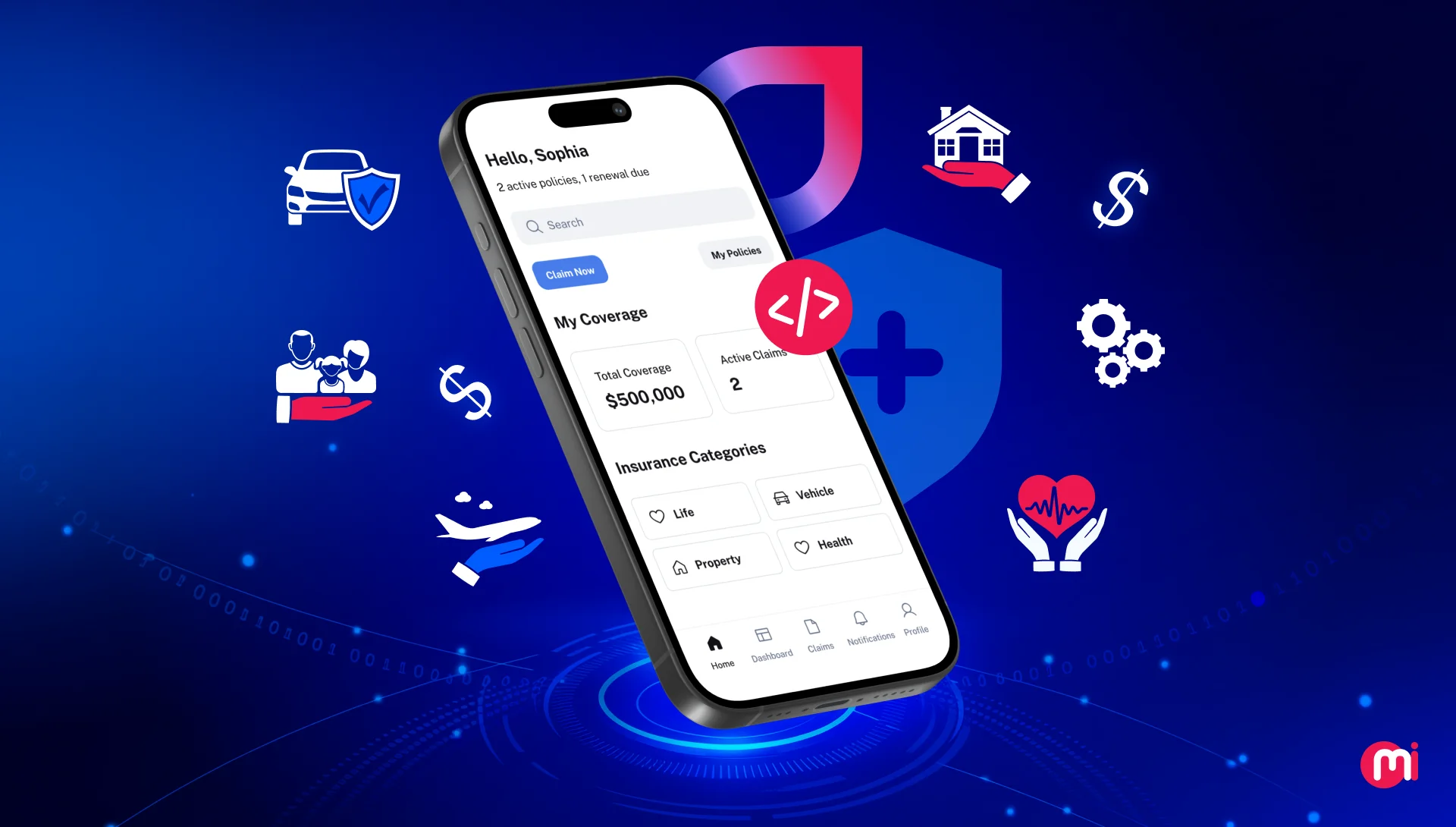
In the modern era of technology, the insurance sector has experienced a significant transformation, especially with the emergence and popularity of insurance mobile app development. Businesses are increasingly opting for insurance app development to leverage the benefits it offers. In this article, we will explore various aspects of developing an insurance app that can be advantageous for your business, including its types, features, processes, and costs.
The digital advancements have revolutionized the insurance sector, introducing a range of innovative digital solutions that are easily accessible to users. This digital transformation has led to both startups and established enterprises exploring the potential of developing insurance apps. As a result, the global insurance market is projected to reach $8.4 trillion by 2026, positioning it as a key player in the digital landscape, as reported by Statista.
These statistics indicate a wave of digital transformation sweeping through the insurance market, prompting existing businesses and startups to explore new opportunities in insurance mobile app development. Customers today are increasingly comfortable with online services, making insurance app development a crucial necessity to stay ahead in the digital competition. Providing clients with a seamless and efficient insurance service through a digital solution is essential to meet their expectations, and partnering with a top insurance software development company can facilitate this process.
This guide aims to provide insights into the various aspects of developing leading apps for insurance businesses. Let’s delve into the key points.
Benefits of Insurance App Development
Developing an insurance app can offer numerous advantages to insurance businesses, such as streamlining operations, reducing paperwork, and automating manual processes. Insurance apps facilitate enhanced client communications, streamlined operations, customized client offerings, data-driven insights, quick deal closure, increased sales, and productivity.
For clients, insurance apps provide easy access to insurance services, on-the-go policy verification, location-based assistance, seamless insurance access, mobile-friendly documentation, real-time updates on policies, and timely renewal reminders.
Types of Insurance Apps
There are six main types of insurance apps based on the financial aspects they aim to protect:
- Life Insurance Apps: Simplify policy selection, terms analysis, notifications, interest rate calculation, and customer support.
- Vehicle Insurance Apps: Assist users in filing claims, uploading relevant data, estimating repair costs, and accessing documents easily.
- Property Insurance Apps: Enable users to choose policies, file claims, receive reminders, and track property damages.
- Health Insurance Apps: Offer insurance across medical disciplines, price comparison, online formalities, and real-time doctor appointments.
- Travel Insurance Apps: Reduce risk in emergencies, cover medical expenses, provide cross-border access, and offer compensation for accidents.
- Business Insurance Apps: Protect various business investments, allow users to choose insurance packages, facilitate immediate claims, and reduce costs.
Key Features of Insurance Apps
The success of an insurance app depends on the inclusion of essential features for both the admin and client panels. Admin panel features include reporting, user management, payment management, policy and claim management, and a documentary repository. Client panel features encompass profile management, policy management, premium payment, client support, and claim management.
Insurance App Development Process
The insurance app development process involves strategic planning, selecting the ideal business model, UI/UX design, app development, quality testing, app launch, and post-launch support. Each step is essential for transforming a concept into a market-ready application that delivers value to both policyholders and insurers.
Compliance Requirements for Insurance App Development
Compliance with regulatory standards like GDPR, HIPAA, and PCI-DSS is crucial in insurance app development due to the sensitive nature of data handled by these apps. Implementing end-to-end encryption, multi-factor authentication, and other security measures is necessary to protect user data and avoid legal penalties.
Insurance App Development Costs
The cost of insurance app development varies based on factors like feature complexity, development platform, UI/UX design intricacy, backend development, third-party integrations, and ongoing maintenance. Partnering with an experienced insurance app development company can help manage costs and ensure a successful app launch.
Conclusion
Insurance apps are essential digital assets for businesses today, offering enhanced user experiences, market competitiveness, and revenue generation. Building a comprehensive insurance app that guides clients from policy purchase to claims processing is crucial for success in the digital age.
If you are considering insurance app development, partnering with a reputable company like MindInventory can ensure a successful project. Their expertise in building insurance apps and integrating AI can boost app adoption rates and enhance user experiences.
FAQs Insurance App Development
- How long does it take to build an insurance app? The development time varies based on the app’s complexity, with more complex apps taking up to a year and simpler apps requiring 3-4 months.
- How can you reduce insurance app development costs? Strategies to reduce costs include careful planning, prototyping, outsourcing, MVP development, cross-platform development, and task automation.
- What are the top tech trends in insurance app development? Key trends include increased AI adoption, predictive analytics, blockchain, IoT, embedded insurance, and telematics.
- How to find the right insurance app development company? Research their expertise, technical skills, portfolio, client reviews, project management approach, and cost estimation to find the right partner for your project.
In conclusion, insurance app development is a critical aspect of digital transformation in the insurance sector. By leveraging the benefits of insurance apps, businesses can enhance their services, engage clients effectively, and stay ahead in the competitive market landscape.