
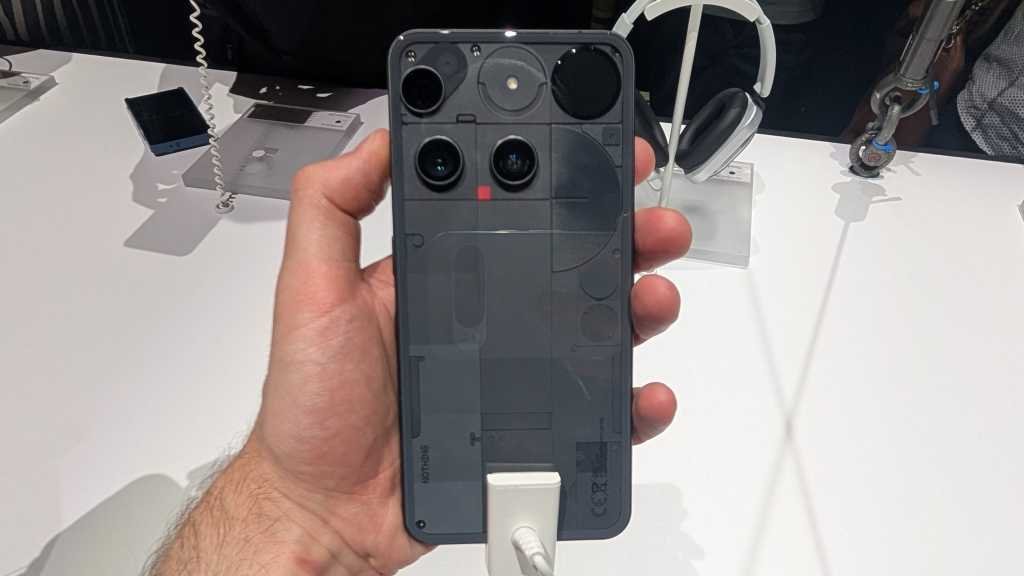
When it comes to Nothing’s smartphones, the design has always left me feeling a bit underwhelmed, especially considering the unique devices they create.
The experience has mostly revolved around the ‘Glyph Interface’ with its flashing, pulsing, and flickering lights on the back. However, as soon as I finish reviewing a Nothing phone, the first thing I do is turn off the Glyph lights. I’ve found them to be more annoying than useful, often distracting me from the overall experience.
So, when I heard that Nothing would be getting rid of the Glyphs on the Phone (3), their first flagship phone priced at £799/$799, I was intrigued.
After getting hands-on with the Phone (3), I’m pleased to see that Nothing has indeed ditched the Glyphs, although the replacement feature didn’t completely impress me.
A Familiar Yet Different Design
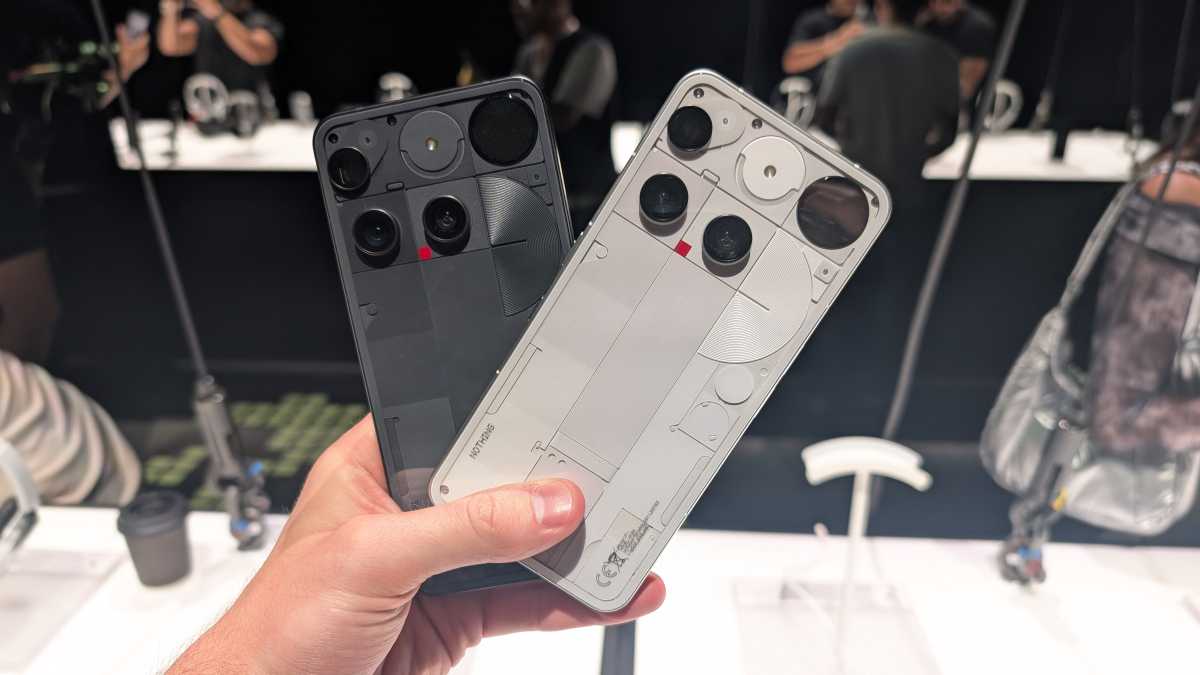
The design of the Phone (3) is anything but simple. While the Glyphs are gone, the handset still manages to capture attention with its unique look.
Replacing the lights is the ‘Glyph Matrix’, featuring 489 monochrome LEDs that offer more detailed information at a glance. From caller IDs and app notifications to interactive games like spin the bottle and a Magic 8 Ball, the Glyph Matrix provides a range of functionalities that the lights couldn’t.
Anyron Copeman / Foundry
While this feature may not be groundbreaking (similar functionality has been seen on Asus ROG gaming phones), it is a more discreet option compared to the flashy lights, making the Phone (3) stand out even when the feature is turned off.
The Phone (3) design is definitely eye-catching and unique
The top of the phone’s back may seem a bit crowded with three camera lenses, a flash, and the ‘Glyph’ matrix all sharing space. The black model tones down the visual noise, but the white version truly makes the phone stand out.
Top-Notch Durability
Despite the polarizing design of the Phone (3), the build quality is unquestionably impressive.
Featuring a glass front and back with an aluminum frame, the phone exudes a premium feel that surpasses the plastic-framed Phone (3a) Pro. While it may be on the heavier side at 218g, the phone’s weight adds to its substantial feel.
Anyron Copeman / Foundry
The use of Corning’s Gorilla Glass 7i on the front and Gorilla Glass Victus on the back ensures the phone can withstand most daily wear and tear. With IP68 water and dust resistance, the Phone (3) can handle submersion in freshwater up to 1.5m, offering peace of mind in various environments.
I would consider using the Phone (3) without a case, as the grip is solid
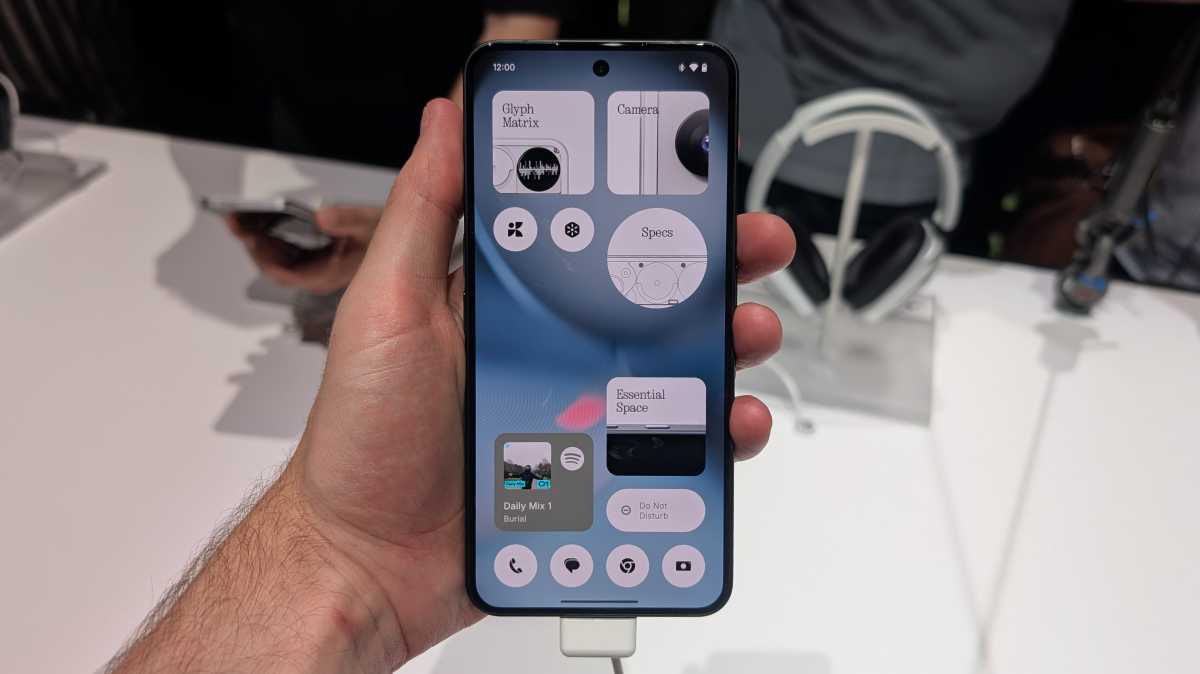
One of the standout features of the Phone (3) is its impressive display. The 6.67-inch AMOLED panel delivers vibrant colors and deep blacks, creating an immersive viewing experience. While the resolution is slightly lower than some flagships at 1260 x 2800, the clarity and detail are still impressive.
Anyron Copeman / Foundry
The Phone (3) boasts a fast 120Hz refresh rate, powered by the capable Snapdragon 8s Gen 4 chip. While it may not be the top-tier Snapdragon 8 Elite, the Phone (3) delivers strong performance with at least 12GB of RAM, making it suitable for most tasks, including high-end mobile gaming.
Impressive Software Updates
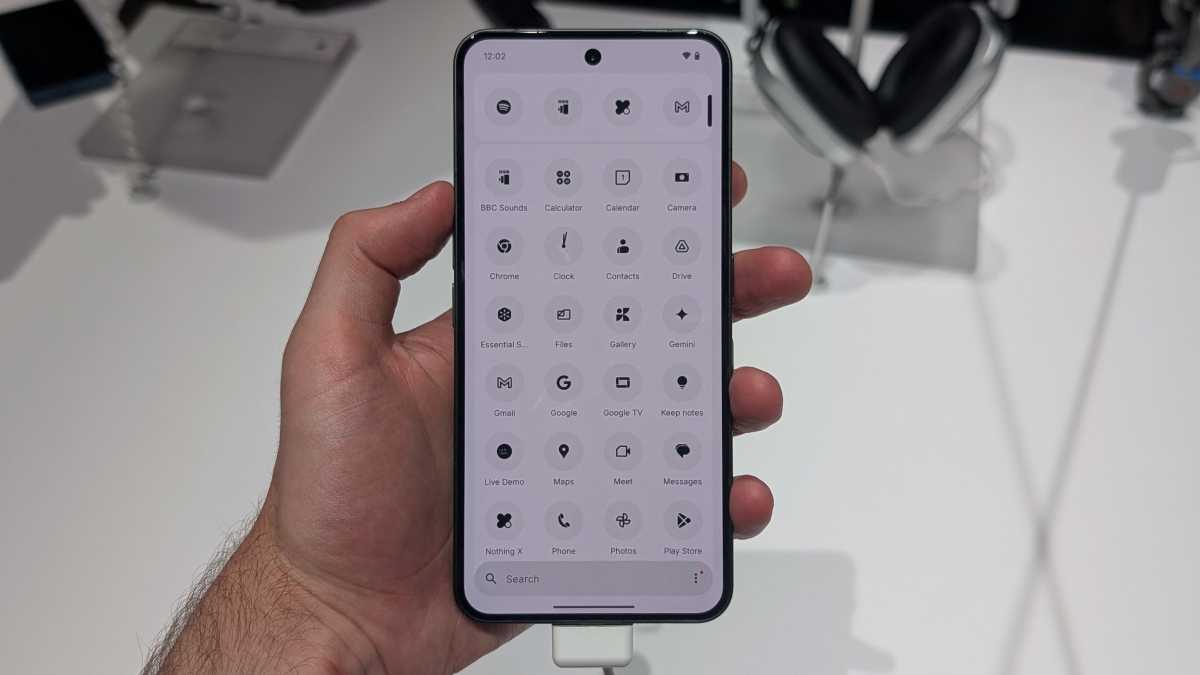
The Phone (3) comes with Nothing OS 3.5, based on Android 15, offering a familiar software experience for Nothing phone users.
Aside from the ‘Glyph Matrix’ feature, the Phone (3) introduces ‘Flip to Record’ in the Essential Space, allowing users to start recording audio by placing the phone face down and holding the Essential Key. The recorded content is then transcribed and summarized automatically.
Anyron Copeman / Foundry
Looking ahead, Nothing has promised an update to Nothing OS 4.0, based on Android 16, to be rolled out in Q3. Additionally, the Phone (3) will receive five major OS updates, potentially reaching Android 20, with security patches planned until 2032.
While the Phone (3) offers an impressive software support timeline, it falls slightly short of competitors like Samsung and Google, who provide seven years of updates.
Unanswered Questions
During a brief hands-on experience, certain aspects of a phone cannot be thoroughly tested. For the Phone (3), two key areas remain uncertain and could significantly impact its success.
Firstly, battery life is a crucial factor. Nothing claims the Phone (3) can last up to two days with lighter usage thanks to its 5150mAh battery. While the Phone (3a) Pro had impressive battery life, the increased power demands of the Snapdragon 8s Gen 4 chipset may affect the Phone (3)’s performance.
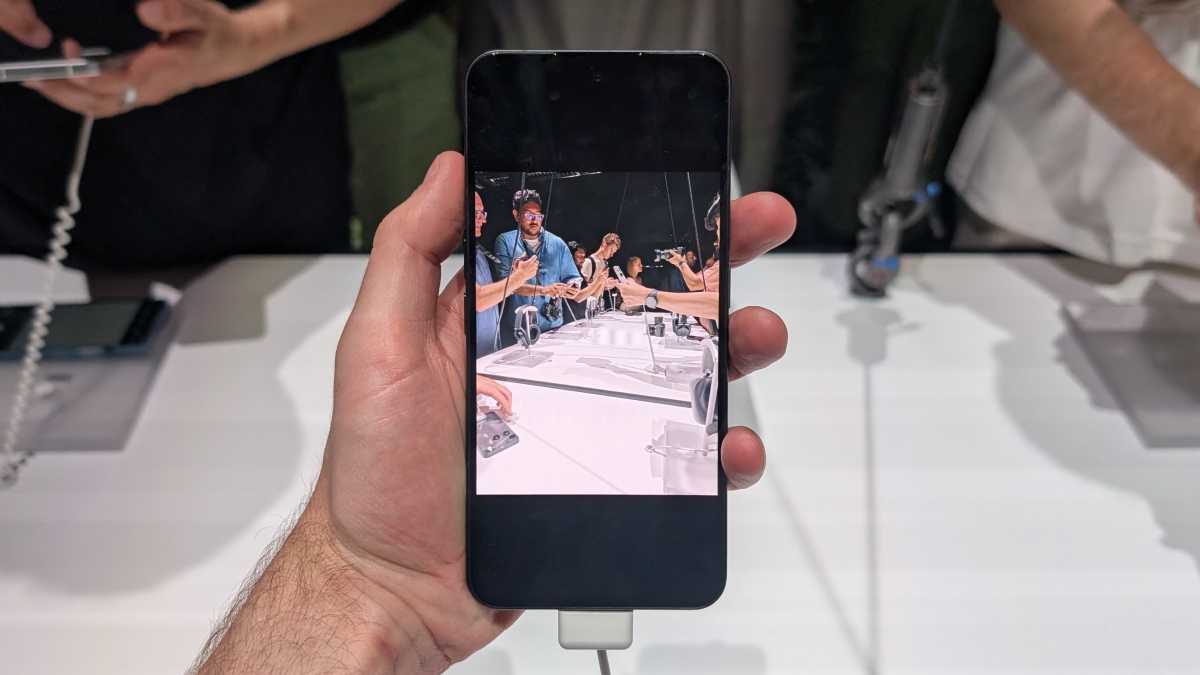
Secondly, camera performance is another area of concern. With four 50Mp lenses, the Phone (3) competes with other flagship phones in its price range. However, the software processing of the images could be a deciding factor in the overall camera quality.
Anyron Copeman / Foundry
While the Phone (3) may not have top-tier cameras, its overall appeal in the flagship smartphone market is undeniable. Potential buyers may find the Phone (3) a compelling alternative to Google Pixel or Samsung Galaxy phones.
Pre-orders for the Nothing Phone (3) will begin on 4 July through the Nothing website, with limited-stock ‘Nothing Drops’ releasing on 12 July and full general sales starting on 15 July.
To discover more about the Phone (3) and how it compares to other smartphones on the market, check out our guide to the best phones available.