
Many cultures have foods that may seem strange or unappetizing to those unfamiliar with them. For example, haggis, a traditional Scottish dish made of sheep parts stuffed into a sheep’s stomach and boiled, may not appeal to everyone. Similarly, lutefisk, a Scandinavian dish of aged fish jellied with lye, and balut, a Southeast Asian delicacy made from a fertilized duck egg that has been incubated and steamed, may not be for everyone.
While these foods may seem questionable due to their unfamiliarity, there are also hidden and unsettling facts about more common foods that we consume regularly.
Here are some interesting (and sometimes disturbing) facts about everyday foods that you may not be aware of:
1. Lemons May Contain Harmful Bacteria
Cut-up lemons are a common sight in restaurants, used to flavor drinks like tea and soda. However, a study found that lemons can be covered in various types of bacteria and yeast, including fecal matter and E. coli. This can be attributed to improper sanitary measures in kitchens and contamination before the lemons reach restaurants.
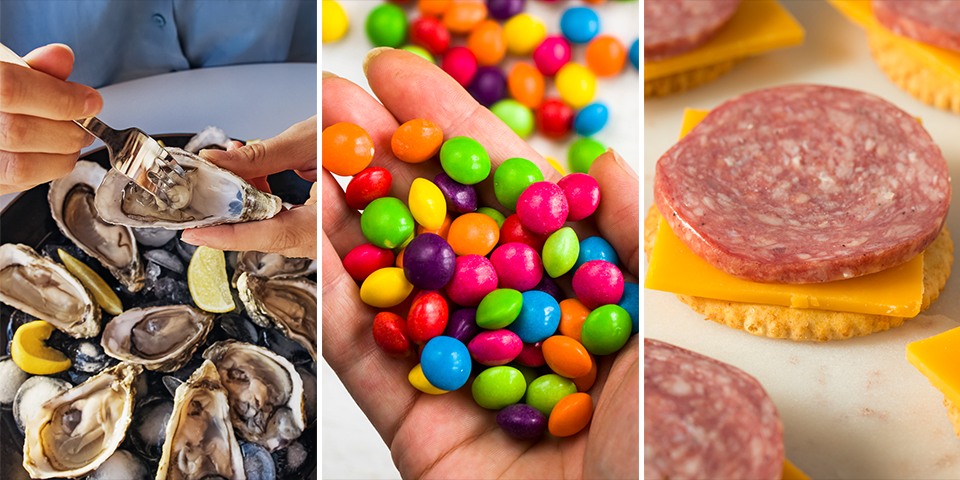
2. Raw Oysters Are Alive When Consumed
Raw oysters are not only uncooked but also alive when consumed. It is important to eat only live oysters to avoid the risk of harmful bacteria infestation.
3. Gummy Candies Are Made From Animal Parts
Most gummy candies contain gelatin, which is derived from animal parts like skin, bones, ligaments, and tendons. For those looking to avoid animal products, there are vegan alternatives made from agar agar sourced from seaweed.
4. Coffee Can Be Sourced From Civet Poop
Kopi luwak is a type of coffee made from beans that have passed through an Asian palm civet’s digestive tract. While this process is said to enhance the flavor of the coffee, it can also involve inhumane practices of force-feeding civets.
5. Candy Coating Contains Insect Secretions
The shiny coating on candies, known as confectioner’s glaze, is made from shellac derived from lac insects’ secretions. While considered safe by the FDA, it may be off-putting to some consumers.
6. Vanilla Flavoring Can Come From Beaver Secretions
Vanilla flavoring derived from beaver castor glands is used in various food products. While it may sound unappealing, it is considered safe for consumption.
7. Salami Is Often Uncooked
Some types of salami are not cooked but rather dry-cured. This process involves fermenting and drying the meat to inhibit the growth of harmful bacteria.
8. Ice Machines Can Harbor Harmful Bacteria
Ice machines in restaurants may contain harmful bacteria due to contaminated water and improper sanitation practices. This can pose a risk of gastroenteritis outbreaks linked to consuming contaminated ice.
9. Fig Bars May Contain Dead Wasps
Some figs require pollination by fig wasps, which may die inside the fruit during the process. However, most figs sold in stores do not require wasps for pollination.
10. Canned Mushrooms Can Contain Maggots
The FDA allows canned mushrooms to contain a certain number of maggots per 100 grams before being considered defective. This may be unsettling for those who are sensitive to the presence of insects in their food.