
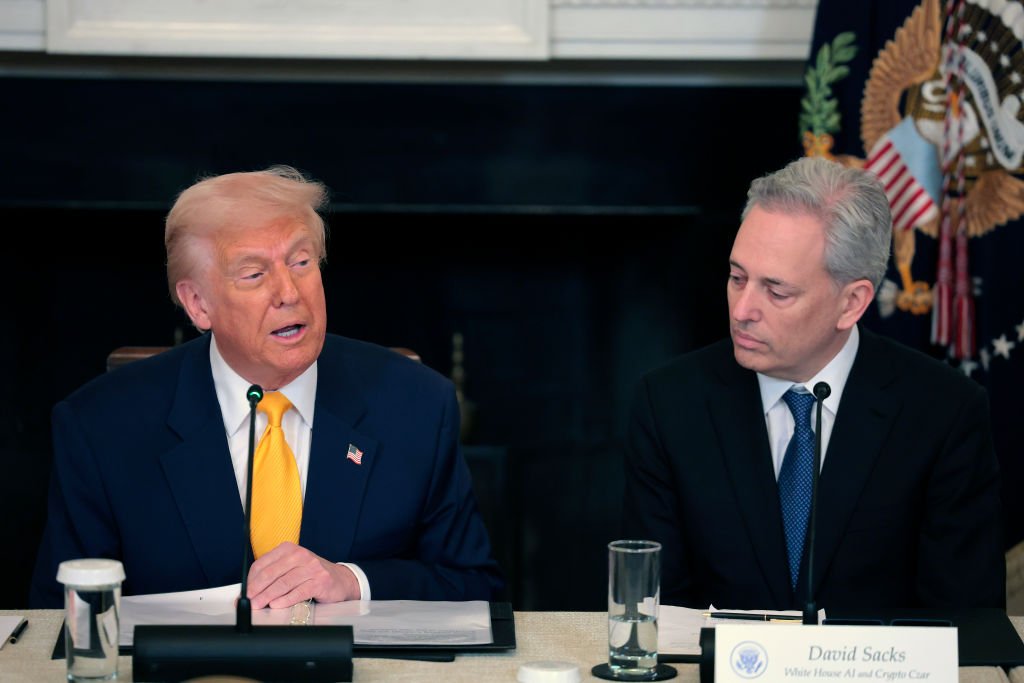
David Sacks Concludes Role as AI and Crypto Adviser to Trump
After a 130-day stint as a special government employee, David Sacks has officially stepped down from his position as Donald Trump’s AI and crypto czar. In a recent interview with Bloomberg, Sacks confirmed his departure and announced his new role as co-chair of the President’s Council of Advisors on Science and Technology (PCAST) alongside Michael Kratsios, a senior White House technology adviser.
As co-chair of PCAST, Sacks will have the opportunity to offer recommendations on a wide range of technology topics, expanding beyond his previous focus on AI. While his previous role allowed him direct access to Trump and involvement in policy decisions, PCAST operates as a federal advisory body, focusing on research, producing reports, and making recommendations rather than setting policy.
The Influence of PCAST
Established during the FDR administration, PCAST has historically played a vital role in advising the president on scientific and technological matters. The current iteration of PCAST boasts an impressive lineup of members, including industry titans like Jensen Huang of Nvidia, Mark Zuckerberg of Meta, and Larry Ellison of Oracle, among others.
According to Sacks, PCAST’s agenda will encompass key areas such as AI, advanced semiconductors, quantum computing, and nuclear power. The council’s immediate focus will be on advancing Trump’s national AI framework, aimed at streamlining regulations that currently vary across different states.
Transition and Future Outlook
While Sacks did not directly address the reasons for his transition, recent comments made on his podcast regarding U.S.-Iran relations may have played a role. Despite this, Sacks clarified that his podcast remarks were personal opinions and not reflective of official policy.
Looking ahead, PCAST’s composition of industry leaders signals a shift towards a more corporate-influenced advisory body. With Sacks now free to pursue his entrepreneurial and investment endeavors, the focus shifts to the council’s potential impact under his leadership.
Historical Context and Outlook
Reflecting on past iterations of PCAST, the council’s effectiveness has varied across administrations. While President Obama’s council was notably productive, achieving tangible policy changes, President Trump’s council struggled to make a significant impact. President Biden’s academic-heavy council also faced limitations in its influence.
With the current PCAST comprising industry executives, the council’s role in shaping technology policy remains uncertain. Sacks’ return to the private sector raises questions about potential conflicts of interest, given his previous involvement in AI and crypto companies while advising on federal policy.