
Student vaping and gambling are constant challenges for educators.
For Superintendent Michael Vuckovich of the Windber Area school district in Pennsylvania, it’s important to view those student behaviors in the context of elevated levels of depression, social isolation, and suicidal ideation among young people throughout the country.
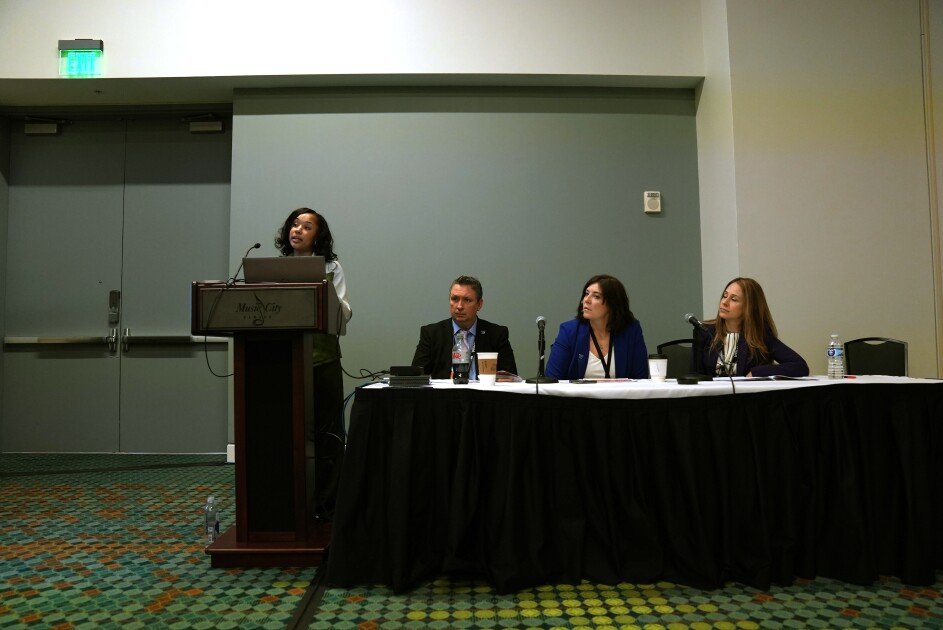
“These are not discipline problems—they’re coping mechanisms,” Vuckovich said during a presentation here at the National Conference on Education sponsored by AASA, The School Superintendents Association.
But kids often don’t recognize how these coping mechanisms—like a puff of a vape or the thrill of a risky sports bet—might be counterproductive, he added.
Three children in the 1,260-student Windber district have died by suicide this academic year, Vuckovich said.
The deaths “rocked” the community, and district leaders “had really tough decisions to make to lead our community through,” he said.
To start, the district reviewed Pennsylvania Youth Survey data, both statewide and district-specific figures. The data show that 10th grade is a pressure point—55% of Windber sophomores reported feeling depressed, and 31% said they felt like a failure. One-third of 10th graders said they had seriously considered suicide in the past year.
“We had to act and build a system that was responsive to that,” Vuckovich said.
Additionally, during routine searches of the district’s schools, drug detection dogs frequently uncovered vapes, particularly in the middle school, said Korie Duryea, the district’s special education director.
Vapes are easy to find—there are three shops on a common route through town, Duryea said—and kids use social media apps like Snapchat to coordinate sales and purchases. Vapes are also easy to hide. Kids have been caught hiding them in the strings of their hoodies or in devices that look like key fobs for vehicles, she said.
Gambling has similarly become a big problem, added Jessica Shuster, Windber’s director of education.
Kids use apps in which they deposit real money for rewards in a game. They’re also increasingly participating in sports betting or playing casino-style games on their devices, she said.
“They are becoming addicted or conditioned to want that reward,” Shuster said.
With knowledge of the problems, Windber focused on prevention
Once the district identified students’ problems with mental health, gambling, and vaping, leaders developed education programs to begin teaching kids as early as pre-K about the risks and resources available to them if they need help.
Pre-K students, for example, are given a presentation called “why animals don’t smoke,” and children in 3rd through 5th grades learn about vaping risks and consequences.
The district hosts meetings and assemblies for families with information on the latest vaping trends and statistics, health concerns, resources, and answers to common questions. The district tries to entice families to attend by offering food and Amazon gift cards, which has been somewhat successful, Duryea said.
The district has also begun implementing a new social-emotional-learning curriculum to teach students emotional regulation, and now refers students who have been caught with vapes to an intervention course sponsored by the American Lung Association.
Along with implementing routine mental health screening for all students, a small group of students also participated in a teen mental health first aid course to give them the tools and vocabulary to assist their peers who may be struggling, Shuster said.
“This can empower our students because what we’ve found is that our students talk to their peers before they talk to anybody else—if they’re having a problem or they need support, they’re going to their peers,” Shuster said. “That’s a tough weight for some of the kids if they’re not necessarily equipped with the skills to handle some of the information that they’re receiving from their peers.”
Students are more likely to seek help if they feel heard and valued by the adults in their schools, she added, so the Windber district also developed student advisory councils at its middle and high schools that meet periodically to give feedback to administrators about what’s working in their schools and what isn’t.
Windber also has a non-voting student school board member who acts as a representative for their peers, she said.
“We always say that they will get their say, they just might not get their way,” Shuster said. “But we are clear that they will have a voice, and we do want to hear them.”