
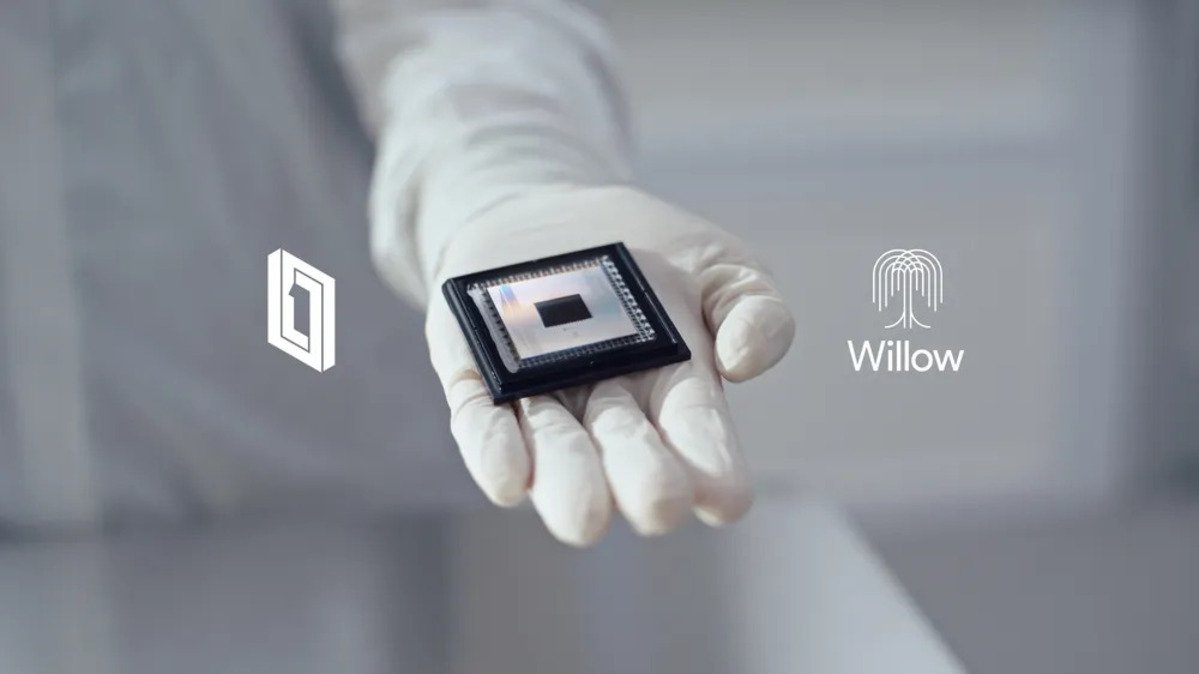
The quest to unlock the power of quantum computing has taken a significant leap forward with a recent breakthrough from Google. The tech giant has unveiled a groundbreaking achievement using its Willow quantum chip and a new algorithm called Quantum Echoes. This development brings the field closer to achieving what researchers refer to as “practical quantum advantage,” where quantum computers can tackle real-world problems that are beyond the capabilities of even the most powerful classical supercomputers.
Google’s experiment involved a sophisticated physics simulation to measure a subtle quantum phenomenon known as the second-order out-of-time-order correlator (OTOC). The results were staggering, with Google’s quantum device performing the calculation over 13,000 times faster than the Frontier supercomputer, currently the world’s most powerful classical machine. To put it into perspective, the quantum chip completed the task in just over two hours, whereas the supercomputer would have required an estimated 3.2 years of continuous operation.
The key to this remarkable speed lies in the Quantum Echoes algorithm itself. By harnessing the unique properties of qubits, the quantum equivalent of binary bits that can exist in multiple states simultaneously, Google was able to achieve unprecedented computational efficiency.
The process is elegantly simple yet powerful. The team sends a specific signal into the quantum system (the Willow chip), introduces a minor disruption, and then reverses the entire signal evolution backward in time. As the evolution unfolds in reverse, quantum waves create a moment of “constructive interference,” amplifying the resulting “echo” and yielding highly sensitive measurements. This approach allows researchers to observe how information spreads and interacts within the quantum system.
One of the key advantages of the Quantum Echoes algorithm is its verifiability. Unlike previous quantum speed demonstrations, the output of this algorithm can be replicated on other comparable quantum computers and validated through physical experiments, ensuring the reliability of the results.
To showcase the real-world applicability of this method, Google collaborated with researchers at the University of California, Berkeley to study the structure of two different molecules using the Quantum Echoes algorithm. The results were compared with data from Nuclear Magnetic Resonance (NMR) spectroscopy, a technique commonly used in chemistry and MRI technology. The alignment of data from both systems was impeccable, with the Quantum Echoes technique providing structural insights that traditional NMR methods often overlook.
While the road to fully realizing the potential of quantum computing still requires hardware with millions of stable qubits, Google’s algorithmic breakthrough represents a significant step forward. The company is optimistic about the future, anticipating that the first practical quantum applications could emerge within the next five years. This research paves the way for a future where quantum computers not only excel in speed tests but also play a crucial role in scientific discovery, revolutionizing fields like medicine and materials science.