
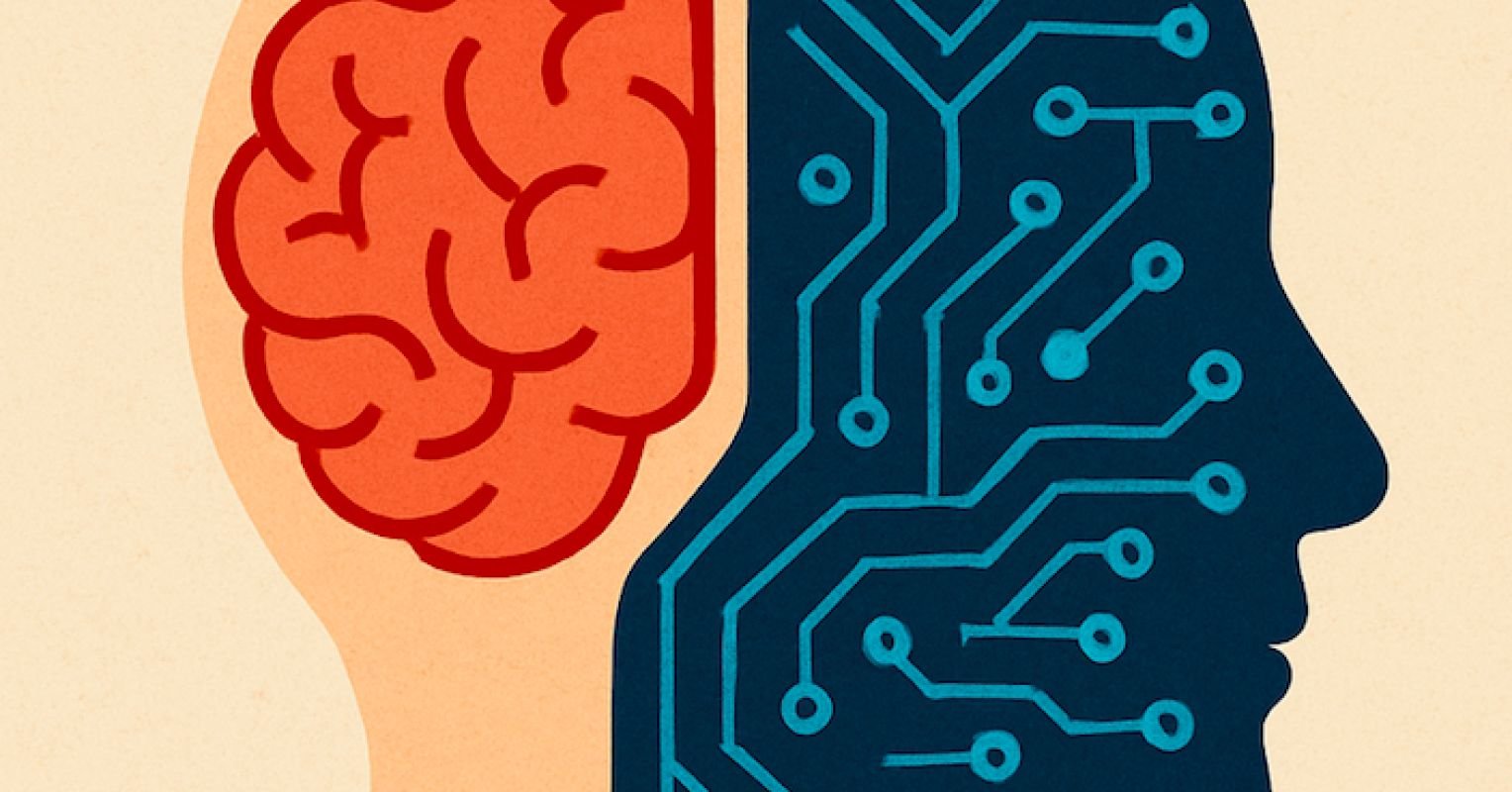
In today’s age, human agency plays a crucial role in shaping our thoughts and decisions. It goes beyond mere philosophical concepts and influences our daily choices, such as what to believe, what to learn, and when to pause and reflect before accepting an answer. Without agency, we risk becoming passive passengers on a cognitive autopilot controlled by external forces.
Artificial intelligence has now emerged as a powerful tool that can assist us in various tasks. With a simple prompt, we can receive refined solutions and summaries that may seem flawless and immediate. However, there is a danger of becoming overly reliant on AI and letting it dictate the course of our intellectual journey.
Instead of viewing AI as a threat to our agency, we can see it as a valuable training partner that challenges us to elevate our thinking. It is essential to maintain our agency at the forefront of our interactions with AI and ensure that we steer the conversation, rather than outsourcing it entirely.
In the era of AI, critical thinking needs to evolve into a new form of literacy. It is no longer sufficient to merely fact-check or debunk misinformation. Agency now involves determining the relevant questions, shaping research directions, and most importantly, staying engaged even when AI provides seemingly perfect answers.
Professor Michael Wagner from Drexel University has presented a framework for critical involvement, highlighting the importance of critical reading, listening, seeing, and making in navigating the AI landscape. These skills are not just academic exercises but essential survival skills that help us retain ownership of our thoughts amidst the illusion of cognitive automation.
The concept of iterative intelligence emphasizes the importance of continuous learning, testing, and refining in a dynamic loop. While AI excels in iteration, it is crucial for students to maintain control over this loop and exercise their freedom of choice. Education in the AI era should focus on empowering students to explore multiple perspectives, ask challenging questions, and critically evaluate AI-generated outputs.
Despite the abundance of information available in today’s digital age, there is a risk of succumbing to cognitive overload. Agency serves as the antidote to this overwhelming influx of knowledge, transforming abundance into opportunities for active learning and generative thinking.
AI’s ability to mimic human language and thought processes poses a unique challenge known as the “uncanny valley effect.” As AI approaches perfection in imitation, there is a temptation to overlook the subtle differences between human and machine-generated content.
Educators, parents, and innovators play a crucial role in cultivating agency in individuals interacting with AI. Educators should teach students how to engage with AI critically, parents should guide children to view AI as a tool for exploration rather than a shortcut, and innovators should design systems that promote reflection and intentional thought.
Ultimately, human agency is the silent force that allows us to be the authors of our own minds. While AI can enhance our capabilities, it is essential to practice agency actively to prevent it from eroding. The age of AI presents an opportunity for unprecedented human growth, but only if we approach it with intentional thought and agency as our guiding principles. In this fast-paced technological world, preserving our agency is more critical than ever, as it is ultimately our most potent form of literacy.