
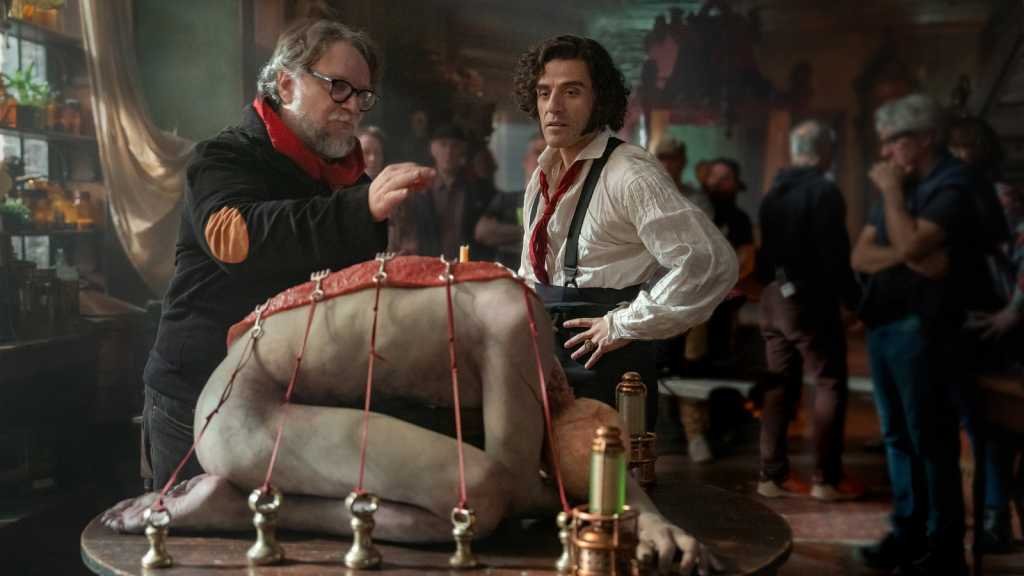
I want real props. I want real makeup. I don’t want any CGI or AI. I want the actors to feel the set they’re in, and to interact with the props. I want to see the sweat and the tears. I want to feel the struggle and the triumph. That’s what filmmaking is all about.
This commitment to practical effects and tangible sets is a testament to del Toro’s dedication to his craft. It’s also a way to ensure that the film has a timeless quality – much like Mary Shelley’s original tale, which has endured for centuries.
The decision to forego CGI and AI in favor of practical effects is a bold one, especially in an era where technology reigns supreme. However, it’s a choice that could pay off in the long run, as it will give the film a unique and authentic feel that sets it apart from other modern adaptations.
In conclusion, Guillermo del Toro’s Frankenstein has the potential to be a groundbreaking film that redefines the classic tale for a new generation. With a fresh interpretation, stellar performances, and a commitment to practical effects, this adaptation promises to be a true cinematic experience. Keep an eye out for Frankenstein when it premieres at the Venice Film Festival – it may just be the best film of the year.
Craftsmanship Over Digital: A Tribute to Guillermo del Toro’s Filmmaking Style
Guillermo del Toro, the visionary director known for his dedication to old-fashioned craftsmanship in filmmaking, has always shunned the trends of digital effects, AI, and simulations. Instead, he values the art of handcrafted props, sets, and scenery. Del Toro is personally involved in painting props, supervising set construction, and ensuring that everything is built by hand. He believes that there is a unique beauty in the operatic process of creating everything manually.
In his latest project, “Frankenstein,” del Toro’s commitment to traditional craftsmanship shines through. He has gone to great lengths to ensure that the sets and props are meticulously crafted, creating a sense of realism and grounding in a world where CGI and AI are becoming the norm. Del Toro’s attention to detail and obsession with building a film set mirrors Victor Frankenstein’s quest to create life out of lifeless elements.
Despite the challenges of modern filmmaking, del Toro remains steadfast in his belief that the art of handcrafting sets and props is essential to preserving the essence of cinema. “Frankenstein” stands as a testament to his dedication to the craft, offering viewers a glimpse into a world where every detail is carefully curated and brought to life through manual labor.
Unfortunately, “Frankenstein” will have a limited theatrical run before being released on Netflix, where most viewers will experience its wonders on a small screen. This decision reflects Netflix’s evolving approach to content creation, as CEO Ted Sarandos has emphasized the shift away from traditional theatrical releases towards streaming platforms.
In conclusion, Guillermo del Toro’s commitment to craftsmanship over digital effects is a refreshing reminder of the beauty and artistry that can be achieved through manual labor. “Frankenstein” serves as a tribute to the vanishing art of handcrafted filmmaking, offering audiences a glimpse into a world where every detail is carefully constructed by human hands.